About Acacia maidenii F.Muell.
Scientific name: Acacia maidenii F.Muell.
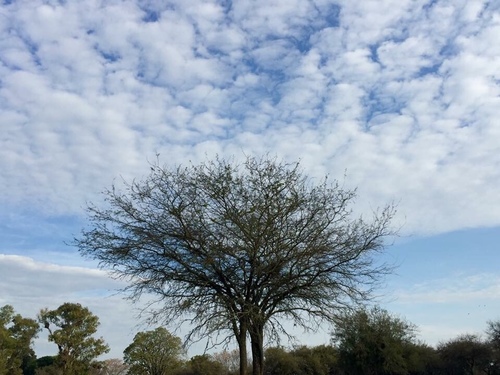
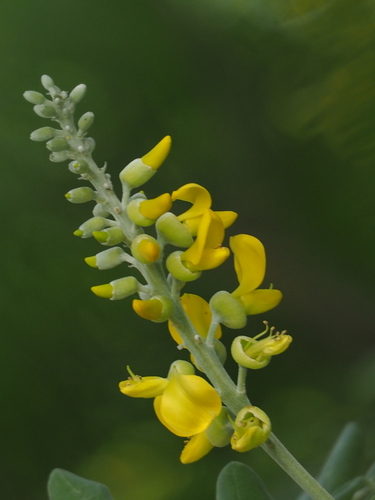
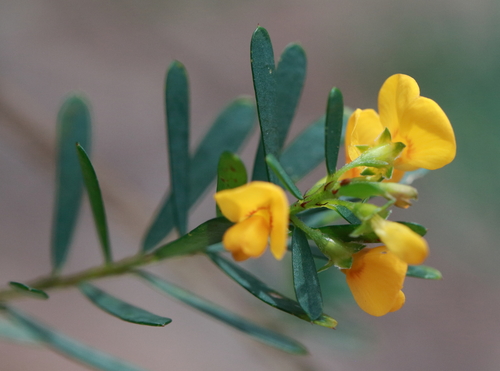
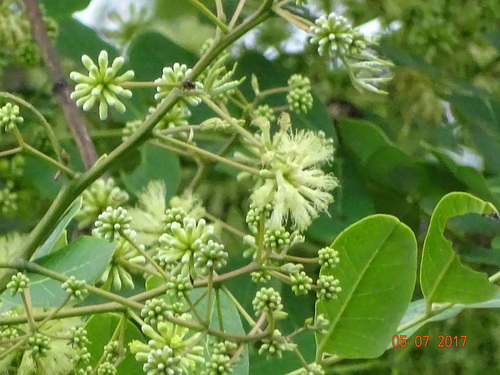
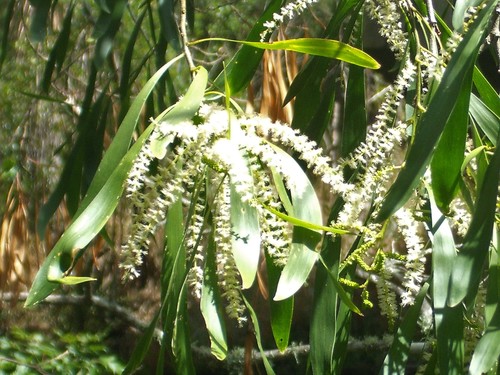
Description and habitat Acacia maidenii prefers full sun to partial shade, and is most often found on the edges of rainforests. It has an erect or spreading growth habit, and can reach up to 20 meters in height. Its dark green phyllodes grow alternately along the stem, reaching up to 20 cm long and 1 to 3 cm wide. It grows very quickly, reaching 1.5 m tall in as little as five months, with an average annual growth rate of approximately 1 m. It has a lifespan of over 30 years. Its inflorescences are pale yellow flower spikes up to 6 cm long, which usually occur in clusters of 2 to 3. The fruit is narrow, hairy, around 15 cm long, and often becomes coiled as it matures. It is listed as an endangered species in the Australian state of Victoria, but remains common across most of the rest of its native range. It is frost tolerant down to −7 °C (19 °F), but is not drought tolerant, so irrigation may be required in some growing areas. In its natural range, it typically grows in areas with an average annual maximum temperature around 25 °C, and can also survive in regions with an average maximum temperature between 22 and 32 °C. It grows primarily in coastal areas with annual rainfall between 1200 and 1600 mm, but can also be found growing in areas with annual rainfall ranging from 600 to 2000 mm.
Uses This species makes an attractive ornamental tree for street plantings and parks. It is also well-suited for reforestation projects in suitable areas. In the past, indigenous Australians used exudates from its trunk (such as gum or pitch) as food.
Cultivation USDA Zone 9 is recommended for cultivation. Acacia maidenii grows well in all soil types except those that remain waterlogged for extended periods. There are approximately 65 seeds per gram of this species' seed. It can be propagated from seed, but pre-treatment of seed is required to improve germination rates. Seeds may be soaked in hot water, nicked, or mechanically scarified to allow water to penetrate their hard outer coating and trigger germination. The highest germination rates occur when temperatures are between 21 and 27 °C.