About Albizia procera (Roxb.) Benth.
Size
Albizia procera (Roxb.) Benth. is typically 7 to 15 meters tall, and occasionally grows as tall as 30 meters.
Foliage Phenology
It is a deciduous species, dropping all its leaves during the dry season, which occurs from August to September.
Leaf Structure
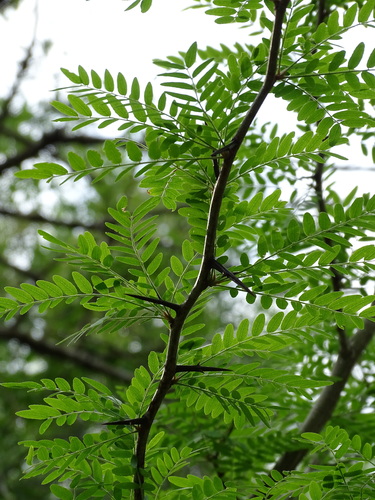
Its leaves are bi-pinnate, with 2 to 5 pairs of sub-opposite pinnae and a 10 to 30 centimeter rachis.
Bark Characteristics
The bark is smooth and light-colored, and exfoliates to show a reddish color underneath.
Flower Morphology
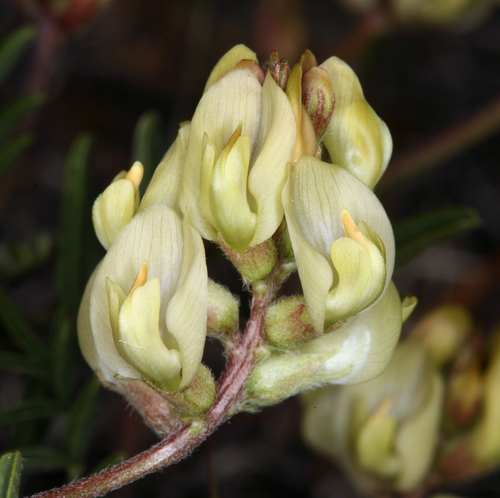
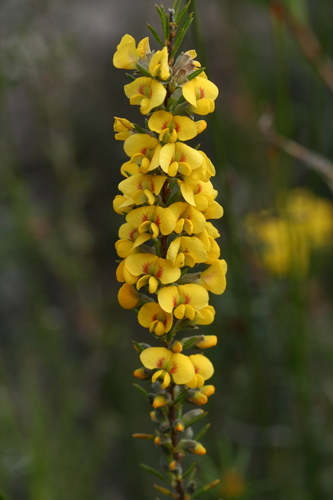
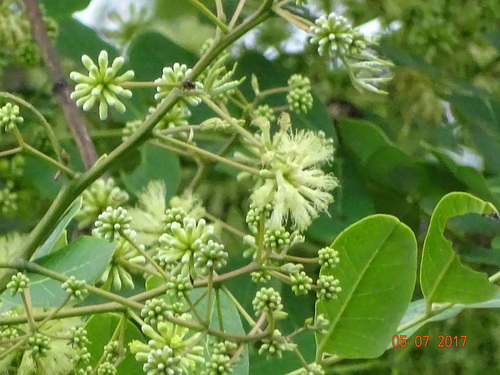
The species produces sessile greenish-yellow flowers with long, threadlike white stamens that create a puffball effect; these flowers grow on racemes that are 8 to 25 centimeters long.
Fruit and Seeds
After flowering, the plant produces rich red or reddish-brown flattened pods that hold 6 to 12 small, greenish-brown seeds.
Cultivation Range
Albizia procera is cultivated for timber or as fuel in Asia, Africa, and the Americas.
Fodder Use
In India, its leaves are regarded as good fodder for animals including cows, sheep, goats, and elephants.
Wood and Resin Uses
The wood of Albizia procera makes good charcoal, its resin works well as a substitute for gum arabic.
Toxic and Pesticidal Uses
Its leaves are reported to be insecticidal, while its bark can be used to make fish poison.