About Abronia umbellata Lam.
Scientific Name
Abronia umbellata Lam.
Description
Growth Form and Foliage
Abronia umbellata is a prostrate annual plant with thick, succulent leaves. It produces few to many slender leaves, which range from ovate to diamond-shaped; the petioles are as long as the leaf blades and are often hairy.
Flower Structure
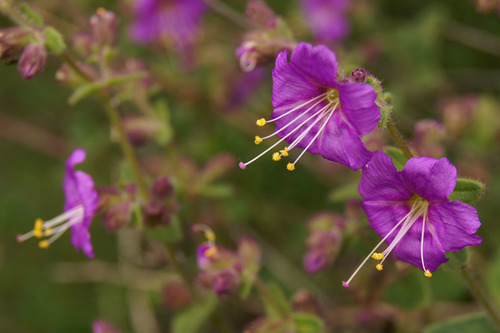
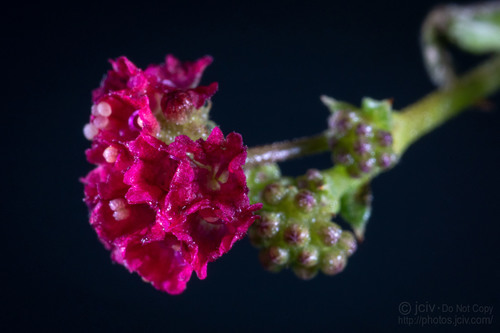
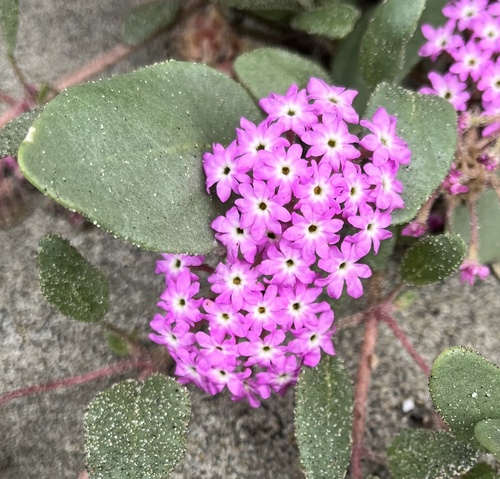
Its flowers are pink to purple with white centers, borne in clusters subtended by 5 to 8 lanceolate bracts. The flowers lack true petals; the cleft calyx lobes give the appearance of 10 to 16 petals.
Perianth and Reproductive Parts
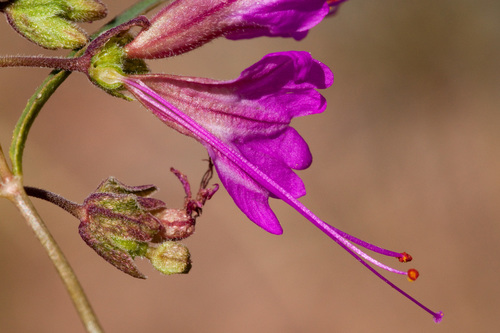
The limbs of the perianth are brightly colored, sometimes deep purplish magenta; the perianth tube may be green or red, and is always covered in glandular hairs. The tube contains one pistil and three stamens.
Ecology and Horticulture
A. umbellata frequently hybridizes with other Abronia species, including A. maritima. Its flowers are fragrant at night and attract moths.
Additional Traits and Uses
Its foliage may become deciduous in response to environmental stress. This species is sometimes used in native plant gardening in California.
Distribution and habitat
Habitat Preferences
This plant typically grows in sandy, well-drained soil in areas with low precipitation. It can form a prominent carpet-like groundcover in undisturbed sites after winter rains.
Geographic Range
Pink sand verbena tolerates seaside conditions, and occurs along the west coast of North America from British Columbia, Canada to Baja California, Mexico.
Typical Locations and Bloom Period
It is most often found on beaches and sand dunes below coastal sage scrub, and blooms for most of the year.
Conservation Status
It is listed as endangered in the U.S. state of Oregon.