About Abies sachalinensis (F.Schmidt) Mast.
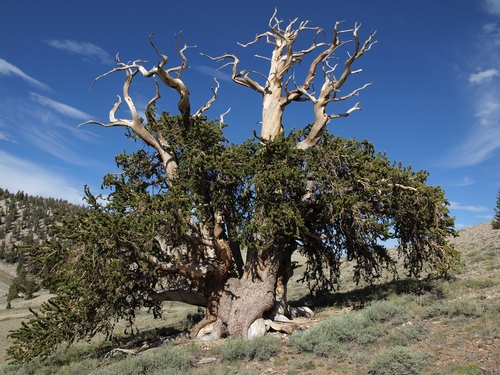
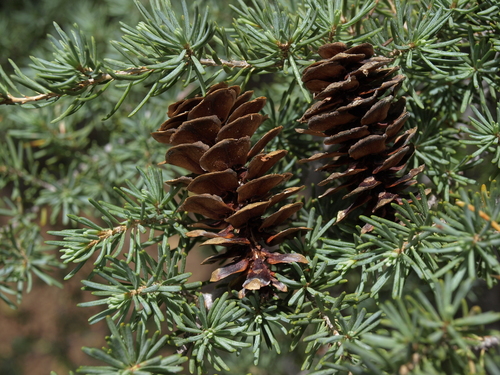
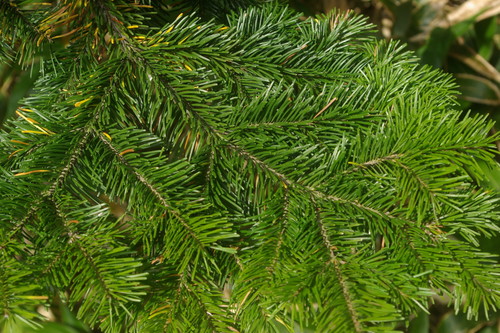
Abies sachalinensis (F.Schmidt) Mast. grows to 30 meters tall with trunk girths reaching up to 100 cm. Its crown is pyramidal when young, but tends to flatten as the tree reaches old age. Its branches remain long and slender throughout the tree’s lifetime. Individuals growing in the more northern parts of the species’ habitat tend to reach shorter heights than those growing further south. This species has a hardiness rating of zone 5, with its cold limit falling between -23.3°C and -28.8°C. This species occurs across a range of elevations from sea level up to 1,650 m. On Sakhalin Island specifically, it grows at elevations of 800–1,100 m, forming either pure stands or mixed forests with Picea jezoensis (Yezo spruce) and Picea glehnii around the treeline. At lower elevations, it is found growing alongside broadleaf trees including Betula ermanii (Erman's birch), Castanea crenulata, Kalopanax septemlobus (castor aralia), and Magnolia hypoleuca. Its preferred habitat has cool summers, mild winters, and around 1,500 mm of annual precipitation, with half or more of the precipitation falling during winter. This species grows best on well drained, moist soils, and does not tolerate waterlogged soil. It is very shade tolerant when young, but its growth is slower in dense shade. It favors slightly acidic soils with a pH around 5. This tree is primarily logged to produce wood pulp for the paper industry. It is cultivated in gardens and arboreta in Russia, Northern Europe, England, and the United States. Additional uses of Abies sachalinensis include dyeing, tanning, extraction of essential oils, production of fibers, timber production, and use in medicine. It is also processed into finished products such as boxes, crates, pallets, posts, stakes, fences, and wall paneling, and is used for both exterior and interior carpentry work. It is an important plantation species in Hokkaido, where other Abies species are not used for plantation forestry.