How to Identify Proteaceae — Protea Family

Proteaceae (Protea Family) is a plant family in the Plantae kingdom, order Proteales, class Magnoliopsida. The family contains 489 accepted species worldwide. Some species in this family are toxic — exercise caution when handling unknown specimens.

Key Identification Features

For instant identification in the field, use the iNature app — AI-powered, works offline.
Representative Proteaceae Species

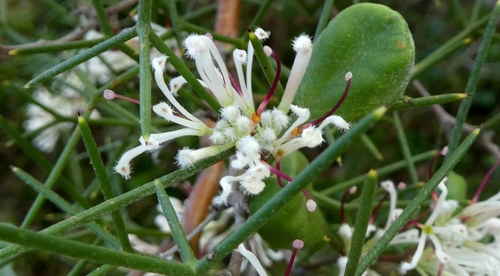
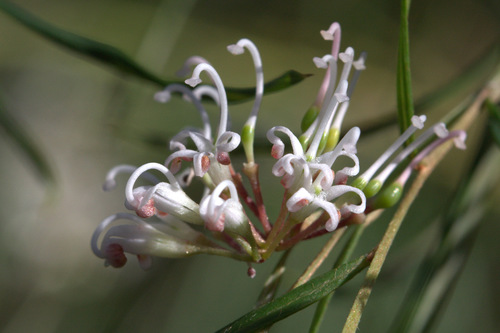
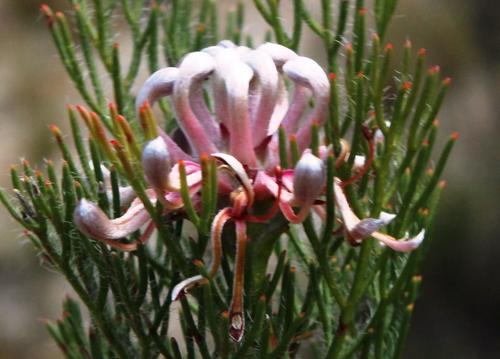
How to identify Adenanthos obovatus Labill.

Adenanthos obovatus Labill.

Adenanthos obovatus Labill.

Adenanthos obovatus is a lignotuberous Proteaceae shrub endemic to Southwest Aus…

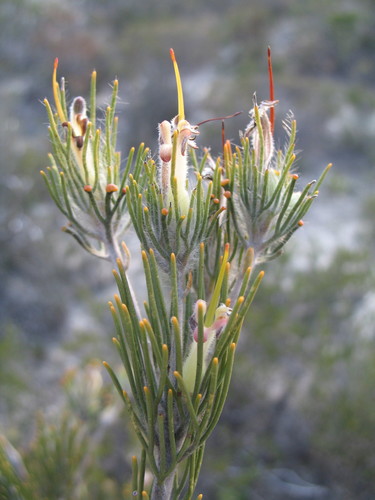
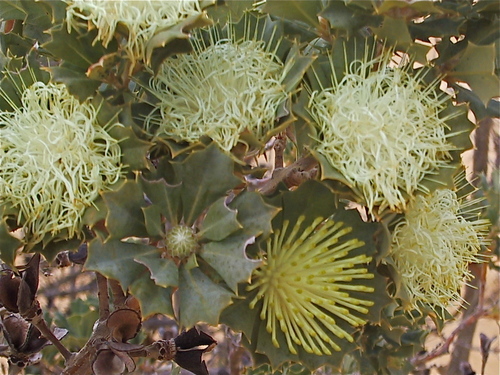
How to identify Hakea trifurcata (Sm.) R.Br.

Hakea trifurcata (Sm.) R.Br.

Hakea trifurcata (Sm.) R.Br.

Hakea trifurcata is a Western Australian shrub with two leaf forms that evolved …

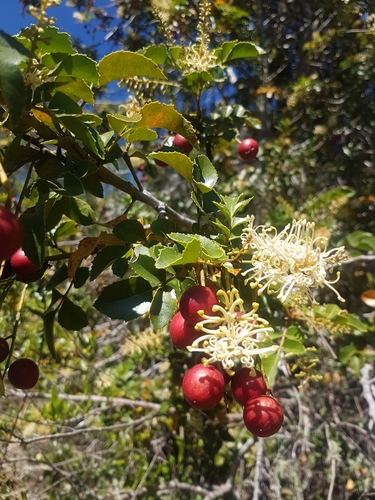
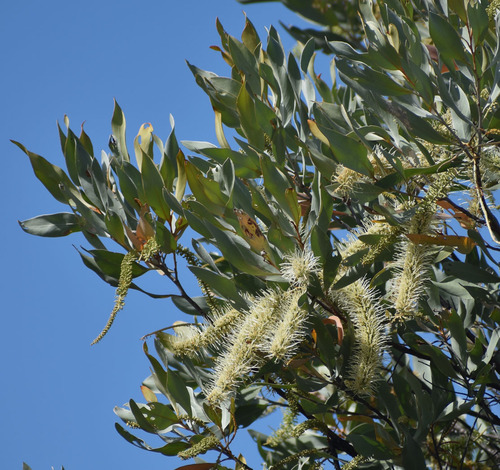
How to identify Gevuina avellana Molina

Gevuina avellana Molina

Gevuina avellana Molina

Gevuina avellana, the Chilean hazelnut, is the only species in genus Gevuina, an…

How to identify Grevillea pulchella (R.Br.) Meisn.

Grevillea pulchella (R.Br.) Meisn.

Grevillea pulchella (R.Br.) Meisn.

Grevillea pulchella, or beautiful grevillea, is a spreading shrub that grows in …

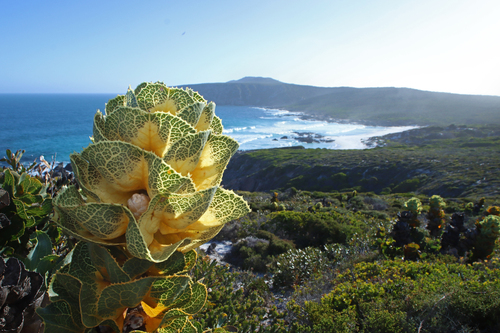
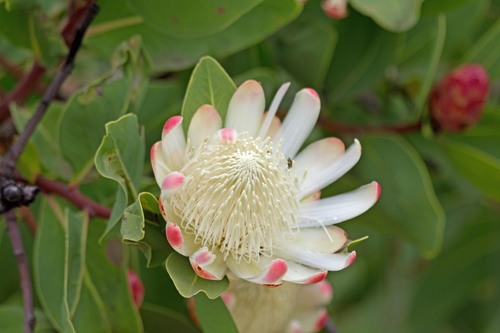
How to identify Hakea victoria Drumm.

Hakea victoria Drumm.

Hakea victoria Drumm.

Hakea victoria, commonly royal hakea, is an erect Australian shrub grown ornamen…

How to identify Grevillea linearifolia (Cav.) Druce

Grevillea linearifolia (Cav.) Druce

Grevillea linearifolia (Cav.) Druce

Grevillea linearifolia, or linear-leaved grevillea, is an open shrub native to N…

How to identify Grevillea glauca Banks & Sol. ex Knight

Grevillea glauca Banks & Sol. ex Knight

Grevillea glauca Banks & Sol. ex Knight

Grevillea glauca is an erect shrub or tree that grows in Queensland and Papua Ne…

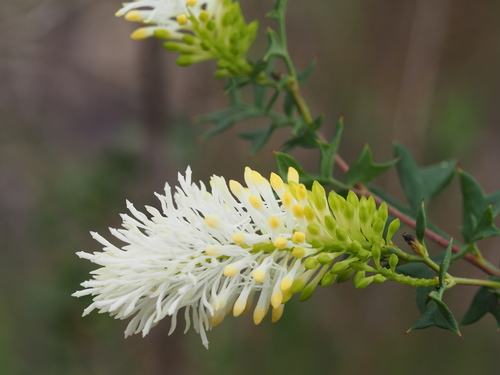
How to identify Adenanthos cygnorum Diels

Adenanthos cygnorum Diels

Adenanthos cygnorum Diels

Adenanthos cygnorum, commonly called common woollybush, is a three-metre tall wo…

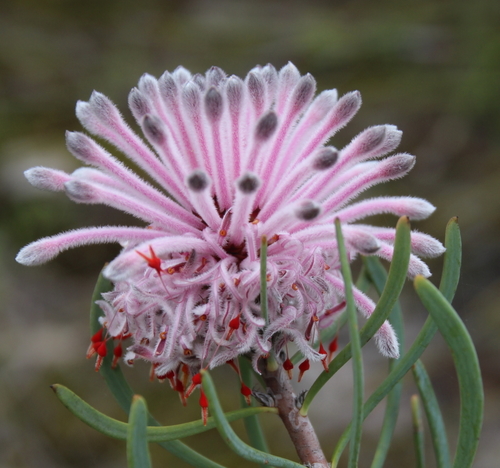
How to identify Petrophile linearis R.Br.

Petrophile linearis R.Br.

Petrophile linearis R.Br.

Petrophile linearis, pixie mops, is a flowering Australian shrub that grows in s…

How to identify Serruria gremialis Rourke

Serruria gremialis Rourke

Serruria gremialis Rourke

Serruria gremialis, the Riviersonderend spiderhead, is an endemic creeping flowe…

How to identify Banksia sessilis (Knight) A.R.Mast & K.R.Thiele

Banksia sessilis (Knight) A.R.Mast & K.R.Thiele

Banksia sessilis (Knight) A.R.Mast & K.R.Thiele

Banksia sessilis is a Western Australian Banksia species that grows into a shrub…

How to identify Protea madiensis Engl.

Protea madiensis Engl.

Protea madiensis Engl.

Tall woodland sugarbush (Protea madiensis) is a common African flowering shrub n…

Browse all 489 Proteaceae species →

Frequently Asked Questions

How do you identify Proteaceae?

Proteaceae plants belong to the Proteales order in the Plantae kingdom. The most taxonomically important distinguishing features between the two species are: perianth limb shape, which is rounded in A. For instant identification, use the iNature app — AI-powered and works offline.

What are the key characteristics of Proteaceae?

Proteaceae is classified in the order Proteales, class Magnoliopsida, phylum Tracheophyta. obovatus has also been recorded on the New Holland honeyeater (Phylidonyris novaehollandiae) and brown honeyeater (Lichmera indistincta).

⚠️ Are any Proteaceae species poisonous?

Yes, some Proteaceae species are toxic or poisonous. Always exercise caution with unknown specimens. View poisonous Proteaceae species or browse the full poisonous species guide.

Sources: GBIF, iNaturalist, Wikipedia · Disclaimer

Start Exploring Nature Today

Download iNature for free. 10 identifications on us. No account needed. No credit card required.

Download Free on App Store