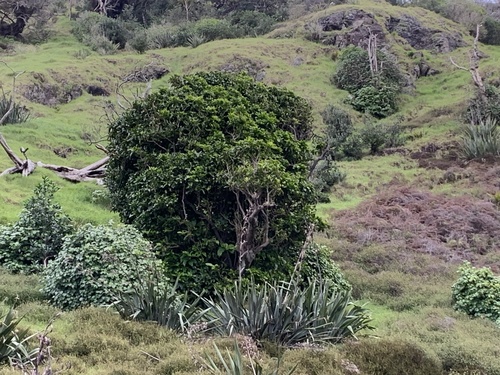
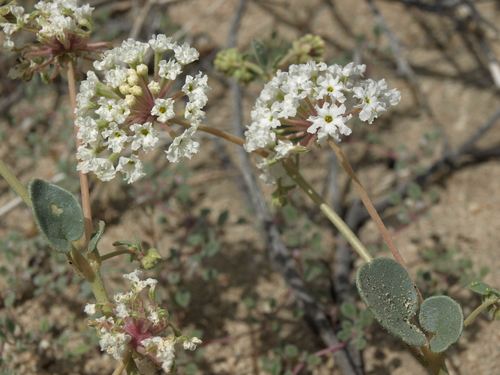
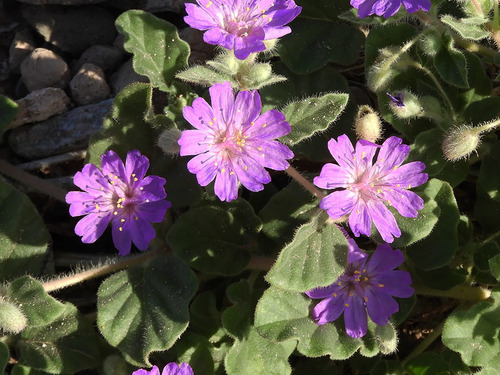
How to Identify Nyctaginaceae

Nyctaginaceae is a plant family in the Plantae kingdom, order Caryophyllales, class Magnoliopsida. The family contains 77 accepted species worldwide. Some species in this family are toxic — exercise caution when handling unknown specimens.

Key Identification Features

For instant identification in the field, use the iNature app — AI-powered, works offline.
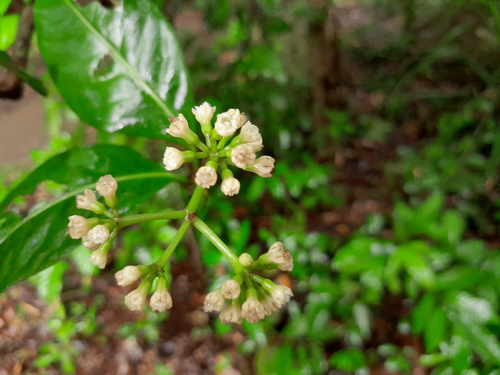
Representative Nyctaginaceae Species

How to identify Ceodes umbellifera J.R.Forst. & G.Forst.

Ceodes umbellifera J.R.Forst. & G.Forst.

Ceodes umbellifera J.R.Forst. & G.Forst.

Ceodes umbellifera, commonly birdlime, is a sticky-fruited tropical tree with re…

How to identify Mirabilis laevis (Benth.) Curran

Mirabilis laevis (Benth.) Curran

Mirabilis laevis (Benth.) Curran

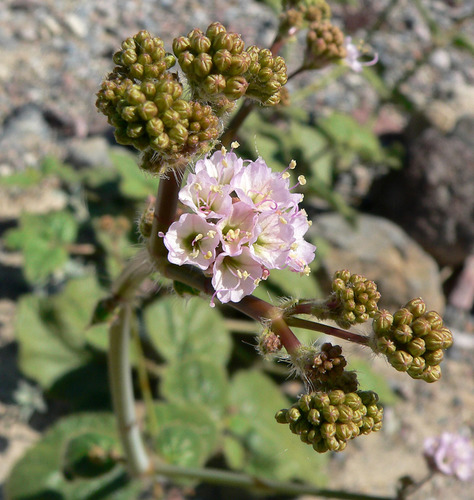
Mirabilis laevis (desert wishbone-bush) is a recently redefined four o'clock fam…

How to identify Boerhavia erecta L.

Boerhavia erecta L.

Boerhavia erecta L.

Boerhavia erecta L. is a perennial herb used as traditional medicine, food, and …

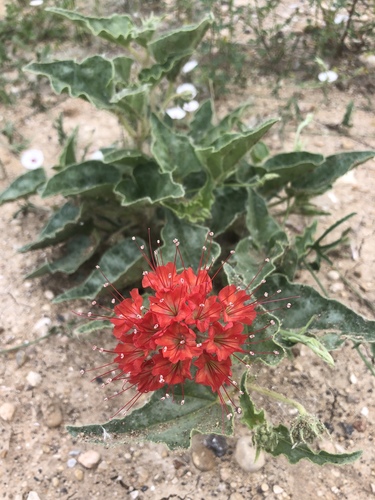
How to identify Nyctaginia capitata Choisy

Nyctaginia capitata Choisy

Nyctaginia capitata Choisy

Nyctaginia capitata, devil's bouquet, is the only species in the monotypic genus…

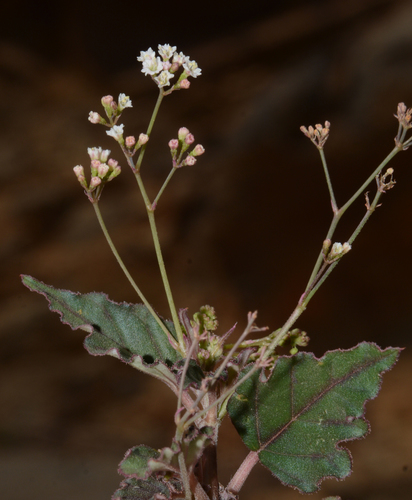
How to identify Boerhavia triquetra S.Watson

Boerhavia triquetra S.Watson

Boerhavia triquetra S.Watson

Boerhavia triquetra is a small hardy annual herb native to the deserts of southw…

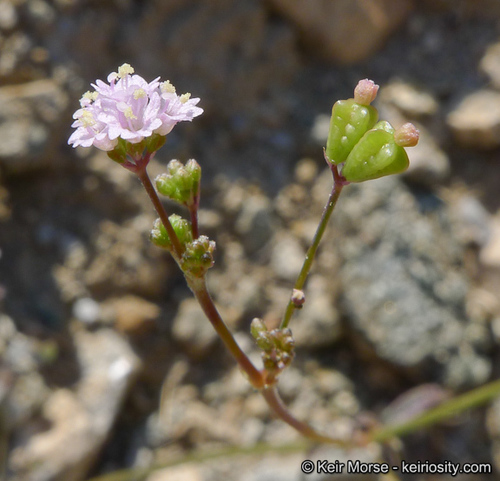
How to identify Abronia umbellata Lam.

Abronia umbellata Lam.

Abronia umbellata Lam.

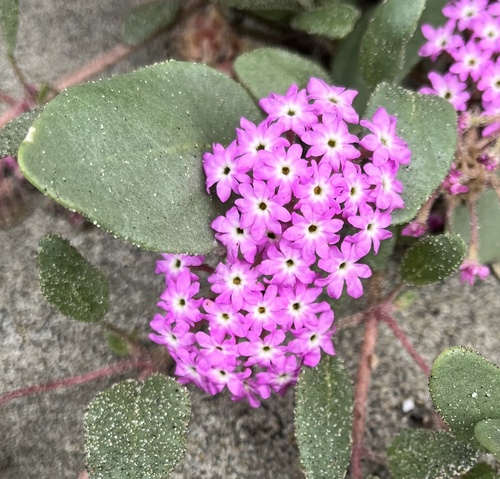
Abronia umbellata is a prostrate annual pink sand verbena native to the North Am…

How to identify Abronia maritima Nutt. ex S.Watson

Abronia maritima Nutt. ex S.Watson

Abronia maritima Nutt. ex S.Watson

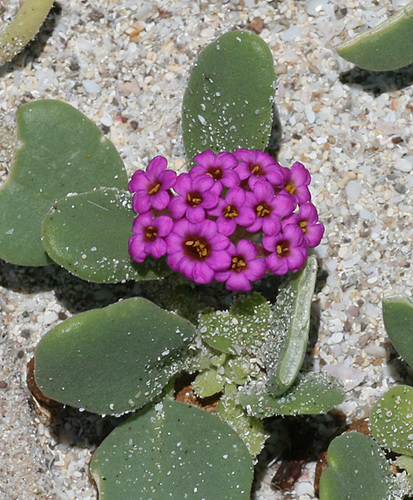
Abronia maritima, or red sand verbena, is a rare beach-adapted perennial halophy…

How to identify Anulocaulis annulatus (Coville) Standl.

Anulocaulis annulatus (Coville) Standl.

Anulocaulis annulatus (Coville) Standl.

Anulocaulis annulatus, or valley ringstem, is a Mojave Desert endemic perennial …

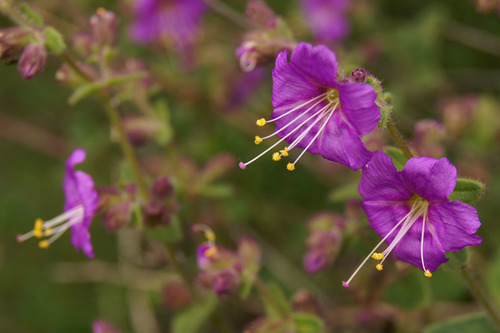
How to identify Mirabilis longiflora L.

Mirabilis longiflora L.

Mirabilis longiflora L.

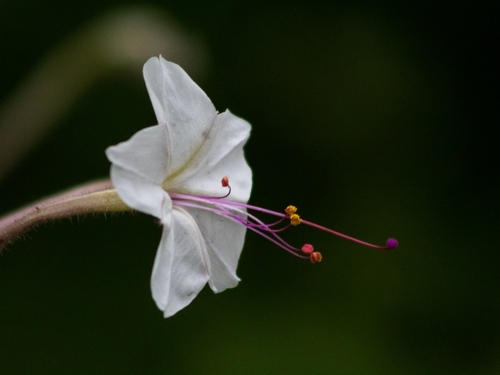
Mirabilis longiflora L. is a tender herbaceous perennial native to scrubby canyo…

How to identify Ceodes brunoniana (Endl.) Skottsb.

Ceodes brunoniana (Endl.) Skottsb.

Ceodes brunoniana (Endl.) Skottsb.

Ceodes brunoniana is a small tree with sticky fruits native to parts of New Zeal…

How to identify Abronia turbinata Torr. ex S.Watson

Abronia turbinata Torr. ex S.Watson

Abronia turbinata Torr. ex S.Watson

Transmontane sand-verbena (Abronia turbinata) is an annual flowering four o'cloc…

How to identify Allionia incarnata L.

Allionia incarnata L.

Allionia incarnata L.

Allionia incarnata is a flowering Nyctaginaceae plant native to the Americas, wi…

Browse all 77 Nyctaginaceae species →

Frequently Asked Questions

How do you identify Nyctaginaceae?

Nyctaginaceae plants belong to the Caryophyllales order in the Plantae kingdom. They have a hairless, glossy, papery texture, with 8 to 10 light-colored lateral veins per leaf side, with no distinctly contrasting dark veins. For instant identification, use the iNature app — AI-powered and works offline.

What are the key characteristics of Nyctaginaceae?

Nyctaginaceae is classified in the order Caryophyllales, class Magnoliopsida, phylum Tracheophyta. It is a perennial herb similar to Boerhavia diffusa, but can be distinguished by several features: its stems are straight, it bears white and pink flowers, and it produces obconic, glabrous fruit.

⚠️ Are any Nyctaginaceae species poisonous?

Yes, some Nyctaginaceae species are toxic or poisonous. Always exercise caution with unknown specimens. View poisonous Nyctaginaceae species or browse the full poisonous species guide.

Sources: GBIF, iNaturalist, Wikipedia · Disclaimer

Start Exploring Nature Today

Download iNature for free. 10 identifications on us. No account needed. No credit card required.

App Store
Scan to download from App Store

Scan with iPhone camera

Google Play
Scan to download from Google Play

Scan with Android camera