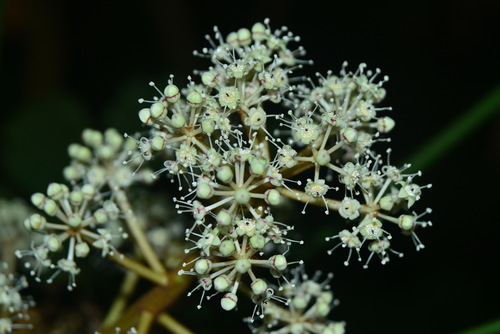
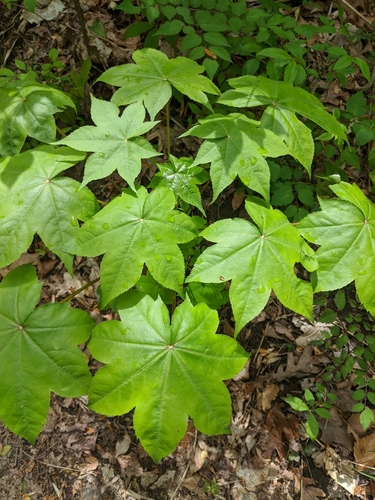
How to Identify Araliaceae

Araliaceae is a plant family in the Plantae kingdom, order Apiales, class Magnoliopsida. The family contains 132 accepted species worldwide. Some species in this family are toxic — exercise caution when handling unknown specimens.

Key Identification Features

For instant identification in the field, use the iNature app — AI-powered, works offline.
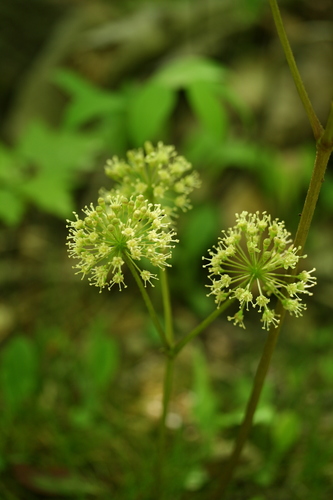
Representative Araliaceae Species

How to identify Aralia nudicaulis L.

Aralia nudicaulis L.

Aralia nudicaulis L.

Aralia nudicaulis L. is a herbaceous perennial North American forest plant with …

How to identify Eleutherococcus sessiliflorus (Rupr. & Maxim.) S.Y.Hu

Eleutherococcus sessiliflorus (Rupr. & Maxim.) S.Y.Hu

Eleutherococcus sessiliflorus (Rupr. & Maxim.) S.Y.Hu

Eleutherococcus sessiliflorus is a 2m - tall deciduous shrub with yellow hermaph…

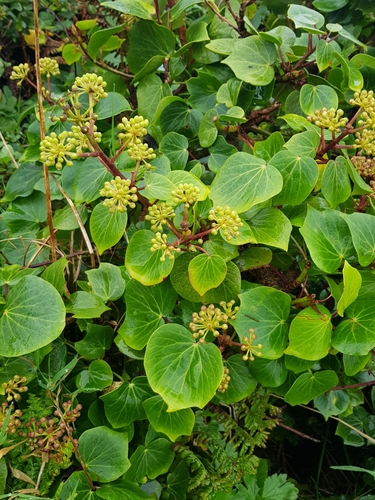
How to identify Hedera azorica Carrière

Hedera azorica Carrière

Hedera azorica Carrière

Hedera azorica (Azores ivy) is an evergreen climbing ivy endemic to the Azores I…

How to identify Heptapleurum taiwanianum (Nakai) G.M.Plunkett & Lowry

Heptapleurum taiwanianum (Nakai) G.M.Plunkett & Lowry

Heptapleurum taiwanianum (Nakai) G.M.Plunkett & Lowry

Heptapleurum taiwanianum is a Taiwanese evergreen ornamental flowering plant in …

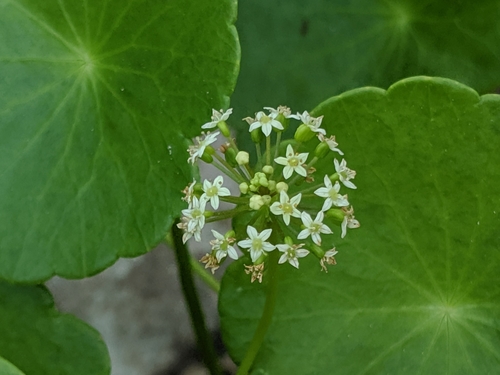
How to identify Hydrocotyle umbellata L.

Hydrocotyle umbellata L.

Hydrocotyle umbellata L.

Hydrocotyle umbellata L. is an aquatic creeping/floating succulent herb with pel…

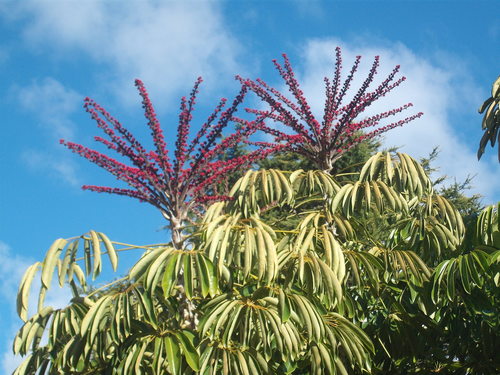
How to identify Heptapleurum actinophyllum (Endl.) Lowry & G.M.Plunkett

Heptapleurum actinophyllum (Endl.) Lowry & G.M.Plunkett

Heptapleurum actinophyllum (Endl.) Lowry & G.M.Plunkett

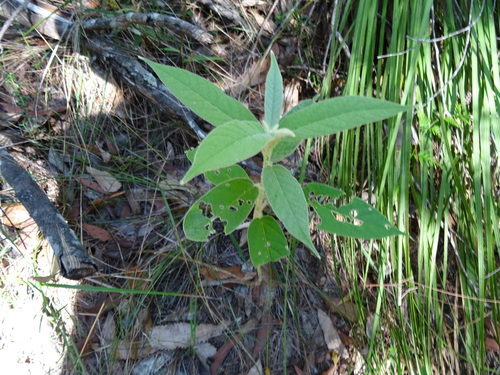
Heptapleurum actinophyllum is an evergreen rainforest tree grown ornamentally th…

How to identify Astrotricha floccosa DC.

Astrotricha floccosa DC.

Astrotricha floccosa DC.

Astrotricha floccosa, the flannel leaf, is an erect Australian shrub with woolly…

How to identify Heptapleurum ellipticum (Blume) Seem.

Heptapleurum ellipticum (Blume) Seem.

Heptapleurum ellipticum (Blume) Seem.

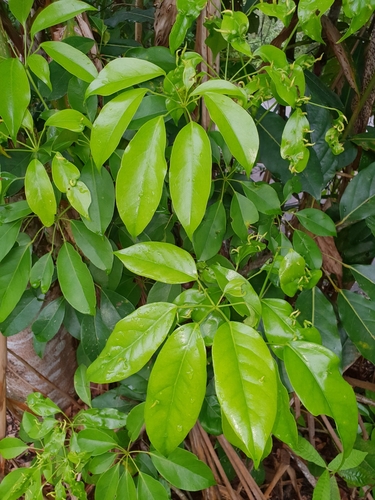
Heptapleurum ellipticum is a climbing vine or shrub used traditionally to treat …

How to identify Hydrocotyle vulgaris L.

Hydrocotyle vulgaris L.

Hydrocotyle vulgaris L.

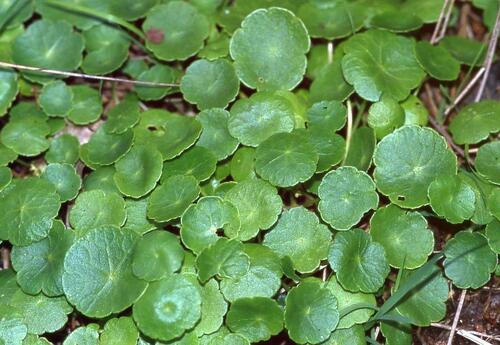
Hydrocotyle vulgaris L. is a small edible perennial marsh herb, grown in pond ed…

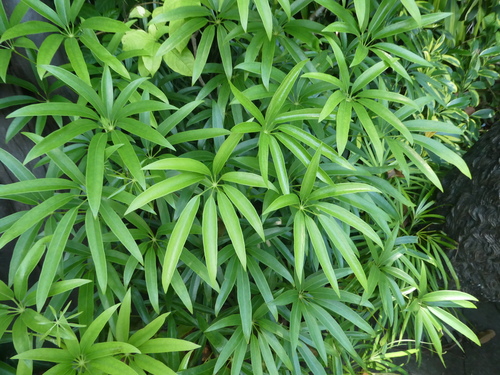
How to identify Polyscias fruticosa (L.) Harms

Polyscias fruticosa (L.) Harms

Polyscias fruticosa (L.) Harms

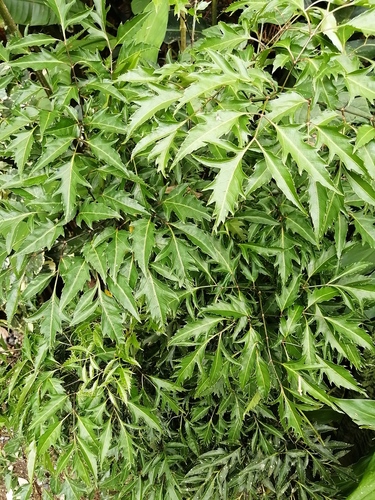
Polyscias fruticosa (Ming aralia) is a tropical shrub grown as an ornamental and…

How to identify Fatsia polycarpa Hayata

Fatsia polycarpa Hayata

Fatsia polycarpa Hayata

Fatsia polycarpa is an evergreen endemic Taiwanese flowering shrub cultivated as…

How to identify Kalopanax septemlobus (Thunb.) Koidz.

Kalopanax septemlobus (Thunb.) Koidz.

Kalopanax septemlobus (Thunb.) Koidz.

Kalopanax septemlobus is a hardy deciduous tree grown ornamentally, eaten as a v…

Browse all 132 Araliaceae species →

Frequently Asked Questions

How do you identify Araliaceae?

Araliaceae plants belong to the Apiales order in the Plantae kingdom. It bears compound leaves that are made up of many leaflets, which are themselves finely divided, creating the plant’s distinctive appearance. For instant identification, use the iNature app — AI-powered and works offline.

What are the key characteristics of Araliaceae?

Araliaceae is classified in the order Apiales, class Magnoliopsida, phylum Tracheophyta. This two-toned foliage gives the genus its name Polyscias, which means "many-shaded"—a common feature of foliage across other species in this genus.

⚠️ Are any Araliaceae species poisonous?

Yes, some Araliaceae species are toxic or poisonous. Always exercise caution with unknown specimens. View poisonous Araliaceae species or browse the full poisonous species guide.

Sources: GBIF, iNaturalist, Wikipedia · Disclaimer

Start Exploring Nature Today

Download iNature for free. 10 identifications on us. No account needed. No credit card required.

Download Free on App Store