About Zuccagnia punctata Cav.
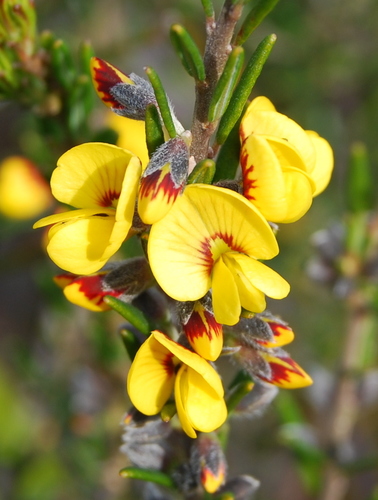
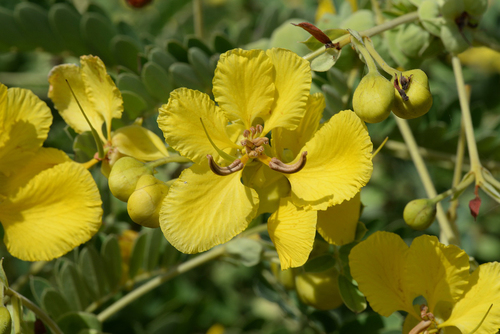
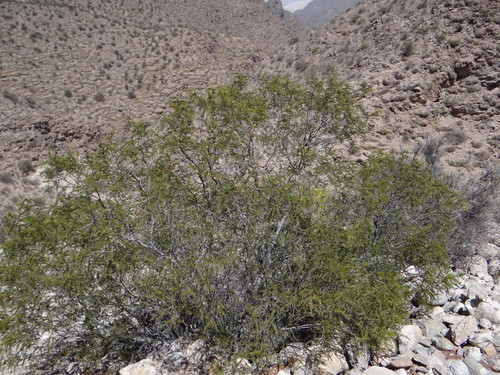
Zuccagnia punctata Cav. is a flowering plant species that belongs to the Fabaceae family. It is the only species in the monotypic genus Zuccagnia. This species is classified within the tribe Caesalpinieae of the subfamily Caesalpinioideae. Mature plants reach an approximate height of 5 meters. They produce small leaflets that have clearly visible punctate glands, yellow 5-merous flowers, and leathery dehiscent seed pods covered in red hairs. Each pod holds exactly one seed. This plant is native exclusively to central Argentina and Chile, where it grows in treeless, scrubby habitats at elevations up to 2,700 meters (8,858 feet) above sea level. The genus Zuccagnia was named to honor Attilio Zuccagni, an Italian botanist and teacher who lived from 1754 to 1807 and served as director of the Natural History Museum of the University of Florence in Florence, Italy. The specific epithet punctata is a Latin term meaning "spotty", which refers to the spotted appearance of the plant's leaf surface. The species was formally published in 1799 by Antonio José Cavanilles in volume 5 of Icones, on page 2.