About Zoysia matrella (L.) Merr.
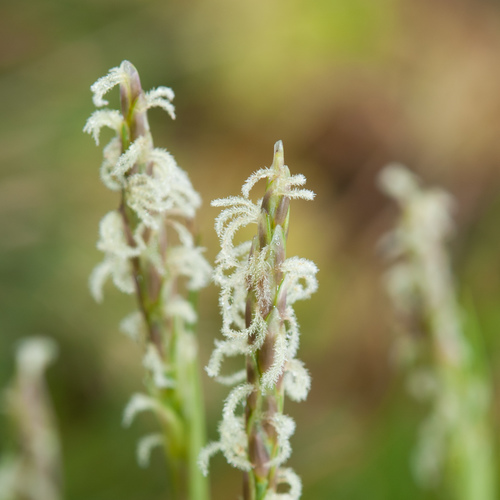
Zoysia matrella (L.) Merr. forms extensive, velvety green mats, and spreads vigorously via stolons, or occasionally rhizomes, once established. It grows at low elevations and prefers sandy soils where other grasses struggle to establish. Its stems are slender, prostrate, and measure 5 to 25 cm in length. Leaves grow alternately at 1.5 to 3 cm intervals along the stem; they are slender, 2 to 10 cm long, and 1 to 3 mm broad. Its flowers are greenish, borne on erect racemes 6 to 35 mm long, with a single 2 to 3.5 mm flower per spikelet. Some authors recognize two varieties: Zoysia matrella var. matrella, and Zoysia matrella var. pacifica Goudswaard, which has the synonym Zoysia tenuifolia. This species, commonly called Manila grass, is cultivated as an ornamental grass. It is used for turf on golf courses across Asia, Europe, and the Americas, grown as a lawn grass in the United States especially in the South, and planted for grazing livestock under trees on tropical coconut plantations. In addition to growing successfully on sandy soils, it tolerates high salinity, making it ideal for erosion control and coastal lawns. The existence of many common names reflects both its widespread presence in these regions and its value as a cultivated grass used across diverse areas. It is naturalized in many locations, including Hawaii, and can become weedy, which is common to many plant species with desirable horticultural traits. The 1889 publication The Useful Native Plants of Australia notes that this species is a grass of considerable value on coastal swamps and dry flats near the sea. According to Kirk, it sometimes forms a compact turf on dry land, producing a large amount of succulent herbage suitable for horses, cattle, and sheep. If bulkier grasses can grow in these locations, however, its value is comparatively low, because its close-growing habit chokes out all other plant species. It is clearly much preferred by livestock, and is worthy of introduction to coastal sand-hill districts or inland saline soils; it would form a valuable sward covering wet flats. It is easiest to propagate from roots, as its closely matted, wiry fibers form coherent turf masses that can be easily transported long distances in fragments without damage.