About Zizula hylax (Fabricius, 1775)
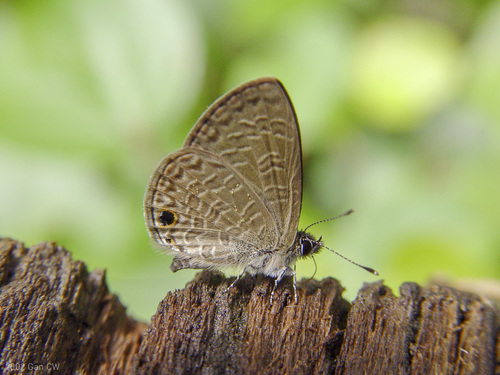
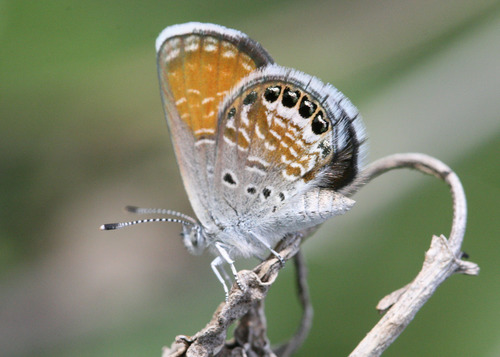
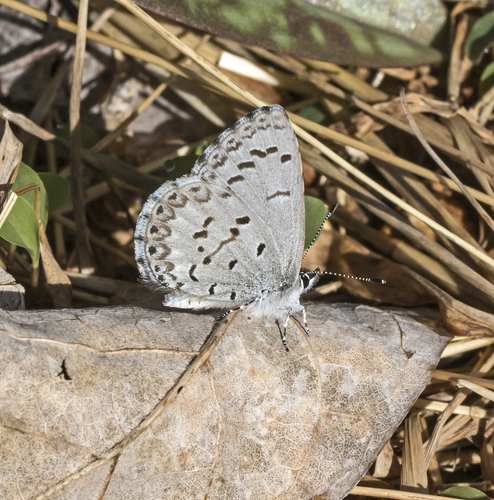
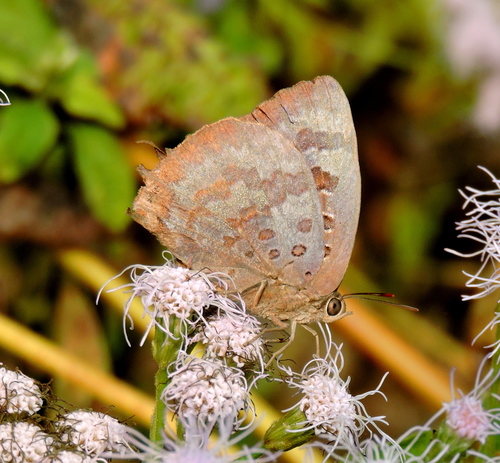
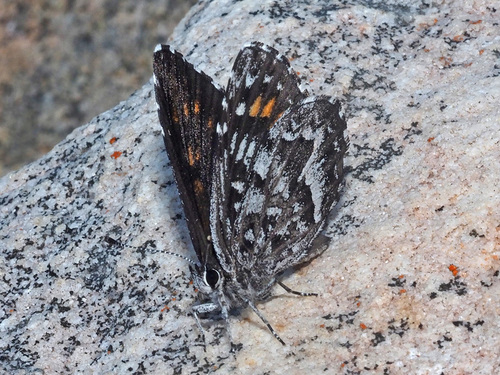
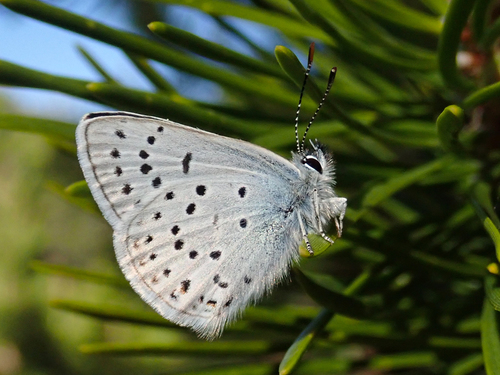
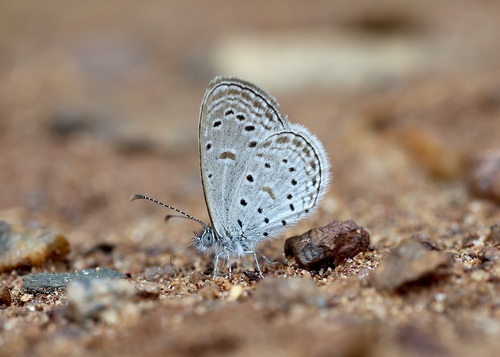
This species is Zizula hylax (Fabricius, 1775), commonly called the tiny grass blue. For males, the upperside of the wings is dull violet blue, which shifts to a brighter violet tint in certain lighting. On the forewing, the costa has a very narrow dull brown border, while the termen has a much broader dull brown border. In most specimens, this terminal edging narrows from the apex to the tornus, and a darker brown anteciliary line runs along its outer edge. The forewing cilia are brownish on the anterior section; on the posterior section, they are brownish at the base with white apical portions. The hindwing has a brighter ground color than the forewing, with much narrower brown edging along the costal and terminal margins, and this edging blends into the dark brown anteciliary line. The hindwing cilia are brown on their basal halves and white at the apex. The underside of the wings is grey. On the forewing, there is a dusky brown lunular line on the discocellulars, and two subcostal spots above the cell, one on each side of the discocellular lunule. There is a strongly curved discal series of five spots: the posterior three are somewhat lunular and placed obliquely en echelon, the spot above these is hook-shaped, and the anterior spot is round. Both the subcostal spots and the discal series spots are black, and each is narrowly encircled with white. Beyond these spots are inner and outer subterminal dusky lines, which are continuous on the anterior section and somewhat broken and macular on the posterior section. These are followed by a very conspicuous, slender, jet-black anteciliary line. The forewing cilia are greyish white, crossed by a medial transverse blackish-brown line. On the hindwing, there are small black spots encircled with white: a transverse subbasal series of three spots, followed by a highly curved series of eight spots that curves across the wing disc to the costa and runs along the costa toward the base. There is a short dusky lunular line on the discocellulars, matching that on the forewing. The terminal markings and cilia are similar to those on the forewing, but the broader outer subterminal line is more broken and macular than it is on the forewing. Male antennae are black, with shafts ringed in white. The head, thorax, and abdomen are dark brown, with a small amount of violet pubescence on the head and thorax. On the underside, the palpi, thorax, and abdomen are greyish white. For females, the upperside of the wings is glossy brown, with no violet tint at all. The darker brown anteciliary lines on both the forewings and hindwings are clearly marked. The underside is very similar to that of the male, with a slightly darker ground color, and markings that are slightly larger and more prominent. The antenna, head, thorax, and abdomen match the male, but the uppersides of the head, thorax, and abdomen have no trace of violet or blue. The tiny grass blue occurs in several different races across tropical and subtropical Africa, Asia, and Oceania. Confirmed locations include India, Japan, the Philippines, Singapore, Eswatini, and the north and east coasts as well as southern areas of Australia. The recorded food plants of Zizula hylax are various members of the plant family Acanthaceae, with the specifically noted species being Hygrophila auriculata and Phaulopsis dorsiflora.