About Ziziphus mucronata Willd.
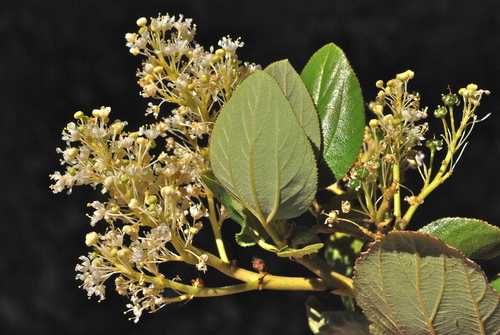
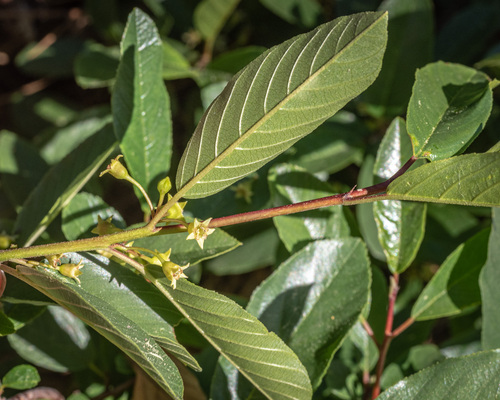
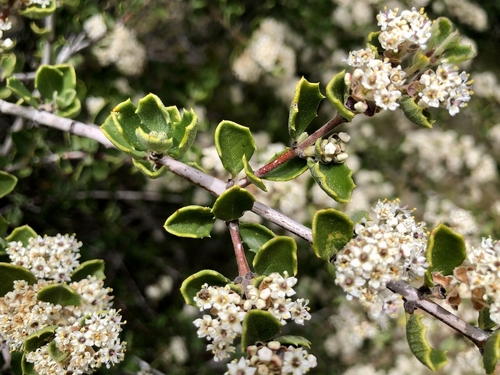
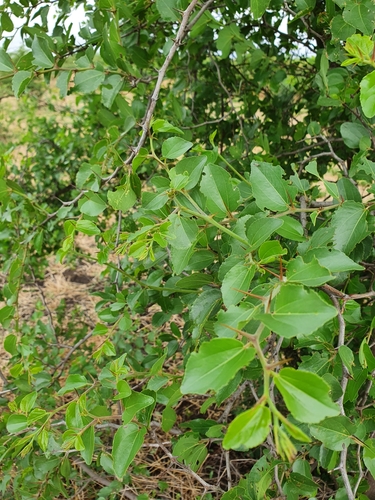
Ziziphus mucronata Willd., commonly known as the buffalo thorn, is a small to medium-sized tree. It typically grows to around 10 metres (33 ft) tall, and rarely reaches up to 17 metres (56 ft). Young stems have red-brown bark, while mature bark is roughly mottled grey and cracked into small rectangular blocks that expose stringy red underbark. As the tree ages, its bark becomes rough and dark grey or brown. This tree or shrub has distinctive zigzag branchlets, with paired thorns: one hooked and one straight. Some fully grown adult trees lose all their thorns. Fruit size varies, and in some regions it can grow larger than a grape, ripening to a deep brown-red colour. Greenish yellow flowers with a silvery sheen grow in dense bunches in leaf axils from October to April. Fruits develop from February to August. In terms of ecology, the small greenish yellow flowers produce abundant nectar, attract many insects, and can be used to produce honey. Multiple bird species feed on the brownish-red fruit, and both leaves and fruit are eaten by wild animals and domestic livestock. Giraffes and impala browse the tree’s leaves. It makes an effective perimeter barrier, because young shoots have many thorns that are hard to untangle, with one thorn pointing forward and the other backward. Some tribes believe this tree provides shelter against lightning, and it can be planted as a grave marker for a deceased chief. A preparation made from the tree’s roots is used as a painkiller and to treat dysentery. Bark and leaves are used to treat respiratory ailments and skin sepsis. A paste made from roots and leaves treats boils, sores and swelling. These medicinal effects may be linked to peptide alkaloids and antifungal compounds isolated from the bark and leaves. Branches are used to protect cattle enclosures (kraals), and are sometimes placed on the graves of deceased tribal members. The wood is used to make tools and as fuel. Leaves, bark and roots are used medicinally and in traditional magical practices for pain relief, respiratory complaints, skin infections, and particularly for chest and stomach disorders. Crushed leaves can be used to stop bleeding. Steam baths made from bark are used to purify the skin and improve complexion. In East Africa, roots are used to treat snake bites. Nutritionally, the leaves are edible and can be cooked like spinach. Seeds can be roasted and ground as a coffee substitute. The fruit is not considered very tasty, but it can be used to make beer. The Ovambo people distill the fruit to make ombike, a traditional liquor. Leaves and fruits are also a valuable source of forage for livestock.