About Zizania palustris L.
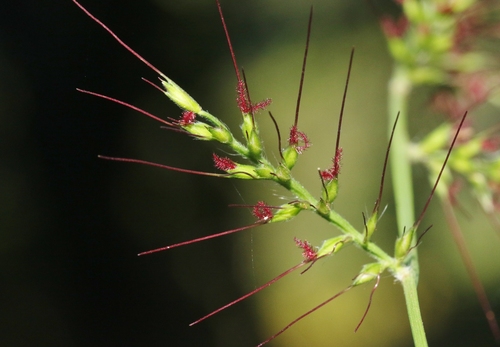
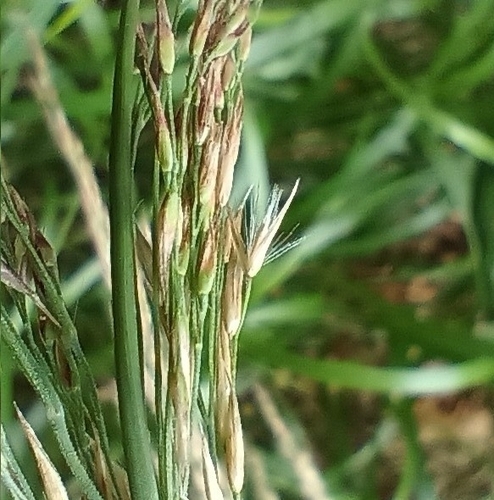
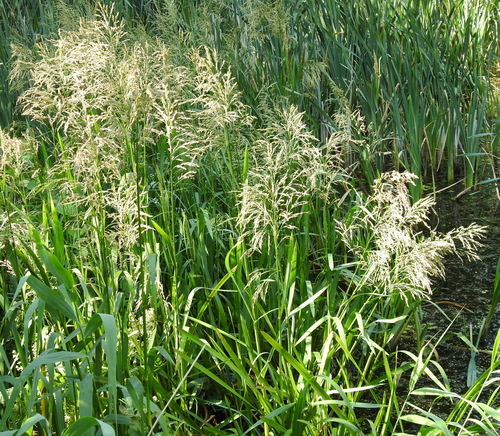
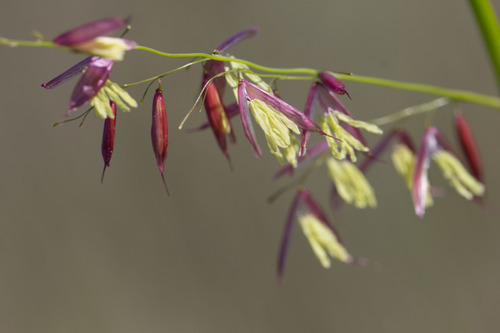
Zizania palustris L., commonly known as wild rice, also has multiple common names including manoomin, mnomen, psíŋ, Canada rice, Indian rice, and water oats. Wild rice refers to any of the four grass species that make up the genus Zizania, as well as the grain harvested from these plants. Historically and to the present day, the grain has been gathered and eaten in North America, and to a lesser extent in China, where the plant's stem is used as a vegetable. Wild rice and domesticated rice (Oryza sativa and Oryza glaberrima) belong to the same botanical tribe, Oryzeae. Wild rice grains have a chewy outer sheath, a tender inner grain, and a slightly vegetal taste. The plants grow in shallow water in small lakes and slow-flowing streams; often, only the flowering head of wild rice rises above the water surface. The grain is eaten by dabbling ducks and other aquatic wildlife. Wild rice seeds can become infected by the highly toxic fungus ergot, which is dangerous if consumed. Infected grains have pink or purplish blotches or fungal growths, which range from the size of a seed to several times larger. The species most commonly harvested for grain are the annual species Zizania palustris and Zizania aquatica. Though Zizania palustris is now domesticated and grown commercially, it is still often gathered from lakes in the traditional manner, especially by indigenous peoples in North America; Zizania aquatica was also widely used in the past. The interior of the stems and root shoots of wild rice is also edible. Native American harvesters typically collect wild rice by canoeing into a stand of plants, then bending the ripe grain heads with two small wooden poles or sticks called "knockers" or "flails" to thresh the seeds into the canoe. One person knocks the rice into the canoe while the other paddles slowly or uses a push pole. Harvesters do not beat the plants with the knockers; only a gentle brushing is needed to dislodge mature grain. Some seeds fall to the muddy bottom and germinate later in the year. The size of knockers and other harvesting details are regulated by state and tribal law. By Minnesota statute, knockers must be at most 1 inch (2.5 cm) in diameter, 30 inches (76 cm) long, and 1 pound (450 g) in weight. Several Native American cultures, such as the Ojibwe, consider wild rice a sacred part of their culture. The Ojibwe people call this plant ᒪᓅᒥᓐ manoomin, which translates to 'harvesting berry', and is commonly translated as 'good berry'. In 2018, the White Earth Nation of Ojibwe granted manoomin certain rights, sometimes compared to rights of nature or granting it legal personhood, including the right to exist and flourish; in August 2021, the Ojibwe filed a lawsuit on behalf of wild rice to stop the Enbridge Line 3 oil sands pipeline, which threatens the plant's habitat. Recorded tribes that historically harvested Zizania aquatica are the Dakota, Menominee, Meskwaki, Ojibwe, Cree, Omaha, Ponca, Thompson, and Ho-Chunk (Winnebago). Native peoples that utilized Zizania palustris are the Ojibwe, Ottawa/Odawa and Potawatomi. Preparation methods for wild rice included stewing the grains with venison stock and/or maple syrup, using it as stuffing for wild birds, and steaming it to make sweets such as puffed rice, or rice pudding sweetened with maple syrup. For these groups, the wild rice harvest is an important cultural and often economic event. The Omǣqnomenēwak tribe takes its name, as well as the name Omanoominii that neighboring Ojibwa use for the group, from this plant. Many places across Illinois, Indiana, Manitoba, Michigan, Minnesota, Ontario, Saskatchewan, and Wisconsin are named after wild rice, including Mahnomen, Minnesota, and Menomonie, Wisconsin; many lakes and streams bear names such as "Rice", "Wildrice", "Wild Rice", or "Zizania". Since the early 1900s, anthropologists have studied wild rice as a food source, often focusing on harvesting of this aquatic plant in the Lake Superior region by the Anishinaabe people, also known as the Chippewa, Ojibwa and Ojibwe. In 1901, the Smithsonian Institution's Bureau of American Ethnology published Albert Ernest Jenks' work The Wild Rice Gatherers in the Upper Great Lakes: A Study in American Primitive Economics. In addition to conducting fieldwork and interviewing members of various tribal communities, Jenks examined accounts from explorers, fur traders and government agents dating from the early 1600s to the late 1800s. He detailed an aboriginal economic activity that is absolutely unique, where no tool used came from outside of aboriginal invention and craft. His study further notes that wild rice was important during the fur-trading era, because the region would have been nearly inaccessible without wild rice available, and its ability to be stored for long periods of time. Wild rice remains socially and economically important for the Anishinaabe and other north woods tribal members in the present day, despite the availability of more easily accessible food sources.