About Zeta argillaceum (Linnaeus, 1758)
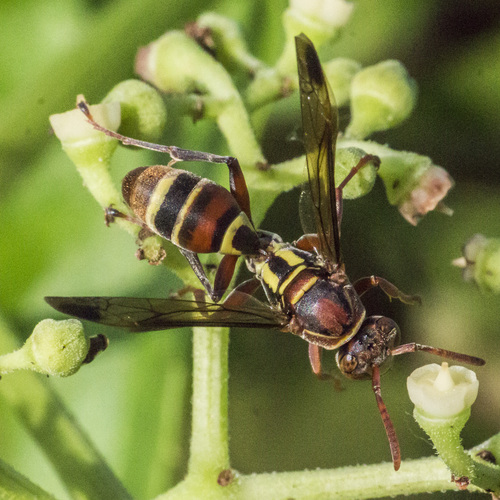
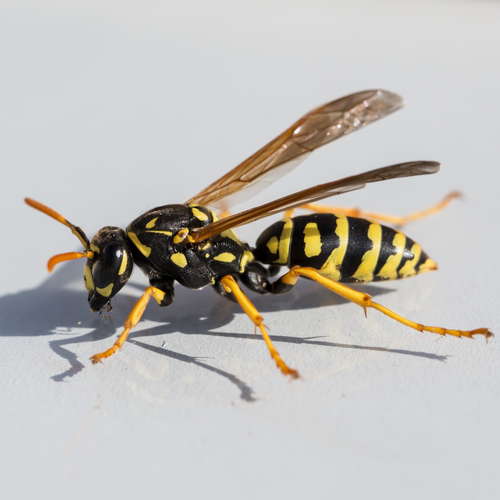
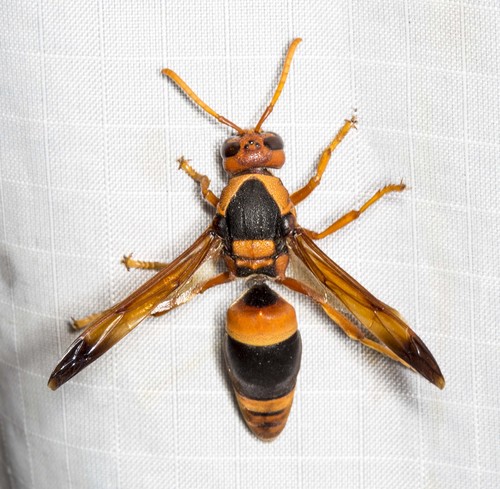
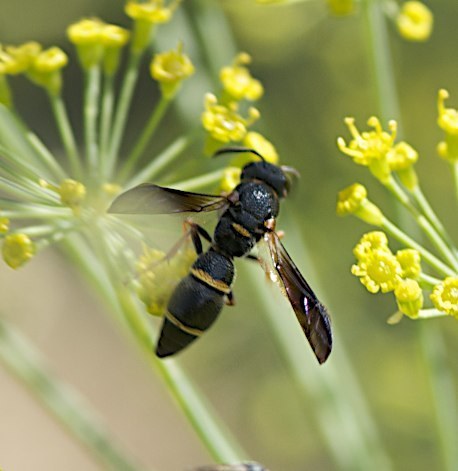
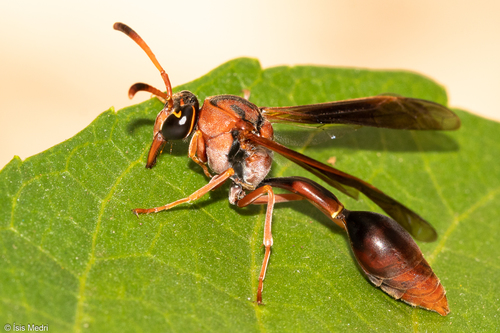
Zeta argillaceum is one of the most common potter wasp species found across South America. Its range extends as far north as Mexico and the southern United States, where it is believed to have been accidentally introduced. This wasp adapts readily to habitat changes, and its nests are a common sight in urban areas. Nests usually occur in small groups, attached to the walls of buildings. Each nest cell is roughly spherical, reaching up to 18 millimeters in diameter, with a single small entrance hole. The wasp lays one egg per cell. Adult wasps provision each cell with paralyzed living prey, most commonly geometrid moth larvae, to feed the wasp larva after it hatches. Zeta argillaceum only uses each nest once, but nests are frequently reused by other potter wasp species, including those from the genus Pachodynerus. This species is often attacked by parasitoids, such as the eulophid wasp Melittobia australica.