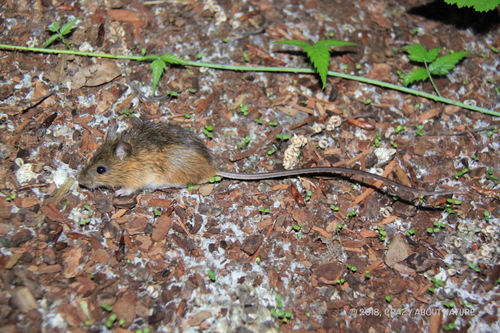
About Zapus trinotatus Rhoads, 1895
Species Naming and Body Size Distinction
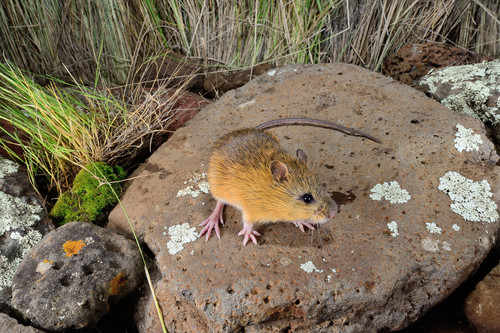
Pacific jumping mice (Zapus trinotatus Rhoads, 1895) can be distinguished from other members of their genus by their larger body size.
Dorsal and Ventral Coloration
They have a clear, distinct color difference between their back and underside.
Ear Fringe Distinguishing Feature
Compared specifically to the Western jumping mouse, another key distinguishing feature of Pacific jumping mice is that their ears are fringed with light brown fur, or fur that matches the color of their back.
General Habitat Preferences
These rodents prefer to live in moist habitats, and are most often found in riparian zones or meadows located near small streams.
Primary Diet and Vegetation Association
Their main diet is grass seeds, so they favor areas with thick vegetation, which provides both protection from predators and access to their primary food source.
Supplementary Food Sources
In addition to grass, Pacific jumping mice also eat fungi and insects.
Hibernation Preparation
Throughout most of autumn, these mice gain fat stores to prepare for winter hibernation, which they spend in small underground burrows.
Post-Hibernation Reproduction
After hibernation ends, a period that can last up to 8 months, they mate and produce a litter of four or more young.
Known Predators
Their known predators include snakes, coyotes, owls, and foxes.
Coastal and Wetland Habitats
Their preferred moist distribution areas include marshes with alder, salmonberry, and skunk-cabbage, as well as riparian alder ecosystems common in coastal redwood woodlands.
Northern Range Habitats
In more northern parts of their range, they live in dense woodlands, wet grassy areas, and alpine meadows of the Cascade Mountains in Washington and the Olympic Peninsula.
Additional Habitat Types
They can also be found in marshy thickets, woodland edges with weedy undergrowth and ferns, and open meadows.
Full Habitat Range
The full range of habitats used by Pacific jumping mice includes streams, brushlands, lakes, woodlands, forests, fields, swamps, meadows, shrub areas, bogs, marshes, and the banks of rivers and ponds.
Geographic Distribution
Their overall geographic range covers the entire Pacific Northwest of the United States, California, and western Canada.
Sexual Maturity Timing
Pacific jumping mice reach sexual maturity the year after they are born.
Breeding Period
Males become sexually active in May or June, which is when females are also fertile.
Gestation and Birth Period
Their gestation period lasts approximately 18 to 23 days, and females give birth in July or August.
Litter Size and Weaning
Each litter contains between 4 and 8 young, which are weaned after 4 weeks.
Newborn Characteristics
Newborn Pacific jumping mice are pink and hairless, weigh 0.7 to 0.9 grams at birth, and are born with their eyes closed.
Juvenile Development and Independence
They depend entirely on their mother to survive their first few weeks of life, and become fully independent after about one month.