About Zanthoxylum capense (Thunb.) Harv.
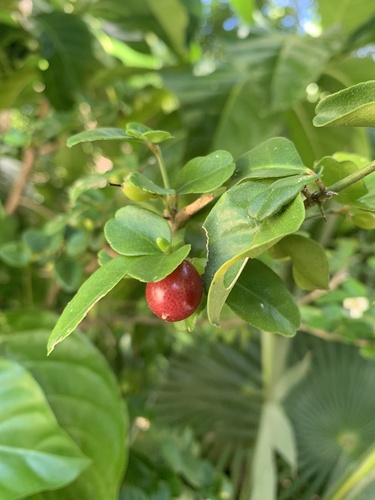
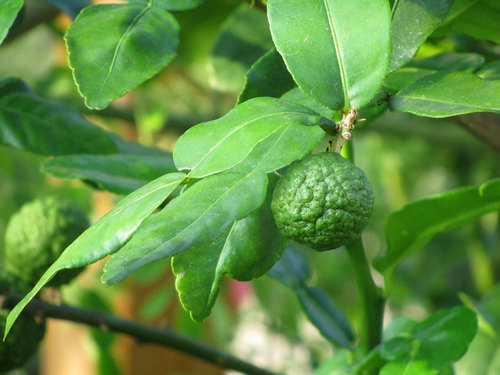
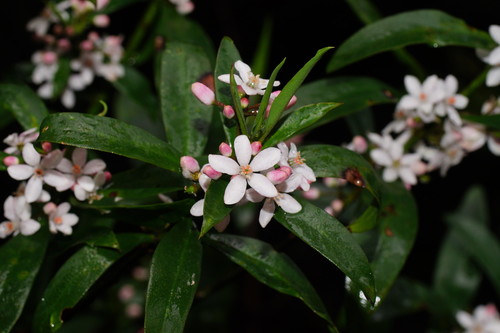
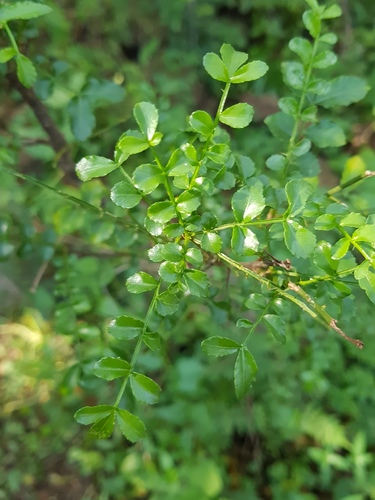
Zanthoxylum capense, commonly called small knobwood, is a plant species belonging to the family Rutaceae. This species grows in eastern areas of southern Africa, ranging from the area around Knysna, Western Cape, to the Zimbabwean granite shield and coastal Mozambique. It grows successfully at a wide variety of altitudes, stretching from highveld elevations down to coastal elevations, though it is most abundant in dry thickets or on rocky slopes and outcrops. Its trunks are bare except for many conical knobs, each of which ends in a spine. Clusters of compound leaves grow at the tips of its branches. Both its leaves and fruit have a distinct, noticeable citrus scent. The fruit are round capsules around 5 mm in diameter, and their entire surface is covered in glands. When the fruit ripens, it splits open to release a single, black, oil-rich seed. Zanthoxylum capense acts as a host plant for three species of swallowtail butterflies: the Citrus swallowtail, White-banded swallowtail, and Emperor swallowtail. Two similar related species are Z. davyi, a larger species restricted mostly to mist belt regions, and Z. leprieurii, which grows in the sand forests of subtropical lowlands.