About Zanclognatha dentata Wagner & McCabe, 2011
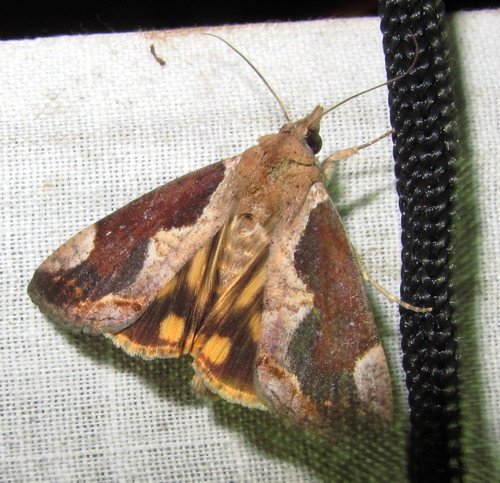
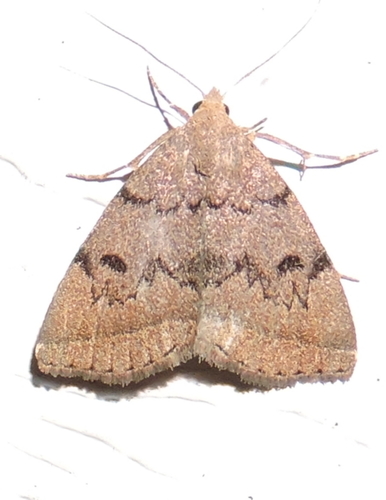
Zanclognatha dentata, described by Wagner & McCabe in 2011, has forewings measuring 10.5–13 millimetres (0.41–0.51 in) in length. The forewings are subtriangular, range in color from pale to chocolate brown, and are usually well marked. The antemedial line is toothed or scalloped, and the discal spot is usually well developed. The postmedial line is toothed, and thickens where it joins the costa. The subterminal line is straight, and has a sparse outer edge lined with pale scales. The hindwings are brown, with a weak discal spot, and postmedial and subterminal lines that develop to varying degrees.
Most of this species' range supports one generation per year, with a single mid-summer flight period running from the end of June through early August. Records from early September in western North Carolina and northern Georgia suggest the presence of a small second brood in that area. Adults have been collected at lights and sugar bait across a wide variety of habitats, including bogs, swamps, marshes, Atlantic white cedar swamps, swales, other wetlands, mesic hardwood forests, Appalachian cove forests, multiple types of boreal conifer forest, and pitch pine/scrub oak barrens. Larvae have been documented feeding on dead, browned, lightly moistened leaves of Abies balsamea, Tsuga canadensis, Pseudotsuga menziesii, Hamamelis virginiana and Lonicera morrowii. The larvae are mottled brown, red, and yellow, with a distinct pale subdorsal spot.