About Zamenis situla (Linnaeus, 1758)
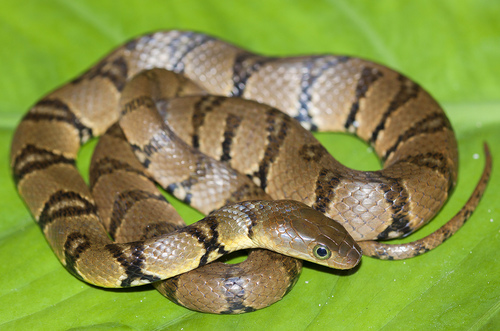
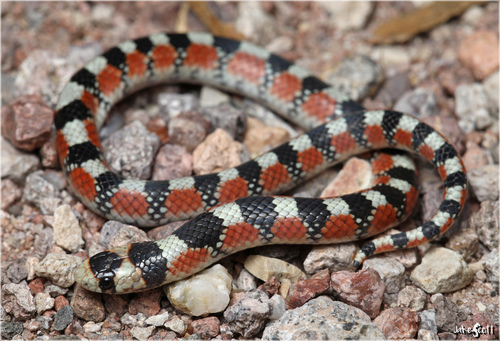
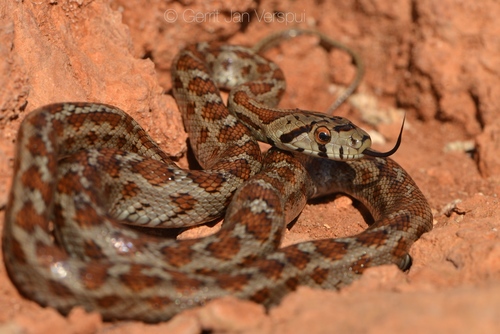
Zamenis situla (Linnaeus, 1758), commonly called the European ratsnake or leopard snake, has a gray or tan base body color. It has a dorsal row of transverse reddish or brown blotches edged with black. Along each side of the body, there is a row of smaller black spots that alternate in position with the dorsal blotches. This species has a distinct Y-shaped dark marking on the occiput and nape. It also has a crescent-shaped black band that runs between the two eyes across the prefrontal scales, and a second black band that extends diagonally from the postocular scales to the corner of the mouth. Its belly is either white with a black checkered pattern, or almost entirely black. Dorsal scales are arranged in 25 or 27 rows and are smooth. Adult individuals can reach a total length of 90 cm (35+1⁄2 inches), with a tail length of 16 cm (6+1⁄4 inches). This snake is found across Albania, Bosnia and Herzegovina, Bulgaria, Croatia, Greece, Italy, North Macedonia, Malta, Montenegro, Turkey, and Ukraine; it may also be present in Cyprus. It inhabits Mediterranean-type shrubby vegetation, pastureland, plantations, and rural gardens, and can be found at elevations up to 1,600 m (5,200 ft) above sea level. It is attracted to human-altered (anthropogenic) habitats including barns, gardens, and even rubbish dumps, most likely drawn by the rodent populations found in these areas. Because of this association, in Greek this species is called the "house snake". Zamenis situla is oviparous, and produces clutches of between two and eight eggs.