About Yucca pallida McKelvey
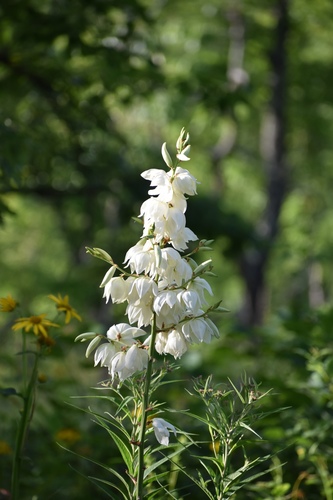
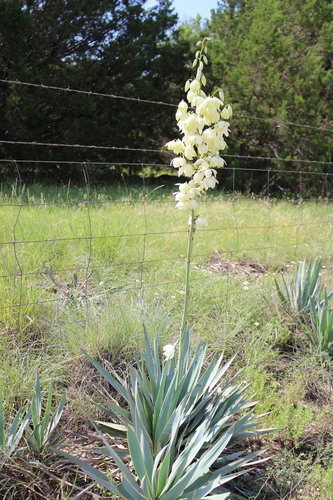
Yucca pallida, commonly called pale yucca, is a yucca species native to Northern Mexico and parts of the blackland prairies of northern and central Texas. It is most notable for its light-colored leaves, which range from pale blue-gray to sage-green. This species forms ground-level rosettes with little to no trunk. The average rosette is 20–50 cm tall and 30–80 cm in diameter. Its leaves are 15–40 cm long and 2–3 cm wide, reaching maximum width around their midpoint. Leaves are generally flat, with possible slight waviness or rolling along the edges, and end in a yellow to brown terminal spine. The flowering structure is a 1–2.5 m tall panicle that can hold up to 100 bell-shaped flowers. Each flower is 5–7 cm long, and ranges in color from light green to cream. Yucca pallida is known to hybridize with Yucca rupicola Scheele, a similar-looking species that has more twisted and curved leaves. While it is not common in horticulture, its distinctive leaf color, compact size, and moderate hardiness (surviving temperatures as low as −18 °C or 0 °F) make it a good gardening alternative to other yucca species.