About Xysticus cristatus (Clerck, 1757)
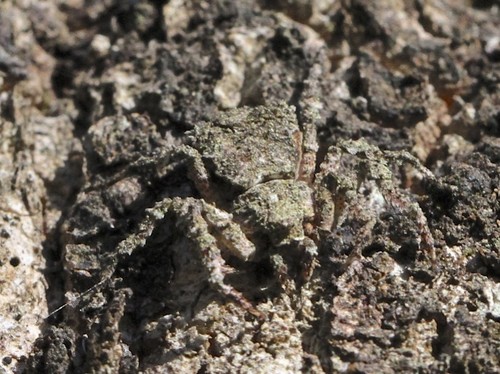
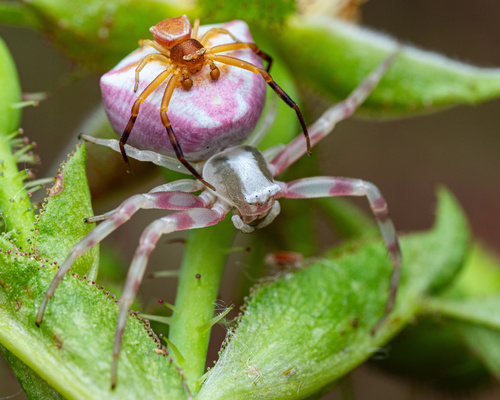
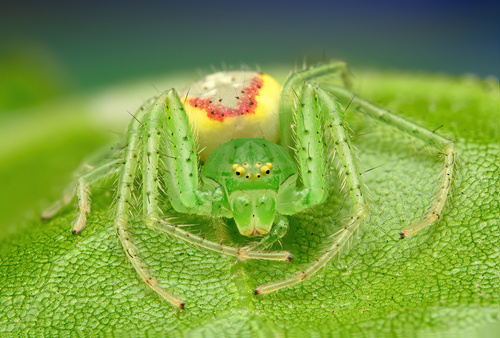
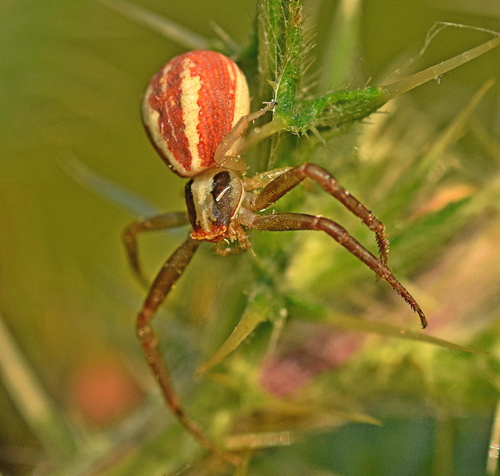
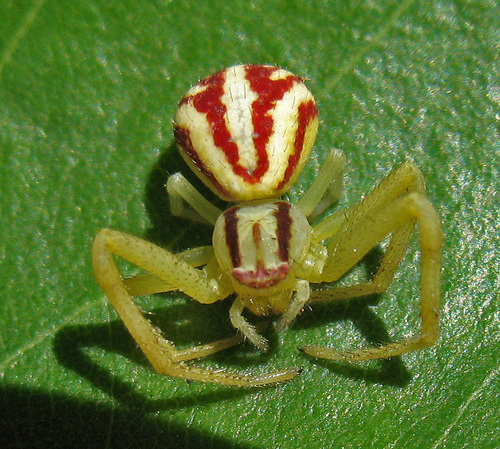
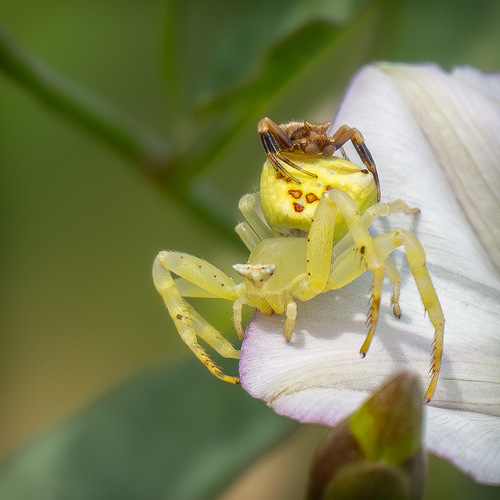
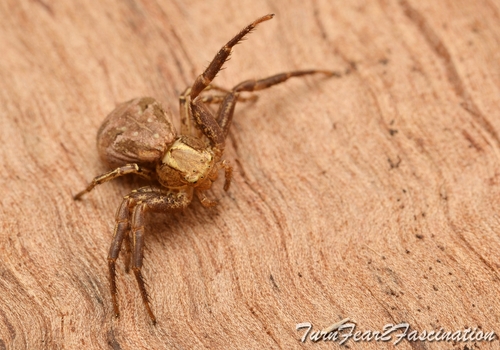
Adult Xysticus cristatus reach an approximate body length of 6–8 mm (0.24–0.31 in) for females, while smaller males reach approximately 3–5 mm (0.12–0.20 in). Body colour ranges from light cream and dark brown to greyish; males are much darker and have contrasting patterns. In both sexes, the carapace has a broad whitish median band that contains a brown triangle facing toward the back, ending in a sharp, black apical spot. The dorsum (upper surface) of the opisthosoma features a dark leaf-shaped pattern with white edges, plus light transverse stripes on the left and right. This cryptic colouration lets this spider blend into its typical environment of dried leaves. It is commonly called a crab spider because it sometimes moves sideways in a crab-like manner. Xysticus cristatus is usually found in low vegetation, often on the ground. It is intolerant of shade and avoids woodland and closed-canopy habitats, but can be found in almost every other habitat type. This species has a Palearctic native distribution, ranging from all of Europe (including Iceland) to South Siberia, Turkey, the Caucasus, Russia, Kazakhstan, Iran, Central Asia, China, Korea, and Japan. It has been introduced to Canada and the United States.