About Xylocopa nasalis Westwood, 1842
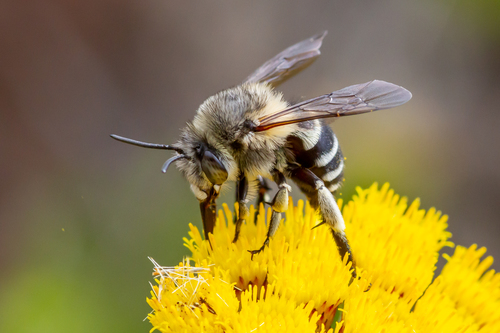
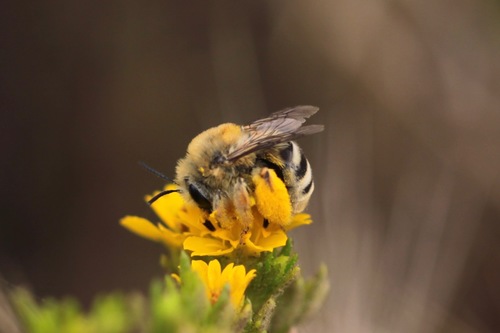
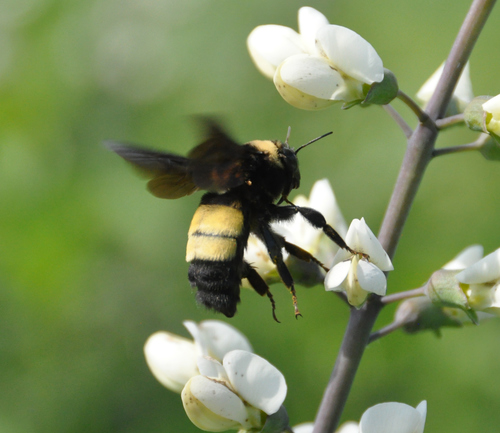
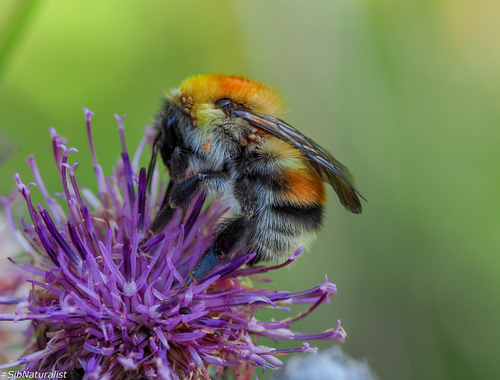
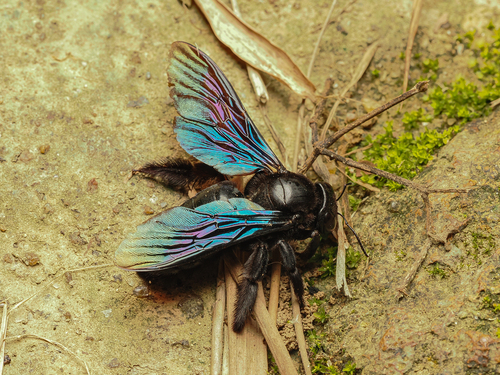
Description and identification: Xylocopa nasalis is a species of carpenter bee easily mistaken for bumble bees. These bees are relatively large, with sturdy, glossy black bodies. Their thorax can measure longer than 5 mm, and some individuals have yellow markings on the head. On the front wing, the marginal cell is thin and elongated. The apex, the anterior corner of the wing, angles away from the costa, which is the leading edge of the wing. The front wing also has small stigma cells. When the mandibles are closed, short mandibles cover the bee’s labral flap. X. nasalis has compound eyes made up of thousands of individual photoreceptor units. The image this bee species perceives forms from the systematic combination of input from all these photoreceptors. Compound eyes like these allow vision over a wide field of view and can detect rapid movement. The eggs of X. nasalis are very large relative to the size of adult females, and are among the largest known eggs of any insect. Distribution and habitat: X. nasalis is a common carpenter bee that occurs in Southeast Asia, where it is found mostly in tropical and subtropical regions including Thailand, Vietnam, West Malaysia, and Singapore.