About Xestia ditrapezium (Denis & Schiffermüller), 1775
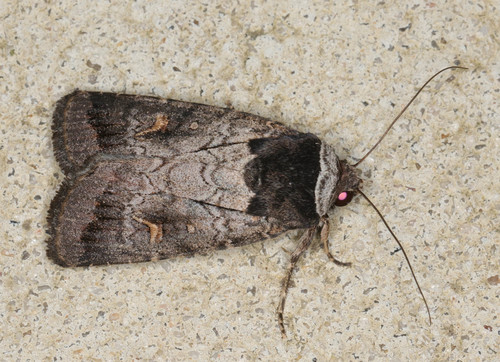
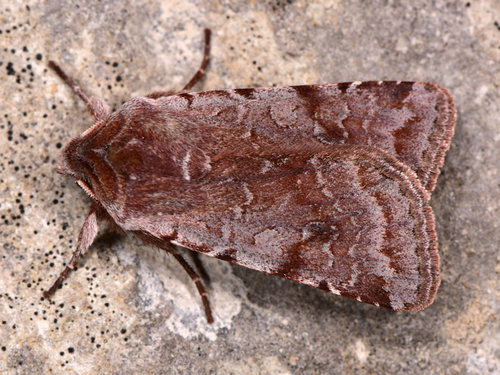
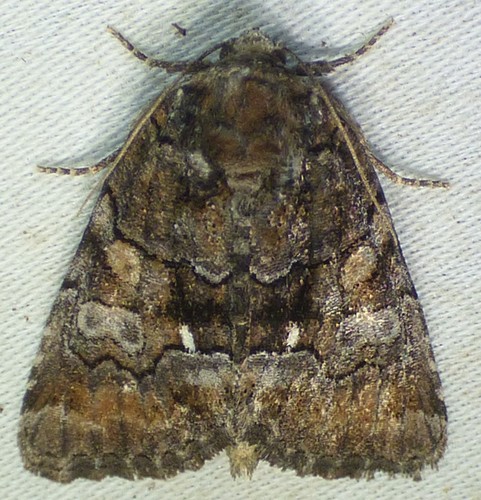
Xestia ditrapezium, commonly called the triple-spotted clay, is a moth species belonging to the Noctuidae family. It can be found across most of Europe, northern Turkey, northern Iran, Transcaucasia, the Caucasus, central Asia, and the area extending from the Altai region to Ussuri, Amur, the Kuril Islands, northern Mongolia, Tibet, China, Korea, and Japan. This species has a wingspan of 35 to 47 mm. Its forewing is darker than that of Xestia triangulum Hufn., and is a smooth vinous brown. Its dark markings are less black, and its hindwing has a distinct yellowish tinge. There are several key differences between X. ditrapezium and X. triangulum. On average, X. ditrapezium has narrower or longer forewings. Its forewing ground color is usually darker, ranging from red to violet-brown, and its hindwing color is a lighter shade. The hindwings are noticeably lighter than the forewings, and the collar has almost no contrast, appearing nearly monochrome. On average, X. triangulum has wider or shorter forewings. Its forewing ground color is usually lighter, ranging from ochre to tawny or grayish brown. Its hindwings are typically a slightly darker grey, and are around the same shade of light as the forewings. The lower section of X. triangulum’s neck collar is grey, and is separated from the dark upper section by a light line.