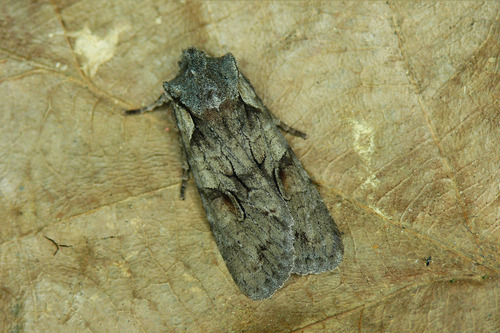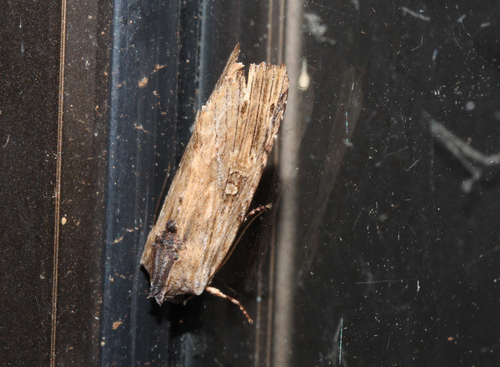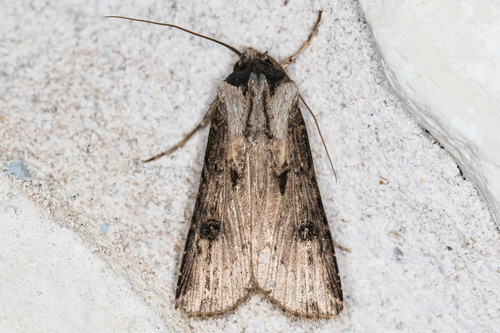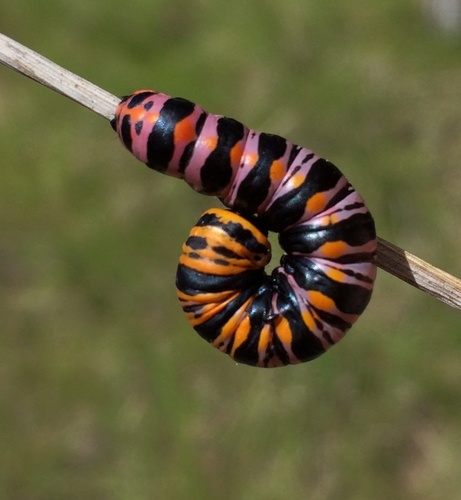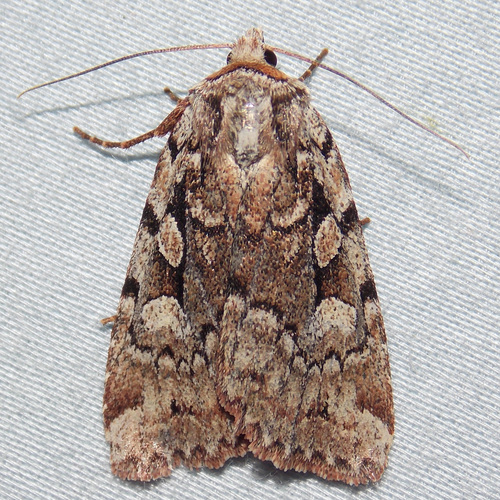
Xestia badicollis Grote, 1873 is a animal in the Noctuidae family, order Lepidoptera, kingdom Animalia. Not known to be toxic.

Photo of Xestia badicollis Grote, 1873 (Xestia badicollis Grote, 1873)
🦋 Animalia

Xestia badicollis Grote, 1873

Xestia badicollis Grote, 1873

Xestia badicollis, the northern variable dart, is a Noctuidae moth found across eastern North America.

Family
Genus
Xestia
Order
Lepidoptera
Class
Insecta

About Xestia badicollis Grote, 1873

Xestia badicollis is a moth species in the Noctuidae family. It is commonly called the northern variable dart or northern conifer dart, and its larval stage is known as the white pine cutworm. This species was first described by Augustus Radcliffe Grote in 1873. It is found in North America, ranging from Nova Scotia to North Carolina, and west to Missouri and Ontario. It belongs to the elimata species group. Within this group, three species — Xestia praevia, Xestia elimata, and Xestia badicollis — show no significant differences in their genitalia or DNA, which suggests they may actually be a single species. The wingspan of Xestia badicollis measures 32 to 45 mm. Adult moths fly from July to October, with the timing depending on their location. This species has one generation per year. Its larvae feed primarily on eastern white pine, and less frequently on balsam fir, eastern hemlock, eastern larch, white spruce, and other conifers.
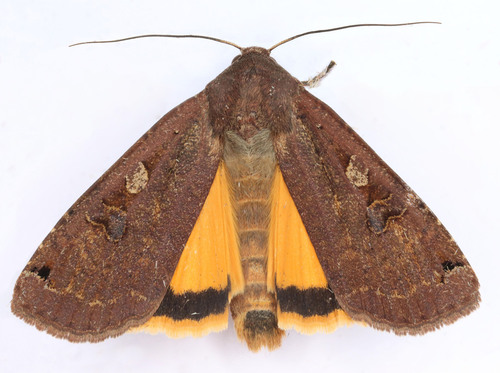
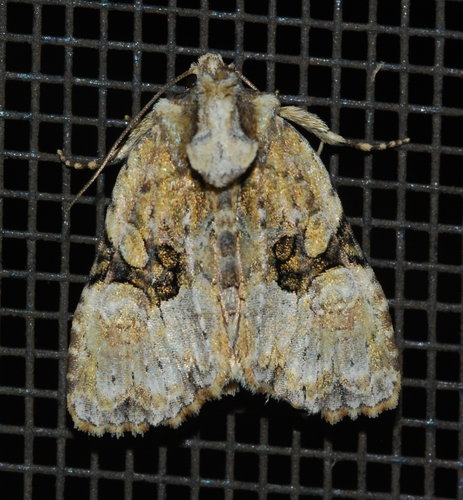
Photo: (c) Fyn Kynd, some rights reserved (CC BY-SA), uploaded by Fyn Kynd · cc-by-sa

Taxonomy

Animalia › Arthropoda › Insecta › Lepidoptera › Noctuidae › Xestia

More from Noctuidae

Sources: GBIF, iNaturalist, Wikipedia, NCBI Taxonomy · Disclaimer

Identify Xestia badicollis Grote, 1873 instantly — even offline

iNature uses on-device AI to identify plants, animals, fungi and more. No internet needed.

Download iNature — Free

Start Exploring Nature Today

Download iNature for free. 10 identifications on us. No account needed. No credit card required.

Download Free on App Store