About Xerolycosa nemoralis (Westring, 1861)
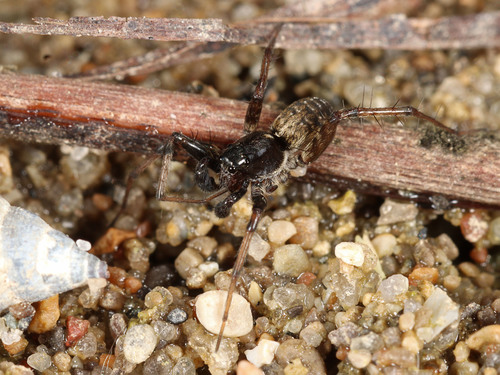
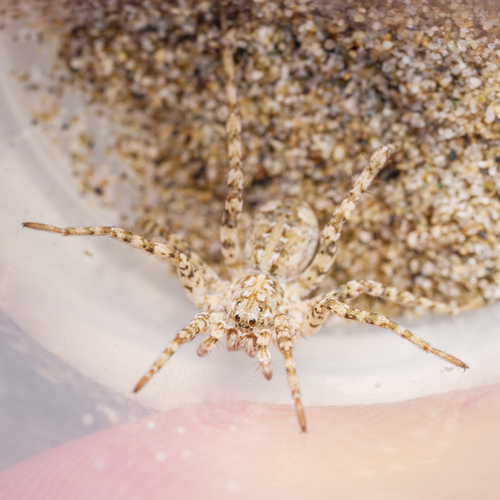
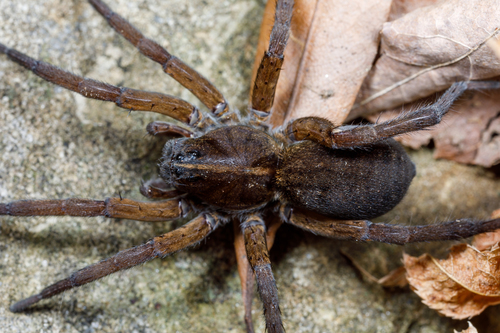
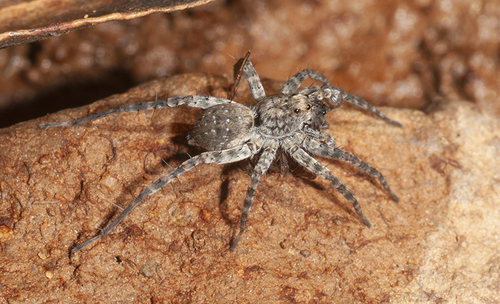
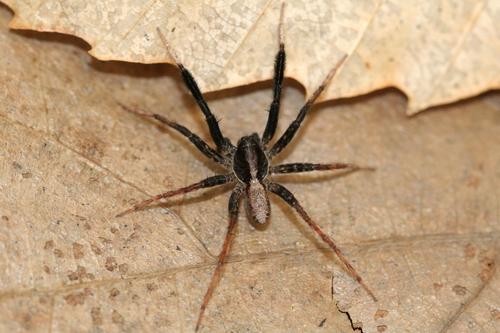
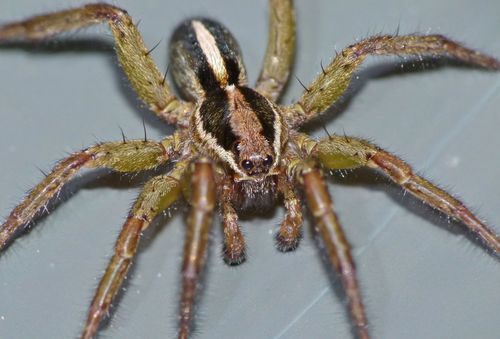
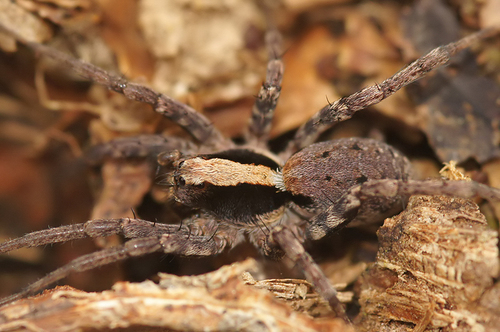
Xerolycosa nemoralis (Westring, 1861) is a species of spider. Males of this species have swollen palpal bulbs that are as long as they are wide at the base, and grooves on the genital shield that are wider than they are long. The prosoma is brown, marked with a bright median stripe that has parallel margins covered in white hair. The sternum is dark brown, and the legs are a uniform dark brown, almost black. The opisthosoma is dark brown, with a slightly darker cardiac spot. Mature males measure 4.5–5.7 millimetres (0.18–0.22 in) in total body length, while females are larger, ranging from 5–7.5 mm (0.20–0.30 in) long. This spider inhabits dry litter and bark in sunny coppiced areas or woodland clearings, stony chalk grassland with a short sward, burnt heathland up to approximately four years after burning, or bare patches of ground in older heathland. X. nemoralis can occur in large numbers in sparsely vegetated man-made sites such as railway ballast, where it is found almost to the exclusion of other wolf spiders. In mainland Europe, it occurs on the sunny edges of coniferous forest at elevations up to 1800 m above sea level. Female Xerolycosa nemoralis excavate shallow depressions in soil. In Britain, X. nemoralis is active from late March through the summer to mid-September. Males emerge earlier than females, and the last active specimens found in autumn are always females. X. nemoralis is widely distributed across the Palearctic realm. Its range extends across Europe from south eastern England east to Russia, continues across the Palearctic to Kamchatka and Honshu, and reaches as far south as Azerbaijan.