About Xerocomus subtomentosus (L.) Quél.
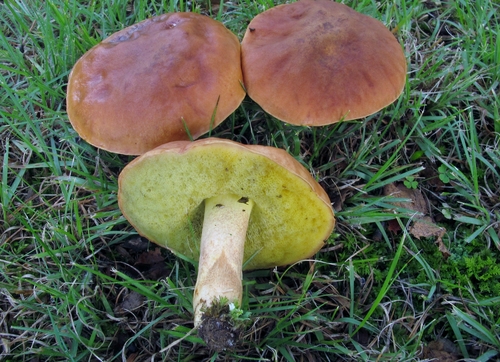
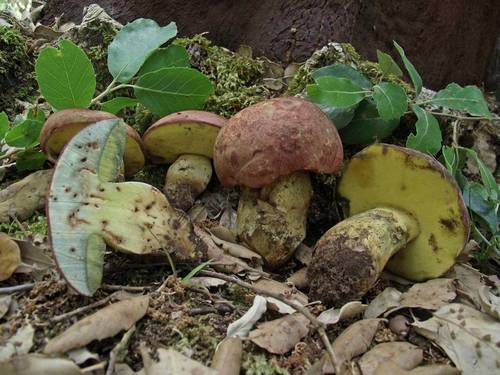
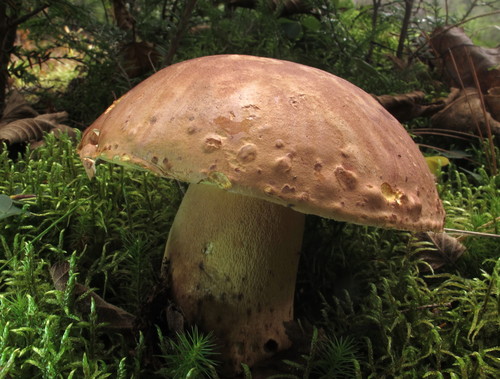
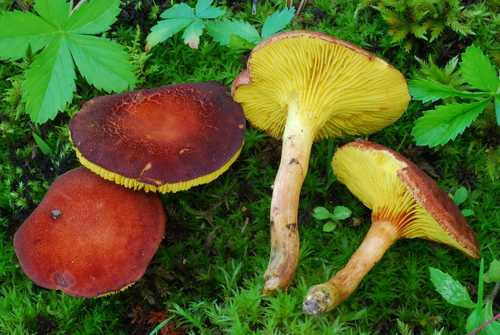
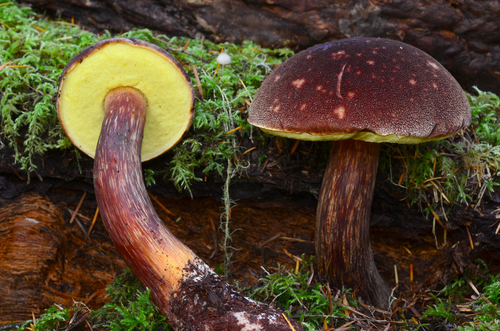
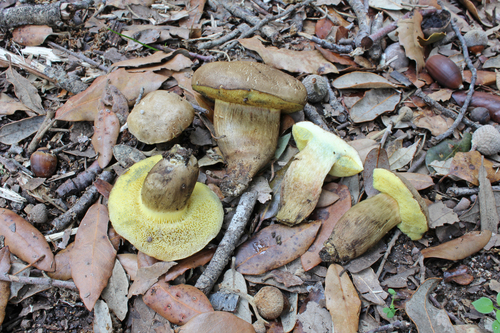
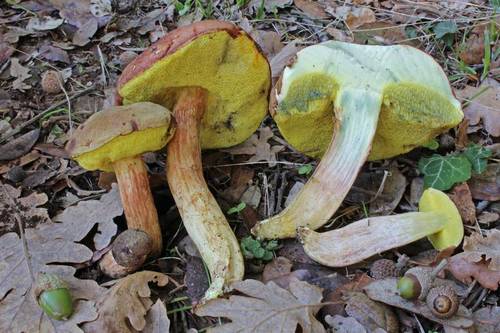
Xerocomus subtomentosus (L.) Quél. has a pale olive or tan cap that starts convex before becoming flattened. The cap measures 4 to 10 cm (1+1⁄2 to 4 in) in diameter, and can exceptionally reach up to 20 cm (7+3⁄4 in) across. Its surface is velvety and tannish, and occasionally develops slits that reveal yellow flesh underneath. The cap skin is very difficult to remove. The pores located under the cap are yellow, and may bruise blue or green before fading somewhat. The stipe has no ring, and grows up to 12 cm (4+3⁄4 in) long and 1–2 cm (1⁄2–3⁄4 in) wide. The spore print of this species is olive-brown. When a drop of ammonium hydroxide is applied to the cap, it instantly produces a mahogany red reaction; this feature distinguishes Xerocomus subtomentosus from some other similar species in the genus. Its flesh is white, with very little distinct taste or smell. Xerocomus subtomentosus fruits in autumn, and grows in forests across Eurasia, North America, and Australia. It forms mycorrhizal relationships with a wide variety of hardwood and conifer trees. It has also been recorded growing under cork oak (Quercus suber) near Tangier, Morocco. It associates with bilberry and other evergreen shrubs in the heath family Ericaceae. In subarctic areas of western Greenland, this species is common, where it grows in association with white birch (Betula pubescens).