About Xenops genibarbis Illiger, 1811
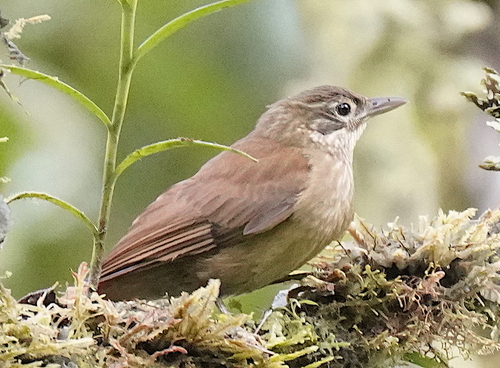
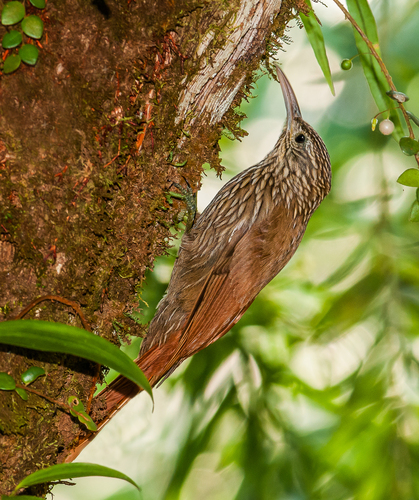
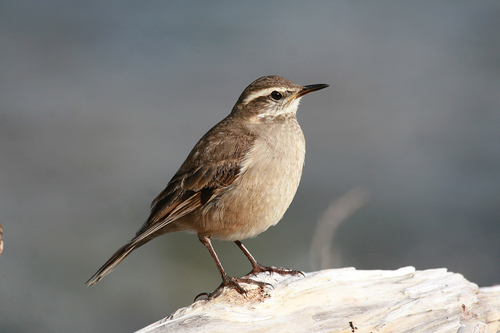
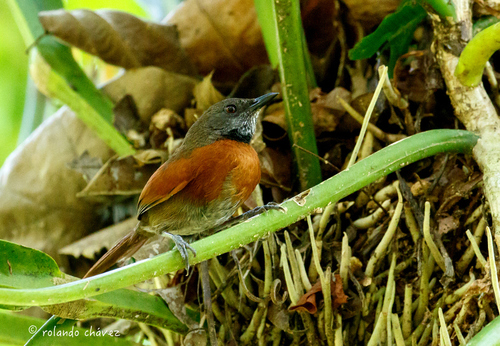
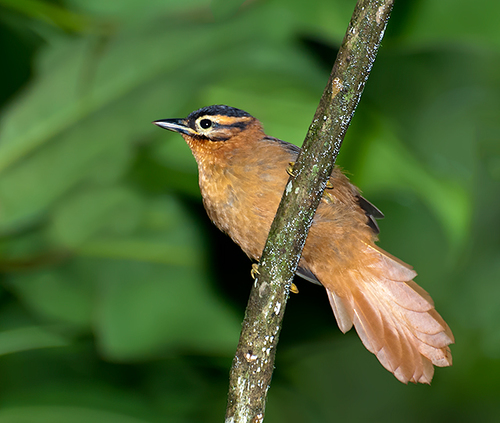
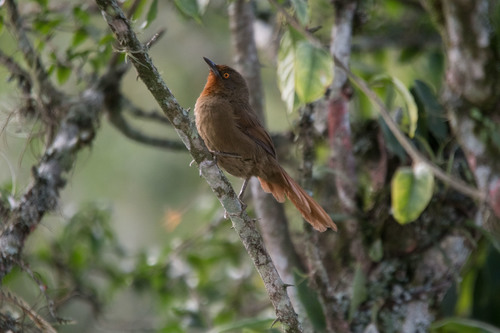
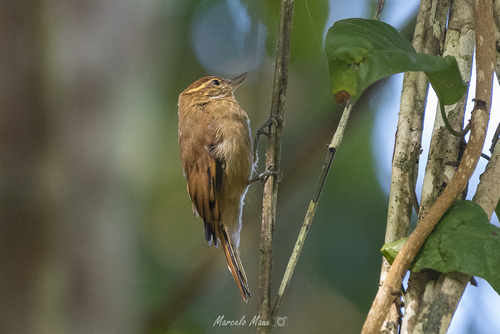
The Amazonian plain xenops, scientifically named Xenops genibarbis Illiger, 1811, has a wedge-shaped, fairly stubby, slightly upturned bill, and the sexes of the species look identical. Adults of the nominate subspecies X. g. genibarbis have a noticeable buff or whitish supercilium and a wide, pure white malar stripe. Their upperparts are dull brown to rufous brown and unstreaked, while their crown is darker and lightly streaked. Their tail is cinnamon with a large amount of black, and their wings are also cinnamon, with a wide ochraceous band on the flight feathers. Their throat is pale, with olivaceous edges on the feathers. The rest of their underparts are plain dull grayish brown, with some light buff spotting on the foreneck and breast. Their iris is dark brown, their maxilla is dull black, their mandible is dull grayish white with a dark gray tip, and their legs and feet are bluish gray. Minimal streaking and a wide malar stripe distinguish this species from other xenops. Other subspecies of the Amazonian plain xenops differ from the nominate subspecies and from each other as follows: X. g. ruficaudus has a darker, buff-streaked crown, more olivaceous underparts, and more spotting on the foreneck and breast; X. g. obsoletus is similar to ruficaudus, with more olivaceous upperparts and less spotting on the foreneck and breast; X. g. remoratus has little or no crown streaking, is duller on the upperparts and underparts, and has ill-defined breast markings; X. g. alagoanus is very similar to the nominate subspecies and has no streaks on the crown. The Amazonian plain xenops is found in the Orinoco and Amazon basins. Subspecies distributions are as follows: X. g. remoratus occurs in eastern Colombia, southwestern Venezuela along the upper Orinoco, and northwestern Brazil north of the Amazon and east to the Rio Negro; X. g. ruficaudus occurs in eastern Colombia, southern and eastern Venezuela, the Guianas, and northern Brazil north of the Amazon and east of the Rio Negro; X. g. obsoletus occurs in eastern Ecuador, eastern Peru, northern Bolivia, and western Brazil south of the Amazon and east to the Rio Madeira; X. g. genibarbis occurs in central Brazil south of the Amazon, from the Rio Madeira east to Piauí state and south to Mato Grosso and Goiás states; X. g. alagoanus occurs in northeastern Brazil between Paraíba and Alagoas states. The Amazonian plain xenops lives in the interior and edges of a range of forested landscapes in tropical lowlands, including terra firme and várzea forests, semideciduous forest, and mature secondary forest. Its maximum elevation varies by region: it occurs up to 2,000 m (6,600 ft) in Colombia; it reaches 2,200 m (7,200 ft) in Venezuela but is mostly found below 1,500 m (4,900 ft); in Ecuador it is mostly found below 900 m (3,000 ft) but reaches 1,300 m (4,300 ft); it occurs up to 1,500 m (4,900 ft) in Brazil, up to 1,400 m (4,600 ft) in Peru, and up to 1,300 m (4,300 ft) in Bolivia.