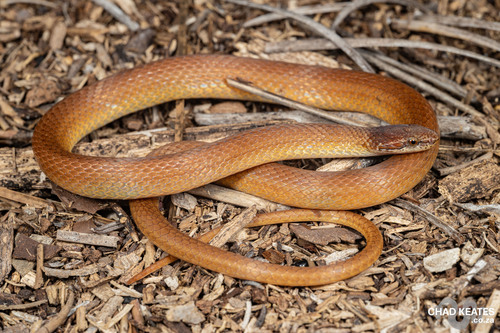
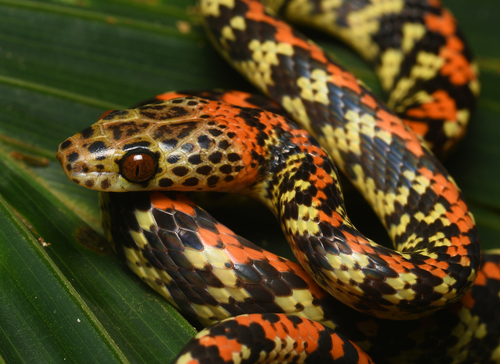
About Xenochrophis vittatus (Linnaeus, 1758)
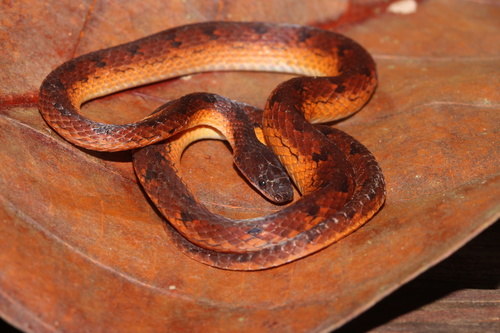
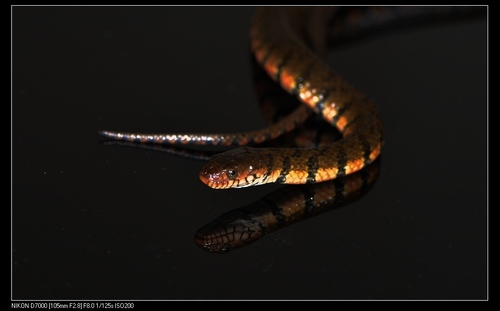
The striped keelback, Xenochrophis vittatus, is a medium-sized snake. Females grow to roughly 70 cm long, while males reach around 50 cm. They are distinctly thin, with a bronze base color marked by black stripes running along the top and sides of the body. Their chin and ventral regions have alternating black and white bars. This snake is native to western Indonesia, primarily occurring on Sumatra and Java. Boulenger recorded the species from Sulawesi in 1897, but no other confirmed records have been made, so the species is likely not actually present there. It has been introduced to Singapore, with the first recorded observation in July 1982 at Pandan Gardens. It was first documented in western Singapore, but has since spread to the eastern parts of the island, where it occurs around beaches and mangrove swamps. In Singapore, white-throated kingfishers have been observed preying on these snakes. The species was first recorded in Puerto Rico in 2011, when two adult snakes were found under a steel panel in Toa Baja. It has since been sighted many times in the northeastern part of the island, in lowland grassy fields and wetlands. Examination of the stomach contents of several specimens found that these introduced snakes had eaten coquis and white-lipped frogs. This is a diurnal snake that inhabits areas in and around aquatic habitats including ponds, wetlands, and paddies. It also lives in open habitats such as fields and meadows. The striped keelback is rear-fanged and mildly venomous, but is considered harmless to humans. Its diet consists of small animals including fish, amphibians, and lizards. It is oviparous, laying clutches of 5 to 12 eggs. Hatchlings measure approximately 13 cm long, and the species has an approximate lifespan of 10 years.