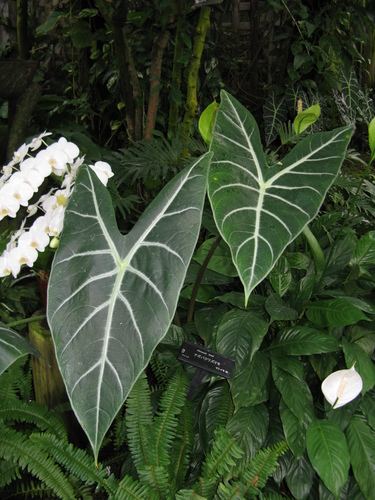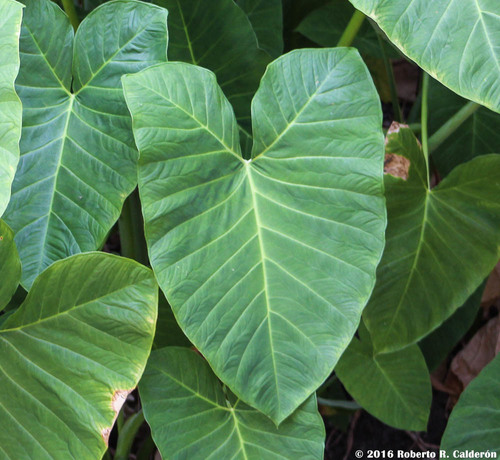
About Xanthosoma sagittifolium (L.) Schott
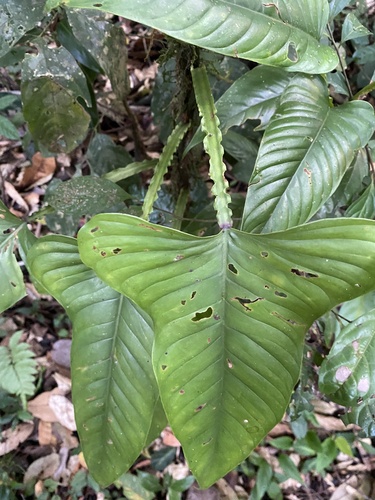
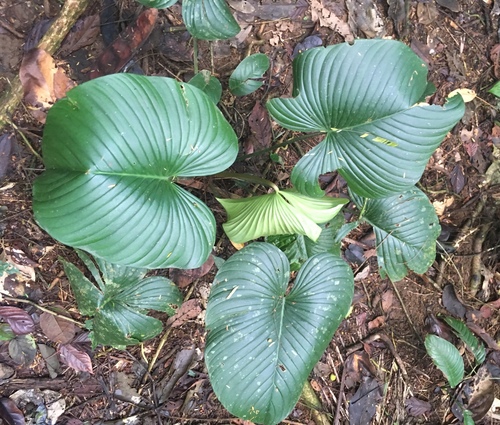
Xanthosoma sagittifolium, commonly known as tannia, is a tropical flowering plant in the Araceae family. It produces an edible, starchy corm. Native to tropical America, X. sagittifolium was first cultivated there, and spread to Southeast Asia and Africa in the 19th century, where it has been grown ever since. It is often confused with the related species Colocasia esculenta (taro), which shares similar appearance and uses; the two are often collectively referred to as 'cocoyam'. Tannia is one of the world’s most important tuber crops, and provides food for 400 million people globally. There are multiple varieties of tannia, with the red-fleshed and white-fleshed types being the most common. These varieties have been selectively bred to enhance pest and disease resistance, shorten time to maturity, and improve cooking quality. Some communities use tannia as a traditional medicine for bites from tarantulas, scorpions, and snakes. Studies conducted on rats have found that tannia leaves may offer protection against cardiovascular disease and bowel cancer. Additional observed benefits include reduced weight gain, lower liver fat, increased fecal mass, and higher concentrations of short-chain fatty acids and bile salts. Tannia also exhibits a probiotic effect. Another study found that tannia can stop the cell cycle and induce apoptosis in cancer cells. Due to its high free calcium content, tannia has also been used traditionally to treat osteoporosis. Research confirms that using tannia for this purpose is a feasible treatment option for low-income communities that do not have access to proper medical care. While cocoa trees can grow in direct sunlight, intense afternoon light can damage their leaves in some climates. Tannia produces abundant foliage, making it a good cover crop to shade cocoa plants from harsh direct sun. It also adapts well to a wide range of climates, so it is suitable for cultivation in many different countries. Tannia can be used to produce food preservatives (specifically lactic acid), energy bars, chips and crisps, beverage additives, sauce thickeners, purees, and sauces. Because of its high starch content and high yield, tannia also has potential as a feedstock for ethanol production for biofuel.