About Xanthorrhoea semiplana F.Muell.
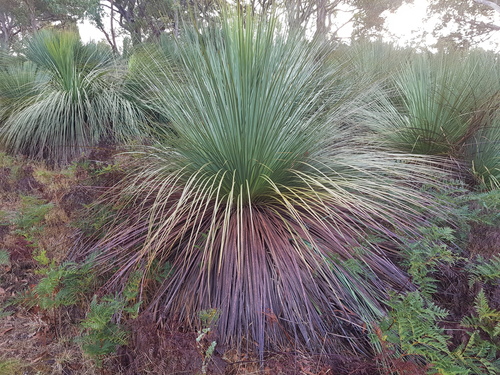
Xanthorrhoea semiplana has two recognized subspecies that differ in size and growth form. Xanthorrhoea semiplana ssp. semiplana is typically smaller than Xanthorrhoea semiplana ssp. tateana: ssp. semiplana does not develop a trunk and stays under 1 meter tall, while ssp. tateana grows a trunk and often reaches over 1 meter in height. Flowering for the species takes place from spring through autumn, and individual plants can produce a flower spike several meters long. X. semiplana can be told apart from Xanthorrhoea quadrangulata, a related plant that grows in the same area, by the cross-sectional shape of its leaves: X. semiplana has flat leaf cross sections, while X. quadrangulata has distinctly square leaf cross sections. Like most species in the genus Xanthorrhoea, Xanthorrhoea semiplana is highly susceptible to infection from the plant pathogen Phytophthora cinnamomi. Xanthorrhoea semiplana is a large, prominent plant in Australian ecosystems. It provides food and shelter for many native animal species. A study conducted by the CSIRO found that these grass trees create a distinct microclimate under their canopies, a finding that carries important implications for local wildlife. The microclimate under X. semiplana canopies is consistently stable: it moderates cold temperatures during winter, and provides a critical cool refuge for animals during summer heatwaves. The study also found that larger, older grass trees offer the most protection from fluctuations in temperature and rainfall.