About Xanthorrhoea gracilis Endl.
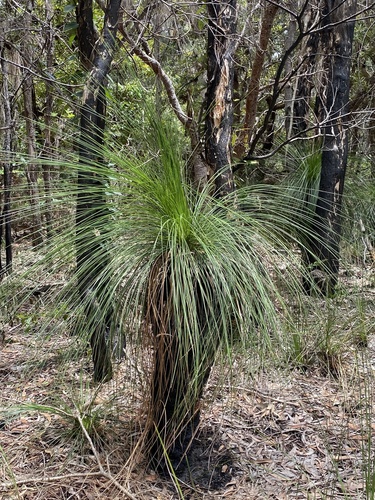
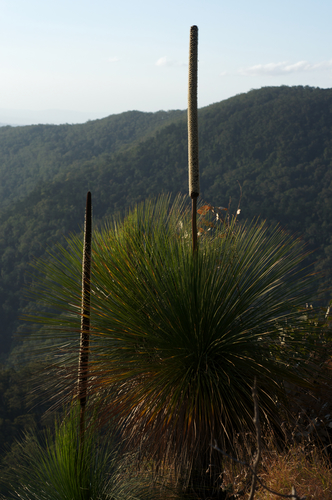
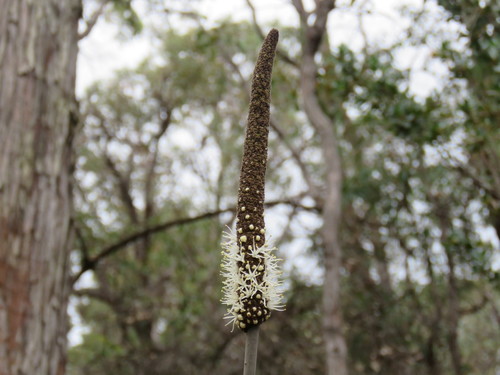
Xanthorrhoea gracilis Endl. is a tufted perennial grass tree. It typically grows to 2 metres (7 ft) tall and has no visible aboveground trunk; branches instead form on its stem underground. It produces a scape 1.5 metres (4.9 ft) long, and its flower spike reaches 0.2 metres (1 ft) in length. It blooms between October and January, producing fragrant cream-white flowers. It can grow a single crown or multiple crowns, which form a loosely upright to decumbent tuft. Its long, slender green leaves are around 1.5 metres (4.9 ft) long, with an irregularly rounded depressed-obtrullate to depressed-cuneate cross section. Leaves are usually about 3 millimetres (0.12 in) wide and 1.5 mm (0.06 in) thick, and are hairy at the base. This species is found along the west coast of Western Australia, through the Wheatbelt, Peel, and South West regions, and extends along the south coast into the state's Great Southern region. Its distribution stretches from Carnamah in the north to Plantagenet in the southeast. It grows in sandy-loamy soils containing lateritic gravel, and most commonly occurs as an understorey species within the jarrah forest ecosystem. Canopy species found in this ecosystem alongside it include Eucalyptus marginata, Eucalyptus calophylla, and Allocasuarina fraseriana. Common substorey associates are Banksia grandis, Persoonia elliptica, and Persoonia longifolia. Common understorey associates include Anigozanthos humilis, Grevillea wilsonii, and Hakea amplexicaulis. Xanthorrhoea gracilis can be cultivated from seed. It prefers a full sun position and is drought tolerant. It is susceptible to Phytophthora dieback. This species is able to resprout from subterranean buds after bushfire. Wild seedlings are rarely seen, because they are grazed by western gray kangaroos. Its fragrant flowers attract bees, butterflies, and birds. It can be grown in containers and is suitable for xeriscaping.