About Xanthorhoe montanata (Denis & Schiffermüller), 1775
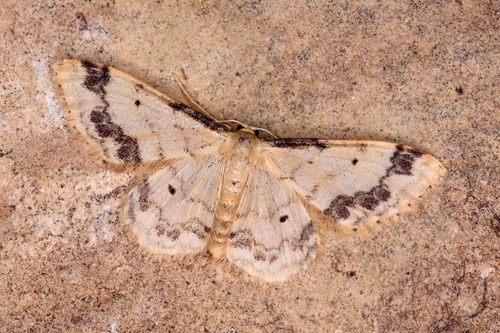
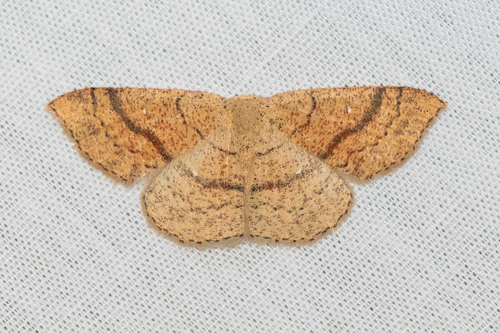
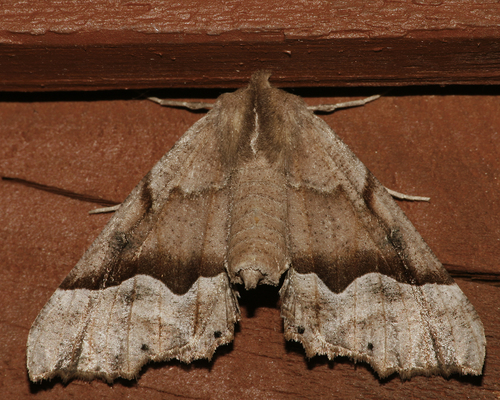
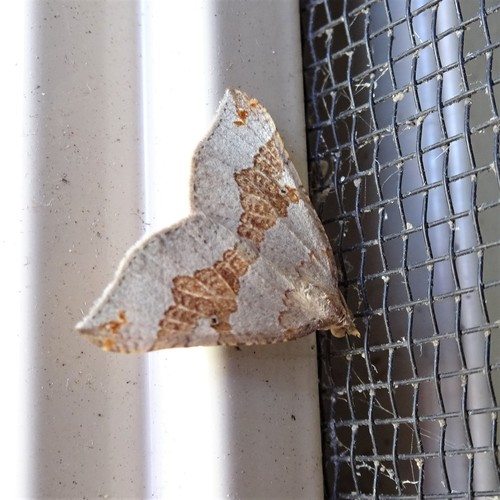
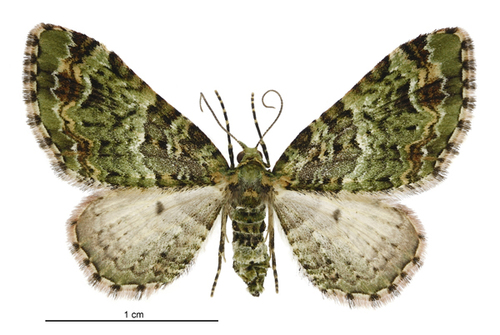
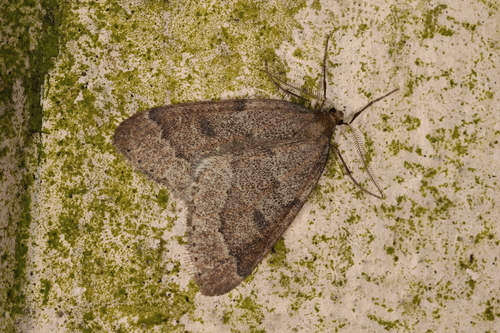
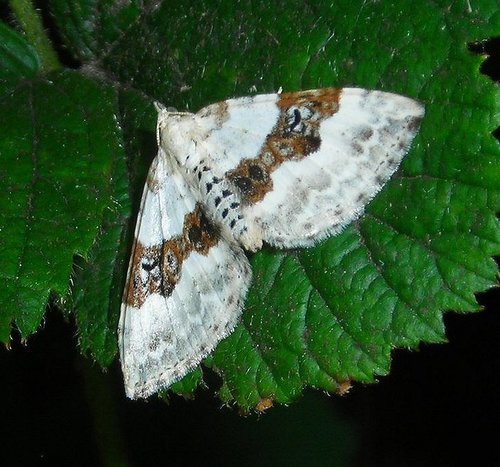
The silver-ground carpet (Xanthorhoe montanata) is a moth in the Geometridae family. It was first described by Michael Denis and Ignaz Schiffermüller in 1775. This species is common across most of the Palearctic region, ranging from Ireland to the Russian Far East (but not found in Japan), and also occurs in the Near East and North Africa. It can live in a wide range of habitats, including humid forests, moorland, shore areas, embankments, unimproved grass meadows, heathlands, and gardens. Its wingspan measures 29–33 mm, though some northern geographic races may be smaller. The forewings are white, marked with a broad shaded band that can range in color from pale grey to almost black. The hindwings are also white, with a pale fascia and a small black discal spot. In The Macrolepidoptera of the World, Louis Beethoven Prout described this as a very variable species. In the typical form, the median band is pale-centred, and the distal area is only weakly marked. A variation called ab. fuscomarginata Stgr. has broad fuscous margins on both the median band and distal area, with a distinct white subterminal line visible. In ab. continuata Krulik, the median band is solid brown or blackish, with no interrupting white patch. In ab. degenerata Prout, the median area is narrowed and split into two parts: a larger anterior section and a smaller posterior section. The variation ab. costimaculata Rbl. only has the anterior half of the median band. Ab. limbaria Hbn. is a more extreme reduction, where the band is reduced to only a very small patch on the discocellulars. Ab. unicolor Rbl. has wings entirely suffused with smoky black, with only a faint indication of the forewing median band; this variant has been collected in South Yorkshire. Beyond these casual aberrations, Xanthorhoe montanata has a strong tendency to form distinct local geographic races. Staudinger classified fuscomarginata as a local race found in the Pyrenees, Alps, and similar mountain regions. The following notable local races are recognized: iberica Stgr. is found at high elevations in the mountains of Castile and Andalusia; this race has white-yellowish forewings, with fewer, less distinct markings, and a narrowed, more fuscous median band. Lapponica Stgr. occurs in Northern Scandinavia and Northeast Siberia; this is a smaller, paler form with very weak markings other than the discal dot. Ab. albicans Strand refers to the most extreme specimens of lapponica, where all markings except the discal dot are absent or barely visible. Shetlandica Weir, from the Shetland Islands, is the same average size as lapponica but differs starkly in appearance. Its forewings are much more variegated, with the ground colour suffused with ochreous between the basal and median bands and in the distal area, the median band is sharply marked at least along its edges, sometimes pale in the centre, and sometimes mixed with bright ochreous brown. This species flies from May to July in the British Isles (flight season may vary across its broader range), and usually flies at dusk. It will come to light traps, but is not strongly attracted to light. The larva is grey with a purplish-brown back. It has been recorded feeding on bedstraw, Corydalis, globeflower, hemlock, and primrose, and likely also feeds on other low-growing plants. The species overwinters in the larval stage.