About Xanthorhoe ferrugata (Clerck, 1759)
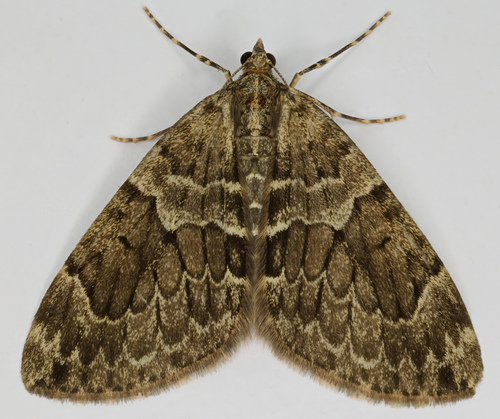
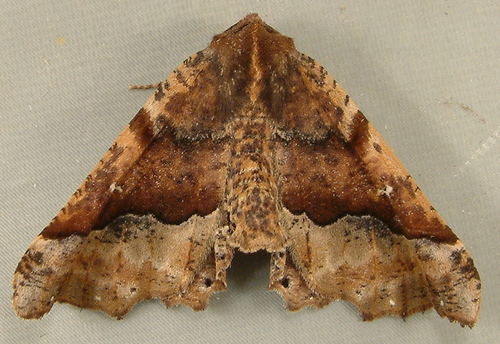
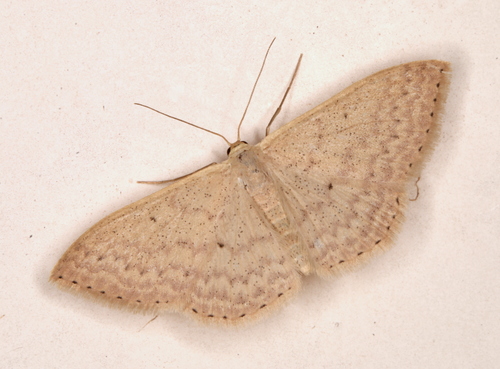
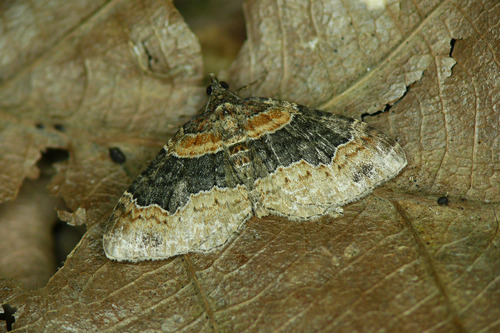
The name-typical form of Xanthorhoe ferrugata, as illustrated by Clerck and well described by Linnaeus, has a reddish or purplish median band. The distal area is very weakly marked, except for the costal patch and two dark spots between the radials, and is often almost entirely white or whitish. A very common, well-studied aberration, ab. unidentaria Haworth, has been proven through extensive breeding experiments by the author and Dr. Draudt to be an almost perfect Mendelian recessive. It differs from the name-typical form by having a black median band instead of a reddish one. Ab. coarctata Prout has a greatly narrowed median band, only 1–2 mm wide, and the rest of the moth’s markings are often partially obsolete. The taxon bilbainensis Fuchs, reportedly a local race originating from Bilbao, is described as smaller with narrower wings, and a more distinctly biangulate distal edge of the median band. The author doubts the validity of this taxon. The subspecies or form stupida Alphéraky, found at Issyk-kul, Tibet, western central China and other nearby locations, is rather larger than the name-typical form, and has a whiter hindwing; it is otherwise similar to ab. unidentaria. Xanthorhoe ferrugata is difficult to reliably distinguish from Xanthorhoe spadicearia (Denis & Schiffermüller, 1775). For further information on distinguishing this species from Xanthorhoe biriviata and Xanthorhoe vidanoi, see Townsend et al. The larva of Xanthorhoe ferrugata is long and slender, and naked apart from a few short bristles. It is grey with darker spots along its back. This species is distributed across Europe, extending east to the Russian Far East, Siberia, Tibet, and China, and south to the Caucasus and Turkey. It is also found in North America, ranging from Alaska to Newfoundland, and south to North Carolina and California.