About Xanthium strumarium L.
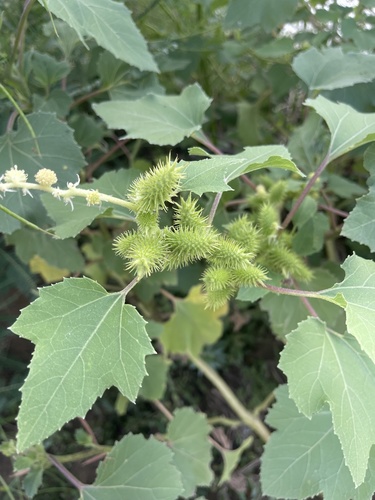
Xanthium strumarium L. has multiple common names, including rough cocklebur, Noogoora burr, clotbur, common cocklebur, large cocklebur, woolgarie bur, and Siberian cocklebur. It is an annual flowering plant species belonging to the family Asteraceae. There is disagreement about its native origin: some sources state it is native to southern Europe and Asia, and has since become widely naturalized in other regions, while works like the Flora of China and Flora of North America hold that it originates in the Americas, and was introduced to Eurasia at an early date. The plant may possess certain medicinal properties, and has been used in traditional South Asian medicine and traditional Chinese medicine. In Telugu, it is known as Marula Matangi. Though small amounts of parts from mature Xanthium strumarium may be consumed, the seeds and seedlings contain significant concentrations of the extremely toxic chemical carboxyatractyloside, so they should not be eaten in large quantities. The mature plant also contains at least four other toxins. There are recorded cases of animals dying after eating this plant. One person who consumed Cang Er Zi Wan, a traditional Chinese medicine that includes cocklebur, experienced muscle spasms. In 2007, the plant was responsible for at least 19 deaths and 76 cases of illness in Sylhet District, Bangladesh. During a monsoon flood, people had no other food available and were starving, so they ate large amounts of the plant, which they refer to locally as ghagra shak. Symptoms of poisoning included vomiting, altered mental states, followed by unconsciousness.