About Wyethia sagittata (Pursh) Mabb.
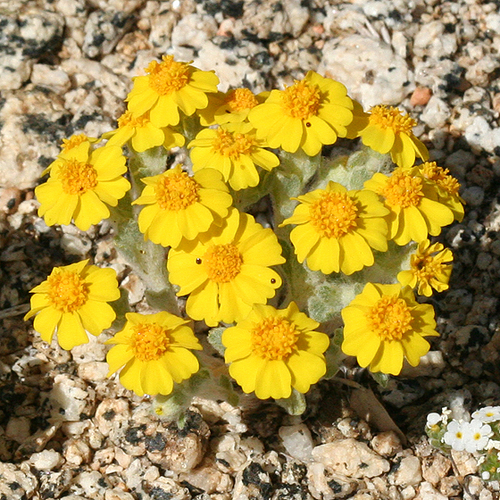
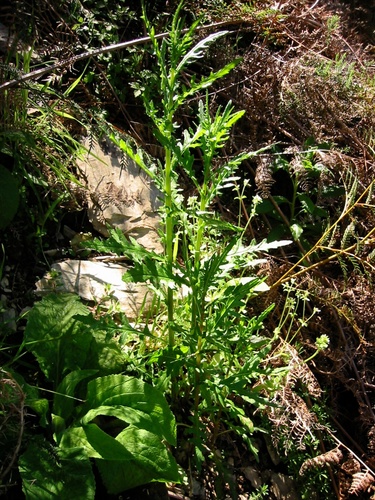
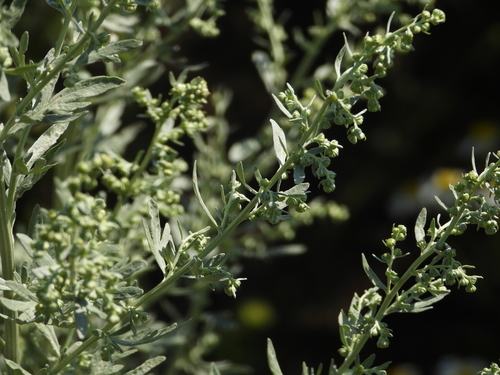
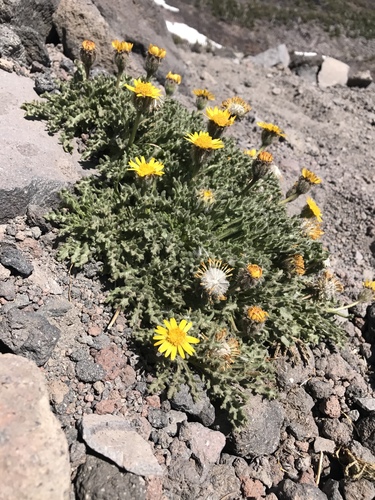
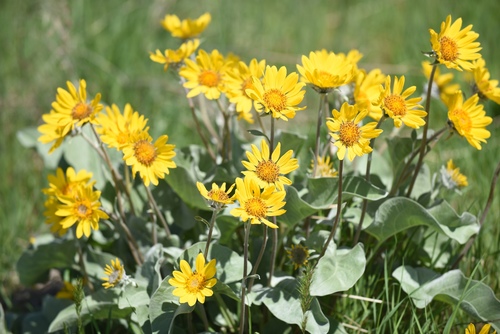
Wyethia sagittata (Pursh) Mabb. is a taprooted perennial herb. It produces a hairy, glandular stem that grows 20 to 60 centimetres (7+3⁄4 to 23+1⁄2 inches) tall, with the plant's total maximum height reaching 80 cm (31 in). Its branching, barky root can extend over 2 metres (6+1⁄2 feet) deep into the soil. The large, silvery-gray basal leaves are generally triangular in shape, reaching a maximum length close to 50 cm (20 in). Leaves growing higher on the stem are smaller, with shapes ranging from linear to narrowly oval. All leaves have untoothed edges, and are coated in fine to rough hairs, most densely on their undersides. The inflorescence holds one or more flower heads, and sometimes multiple heads grow on a single stem; blooming occurs from May to July. Each head has a center of yellowish tubular disc florets, surrounded by a fringe of 8 to 25 bright yellow ray florets, each of which can grow up to 4 cm (1+1⁄2 in) long. The fruit is a hairless achene about 8 millimetres (3⁄8 in) long. Balsamorhiza deltoidea is similar in appearance, but is greener, less hairy, and does not retain its ray flowers for as long. The native range of this plant stretches from British Columbia and Alberta in the north, south to northern Arizona and California's Mojave Desert, and east to the Black Hills of South Dakota. It grows in many habitat types, including mountain forests, grassland, and desert scrub, and is drought tolerant. This species hybridizes with Balsamorhiza hookeri. Grazing animals find the plant palatable, especially its flowers and developing seed heads. Elk and deer browse its leaves. The plant becomes ready for harvest in late spring, and all parts of it can be eaten. The most commonly consumed parts are leaves (eaten raw or cooked), cooked roots, and seeds (eaten raw or pounded into flour). It can have a bitter, pine-like flavor. Young leaves are considered the best for harvest, and may carry a citrus flavor. Many Native American groups, including the Nez Perce, Kootenai, Cheyenne, and Salish, used this plant as both food and medicine. Its seeds were particularly valued as food, or processed for oil. In 1806, William Clark collected a specimen near the White Salmon River; both Clark and Frederick Pursh recorded that native peoples ate the plant's stem raw.