About Woollsia pungens (Cav.) F.Muell.
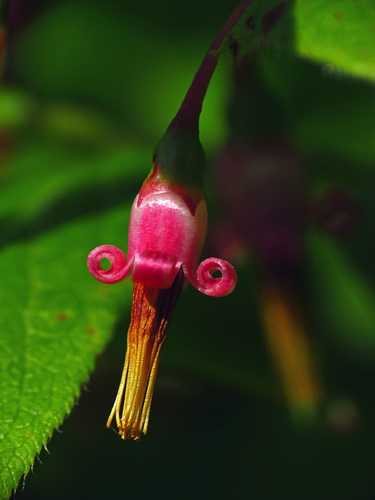
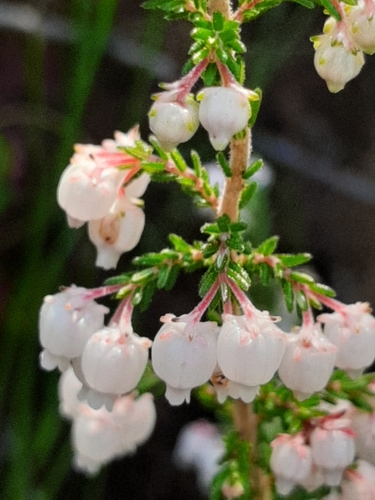
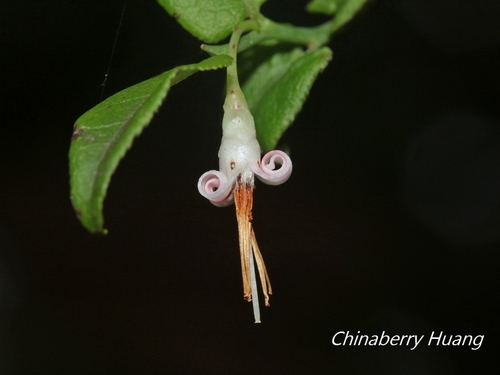
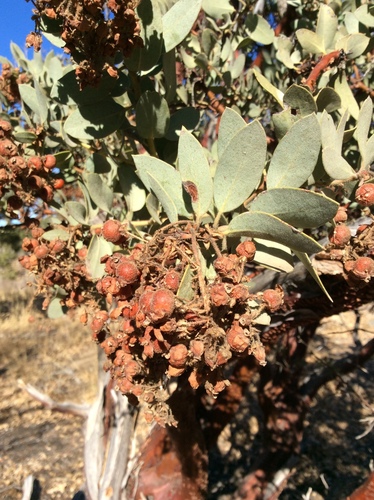
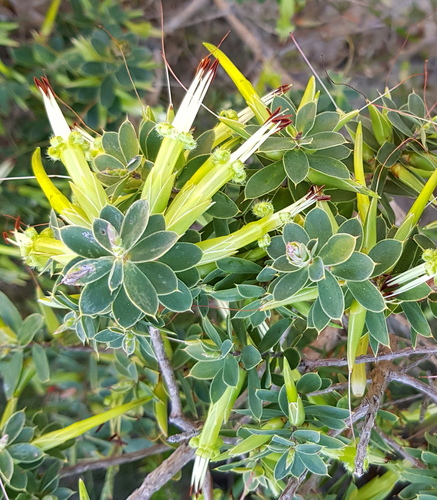
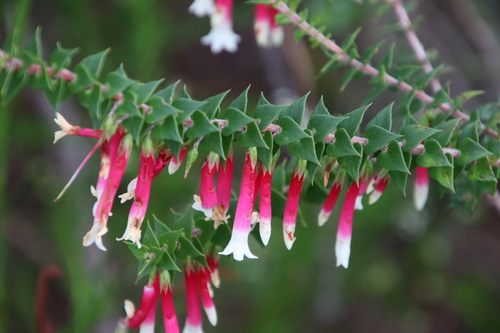
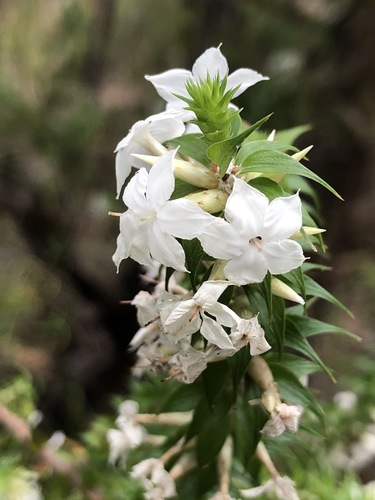
Woollsia pungens is an erect shrub that typically reaches 0.2 to 2 meters (7.9 inches to 6 feet 6.7 inches) in height and has hairy stems. Its leaves are egg-shaped, measuring 3.5 to 12 mm (0.14 to 0.47 inches) long and 1.5 to 6 mm (0.059 to 0.236 inches) wide, attached to a petiole up to 1 mm (0.039 inches) long. The leaves have a rounded to heart-shaped base and end in a sharp point. The flowers are white to dark pink, 8 to 13 mm (0.31 to 0.51 inches) in diameter, and have a sweet scent. This species has hairy bracts and sepals that are 8 to 10 mm (0.31 to 0.39 inches) long. Its petals are joined at the base, forming a tube 7 to 14 mm (0.28 to 0.55 inches) long, with spreading lobes 4 to 5 mm (0.16 to 0.20 inches) long. Flowering occurs in most months of the year, and the fruit is a capsule around 2.5 mm (0.098 inches) in diameter that holds many small seeds. In terms of distribution and habitat, Woollsia pungens grows in heathland alongside species including saw banksia (Banksia serrata), mountain devil (Lambertia formosa), and grasstree (Xanthorrhoea resinifera). It also grows in open sclerophyll forest under trees such as Sydney peppermint (Eucalyptus piperita), scribbly gum (Eucalyptus haemastoma), and red bloodwood (Corymbia gummifera). Its range extends along the coast and in the upper Blue Mountains, from Pigeon House Mountain in southern New South Wales to south-east Queensland. Wild plants of this species are thought to live 10 to 20 years. They are typically killed by bushfire, and new seedlings grow from seed stored in the soil. In horticulture, where it is called snow heath, it grows best in a part-shaded location with good drainage and ample moisture. It can be propagated from cuttings or seed.