About Woodwardia fimbriata J.E.Sm.
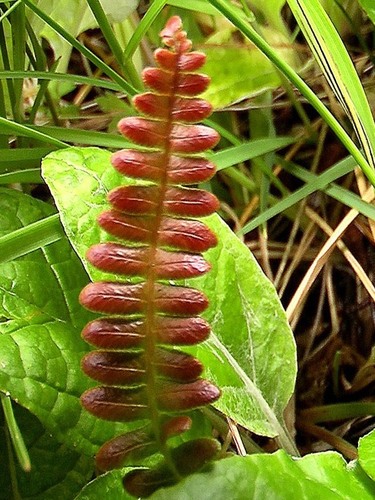
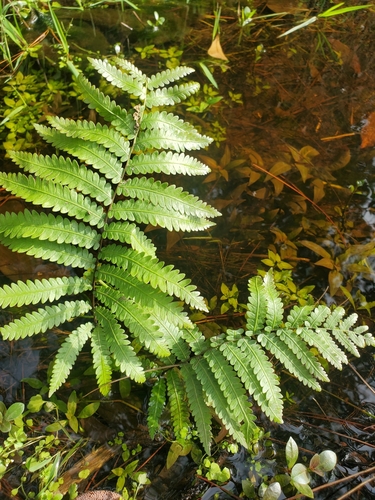
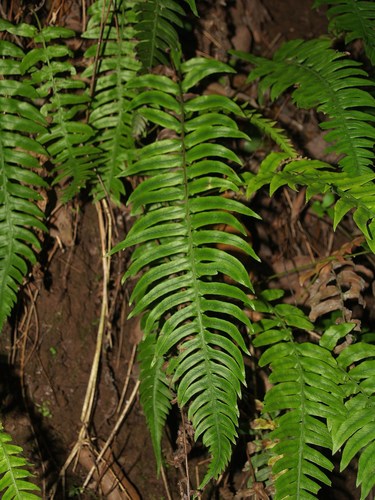
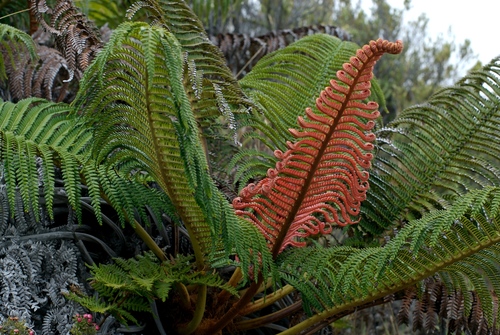
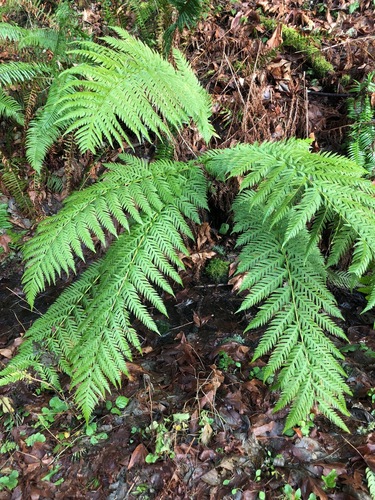
Woodwardia fimbriata J.E.Sm. is commonly known as a chain fern, named for a key characteristic of its reproductive structures. This species produces very long fronds that reach 1 to 3 meters in length. Its fronds are bipinnately compound, with leaflets sharing a consistent general shape and a leathery texture. Its sori are short but broad, and arranged in neat lines that give the genus its common name of chain fern; this chain-like pattern is visible on both sides of each leaflet. Its rhizome has portions growing both above and below ground. The above-ground portion is covered in petioles, and reddish-brown or orange-brown scales cover the bases of these petioles. Petioles may also be straw-colored, or have a reddish-brown color at their base, and they measure between 15 and 100 cm in length. Woodwardia fimbriata is distributed along the western coast of North America, ranging from British Columbia, Canada, south to Baja California, and also occurs in the state of Nevada. It is found growing in canyons, foothills, near springs, along streambeds and streambanks, and in multiple forest types including redwood forest, coniferous forest, and mixed forest. It grows primarily in moist and wet environments, at elevations between 0 and 1000 meters, though there are recorded instances of it growing at elevations up to 8000 feet (2438 meters). In terms of ecology, natural threats to Woodwardia fimbriata include soil erosion and competition for natural resources from invasive species. It is often found growing near red alder (Alnus rubra) and western hemlock (Tsuga heterophylla), as well as near other fern species including sword ferns and maidenhair ferns. This species is cultivated as an ornamental plant for traditional gardens, native plant gardens, natural landscaping, and habitat restoration projects. It has been awarded the Royal Horticultural Society's Award of Garden Merit. For successful cultivation, it should be planted in a partially shaded, moist location with acidic or neutral soil, though it can also be grown in full sun if provided with adequate watering. There are no notable pests or diseases that specifically affect this species when grown in cultivation. California's indigenous Native American tribes used fibers harvested from this plant to create decorative patterns in their baskets. Fibers were taken from the plant's stems, then dyed red using an extract from white alder before being woven into baskets. Fibers were also obtained from leaf tissue by crushing and processing the leaf rachis. Dyes for the fibers were collected from the bark of both white alder and red alder. There are recorded medicinal uses of this plant for pain relief: Luiseno Indians used root extractions for this purpose. Members of the Pomo and Kashaya tribes also placed this species' leaves in their cooking ovens before cooking.