About Waitzia acuminata Steetz
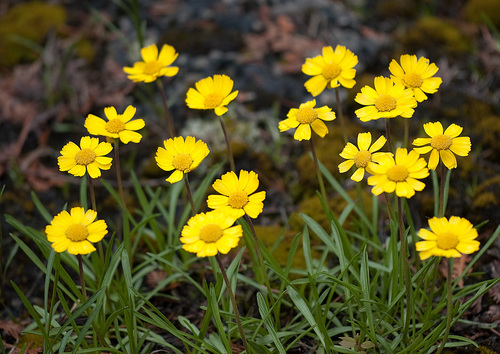
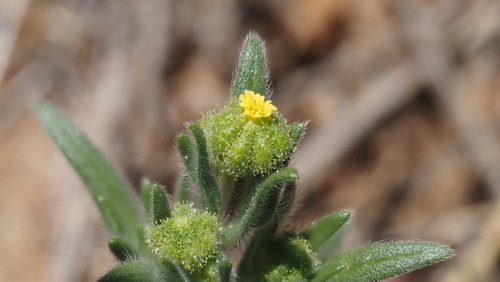
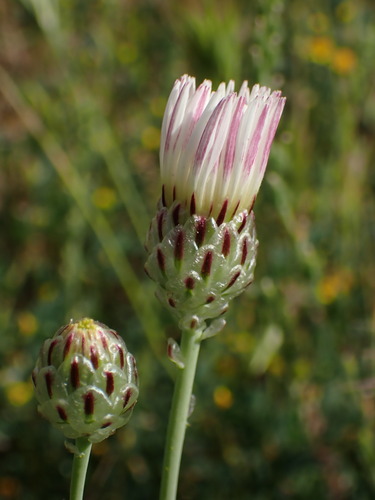
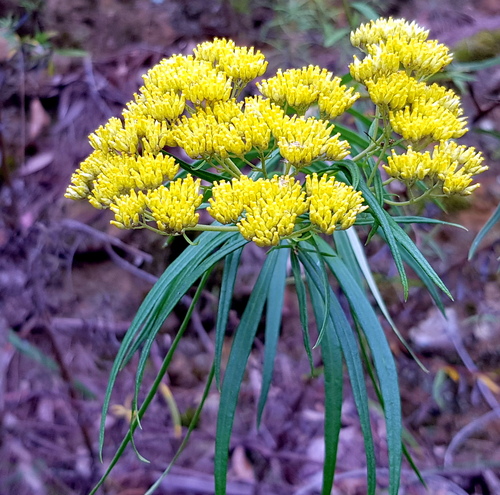
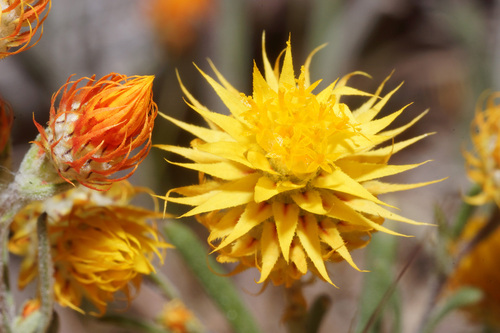
Waitzia acuminata Steetz can grow up to 600 mm tall, and has reddish stems. The stem indumentum is sparsely glandular and glandular pilose. It produces narrow green leaves that measure roughly 20 to 70 mm in length. Its flower heads are shaped like eggs or bells, with yellow to orange petals. Flowers often grow in bunches on each stem. The seeds are narrow with tapered ends and have a bumpy surface. Up to twenty long, fine bristles protrude from one tapered end of each seed. A less common variety, Waitzia acuminata var. albicans, shares most characteristics of the species except for flower colour. Its flowers start pink and gradually turn white as they open. The species is most abundant in the southern half of Western Australia, and is also sparsely distributed across arid regions of other Australian mainland states. It typically grows in deep sandy red soils, and in shallow stony soils derived from sandstone or granite, within mallee and mulga woodlands. It is also recorded growing in saline depressions, sand, loam, gravel, litter, laterite, sand dunes, plains, and clay soils. It grows on sand dunes and rocky outcrops, and favours warm climates and areas with high sun exposure. The germination rate of its seeds is influenced by temperature and light. Previous research has found that germination is more successful or faster under warmer climatic conditions, and that light exposure can stimulate higher germination rates. This species relies on insects for cross pollination. Because of its attractive appearance, Waitzia acuminata is grown as an ornamental garden plant in parts of Australia, and is featured in the Kings Park Botanic Garden in Western Australia.