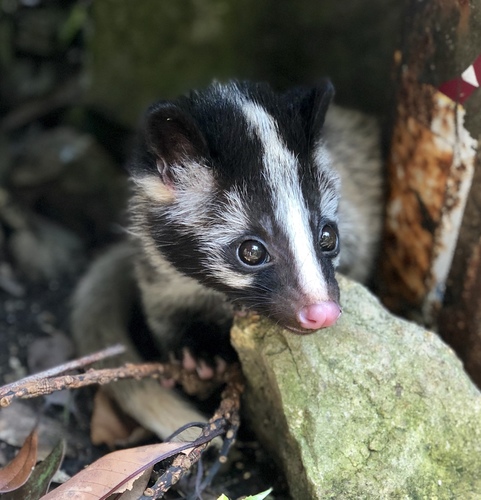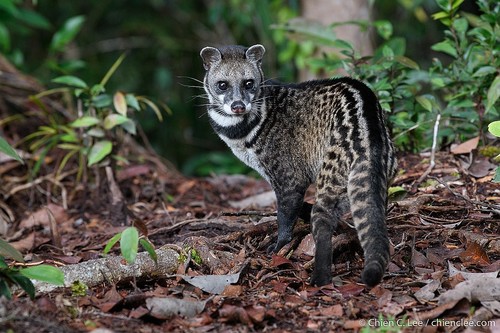
About Viverra tangalunga Gray, 1832
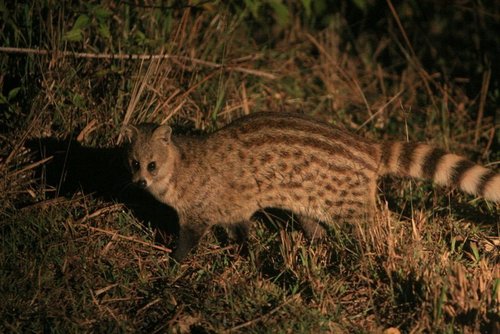
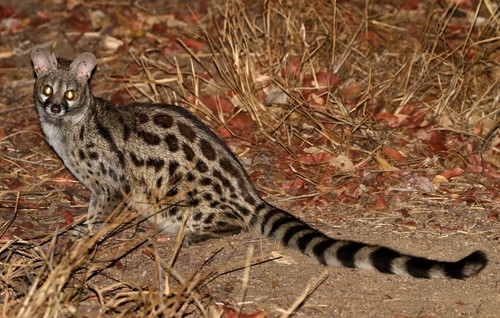
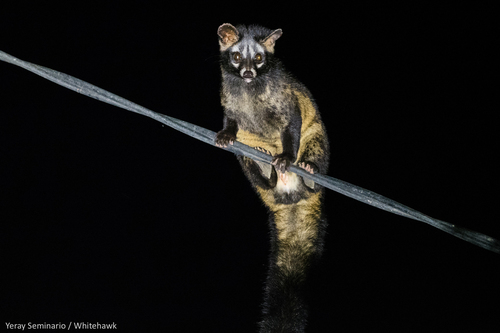
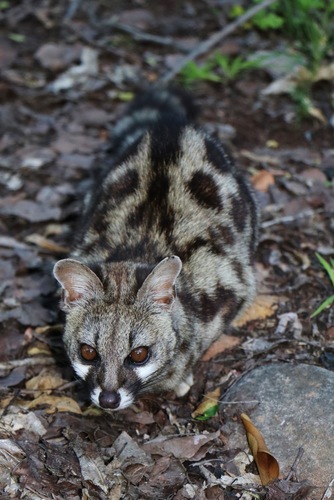
Characteristics: The upper side of the Malay civet (Viverra tangalunga Gray, 1832) tail is black, and the lower side is ringed. Distribution and habitat: The historical range of the Malay civet covers Indonesia, Malaysia, Brunei, the Philippines and Singapore. In Malaysia, it lives in Borneo, Banggi Island, Langkawi Island, Penang Island and Peninsular Malaysia, and it also occurs on Sumatra. This species was introduced to Sulawesi and the Maluku Islands. Museum records show that the Malay civet also once occurred on the Indonesian islands of Java, Bawal and Telok Pai, as well as on Leyte, a Philippine island. One individual was photographed in Singapore in 2012. The Malay civet population in the Philippines may have originated in Borneo and naturally colonized Palawan island. It possibly dispersed to the rest of the Philippines later via human introduction, because no land connection existed between Philippine islands during the last glacial period. The Malay civet inhabits a wide range of habitats, including forests, secondary habitats, cultivated land, and the outskirts of villages. Ecology and behaviour: Malay civets are solitary, omnivorous, and primarily terrestrial. Malay civet densities are higher in unlogged forests than in logged forests. Fruit makes up a larger proportion of their diet in unlogged forests compared to logged forests. Because fruit contributes a larger percentage of the diet in unlogged forests, logging may lead to increased competition from other frugivores such as palm civets. Unlike the mainly terrestrial Malay civet, palm civets can exploit fruit directly on trees. Around Bera Lake in Malaysia, Malay civets have been found in logged forest. Arboreal, frugivorous civets are barely affected by logging, while terrestrial, carnivorous or insectivorous civet species may be negatively impacted by logging.