About Vitis riparia Michx.
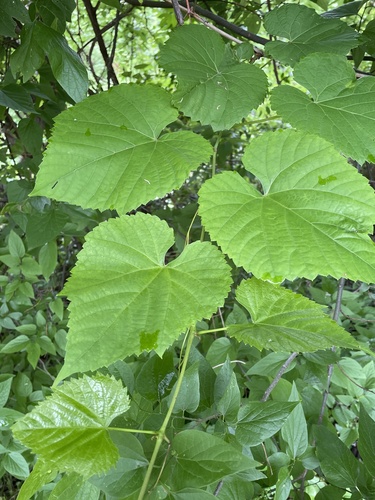
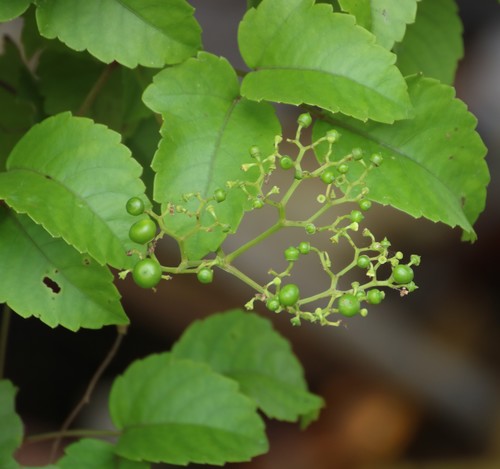
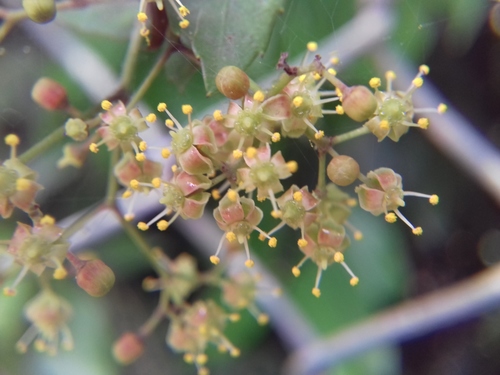
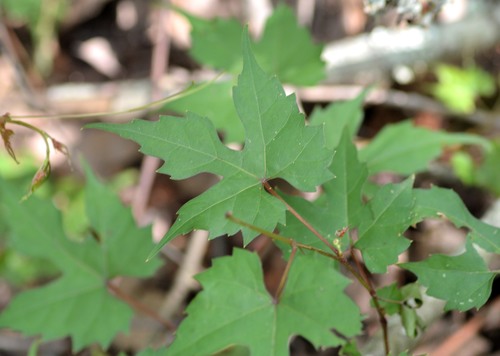
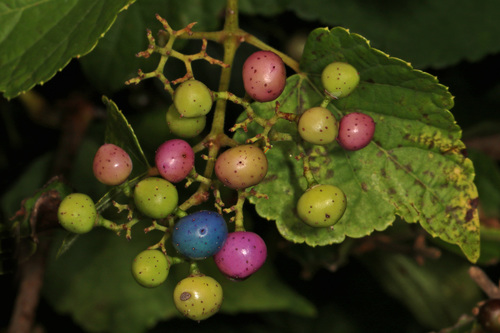
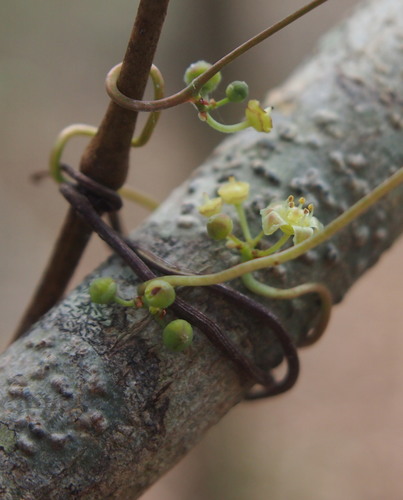
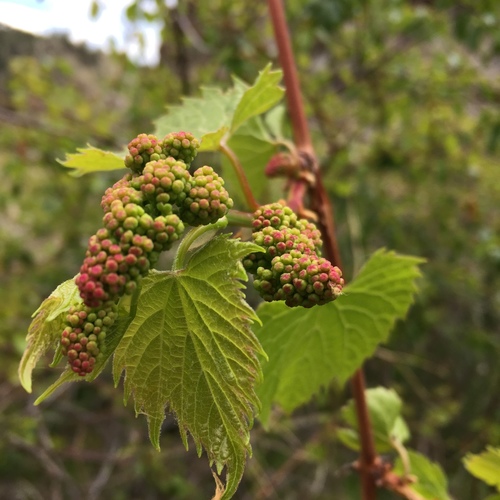
Vitis riparia Michx., commonly known as riverbank grape, has the following traits. Mature vines have loose, fissured bark, and can reach several inches in diameter. Its leaves grow in an alternating pattern, are coarsely toothed, measure 5–25 cm long and 5–20 cm broad, and sometimes have sparse hairs on the underside of their veins. Vines often produce opposite tendrils or inflorescences paired with these leaves. V. riparia is functionally dioecious. Its inflorescence is a loose panicle that grows 4–15 cm long, bearing small, fragrant, white or greenish flowers. The species blooms between April and June. In August or September, it produces small blue-black seeded grapes 6–15 mm across that carry a natural waxy bloom. These grapes are juicy and edible, with a wine-like flavor that lacks the "foxy" characteristics of Vitis labrusca, but are usually quite sour and herbaceous. This species has a wide range, so individual plants can deviate considerably from this general description. Known variations include white berries, perfect flowers, large clusters, large berries, and sweet fruit. Some observers consider these variations to be evidence of natural hybridization with other grape species. Vitis riparia has the largest geographical range of any North American Vitis species. It grows across nearly the entire eastern half of North America, ranging from southern Quebec to Piedmont, Alabama, and the Carolinas, but is absent from coastal plains and the western parts of North America's Great Plains. Variants of the species have been recorded as far north as Riding Mountain National Park in Manitoba, Canada, and as far west as Montana, Nebraska, and North Dakota. In the wild, this vine grows best in exposed areas with good sun exposure and adequate soil moisture, such as riverbanks, forest clearings, fence lines, and roadsides. It has adapted to a wide variety of soil chemistries. The most significant agricultural use of V. riparia is as grafted rootstock for Vitis vinifera. Key benefits of using V. riparia, and hybrids between it and other Vitis species, include resistance to phylloxera and adaptation to diverse soil types. Because V. riparia has extensive cold hardiness and fungal disease resistance, it has been widely used in grape breeding programs to transfer cold hardiness and disease resistance genes to domesticated grapes. French-American hybrid grapes are well-known examples of this work. V. riparia has been used for over a hundred years to create hardy grape hybrids, and many V. riparia hybrids are currently used and studied by plant breeders in programs such as the horticulture program at the University of Minnesota. These programs work to develop a commercially viable wine grape that can survive the northern climate of the Upper Midwest. Commercially important cultivars with significant Vitis riparia ancestry include Baco noir, Marechal Foch, Triomphe d'Alsace, and Frontenac. While V. riparia shares many important traits with its relative Vitis vinifera, several features make it unsuitable for commercial viticulture on its own: its small berry size makes it prone to bird predation, its fruit has high acidity that often reaches 5% titratable acidity, its juice has intense pigment, and wine produced from it carries herbaceous aromas. Despite this, these grapes are sometimes used to make flavorful homemade jellies, jams, and wine.