About Vitex agnus-castus L.
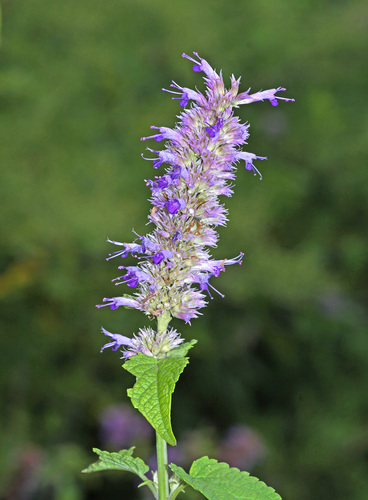
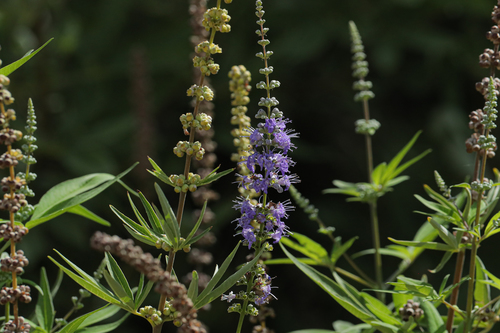
Vitex agnus-castus L. is widely cultivated in warm, temperate, and subtropical regions for its delicately textured aromatic foliage, and midsummer spikes of lavender flowers that attract butterflies. In cooler climates, these flowers open in late summer. This plant grows to a height between 1 and 5 meters (3 to 16 feet). It requires full sun, though it can tolerate partial shade, and needs well-draining soil. Under ideal growing conditions, it is hardy to −23 °C (−9 °F) in USDA Zone 6. In colder zones, the plant typically dies back to the ground, but since it flowers on new wood, vigorous growth the following season produces unaffected flowering. Cold, wet weather causes dieback and plant loss. It grows well in loamy, neutral to alkaline soil. In UK cultivation, the form Vitex agnus-castus f. latifolia has earned the Royal Horticultural Society's Award of Garden Merit. A single tree can produce harvestable fruits for more than 15 years, which means this tree cannot be incorporated into a standard crop rotation system. It is recommended to plant dissimilar plants such as monocots after chaste tree to make it easier to control this dicot, also called monk's pepper. Because monk's pepper fruits tend to fall constantly and uncontrollably, the plant can likely germinate from dropped seed. The highest reported overall yield per hectare is achieved when plants are spaced roughly 70 cm (28 in) apart. Pruning branches back in autumn has a positive effect on fruit yield, while additional pruning in spring encourages more vegetative shoot growth, which leads to lower fruit yield. This plant can also be reproduced vegetatively. One method uses 5–8 centimeter (2–3 inch) pieces of ripening wood with buds, taken in July or August. A second method cuts ripe wood in November, then lets it root in a coldframe. In vitro reproduction using shoot spikes or node explants is also possible. Adverse effects from Vitex use can include nausea, headache, gastrointestinal discomfort, menstrual discomfort, fatigue, and skin disorders. People taking dopamine-related medications or Parkinson's disease medications should avoid using chasteberry. Women taking birth-control pills, hormone-replacement therapy, or people with a hormone-sensitive condition such as breast cancer, are advised not to use chasteberry. Use of Vitex is not recommended for pregnant or breastfeeding women, or for children. The chaste tree, a local shrub known since the Lower Paleolithic, was used as a spice by several ancient Mediterranean cultures. Vitex has been used in folk medicine for its supposed effects on women's reproductive health, but there is little high-quality clinical evidence to support that it is effective. While it is commonly recommended in Germany, Vitex agnus-castus should be avoided during pregnancy due to the potential for complications. In ancient Greece, the chaste tree had an important role in the female agricultural festival of Thesmophoria, which was held to honor the goddesses Demeter and Persephone across Greek cities. In Archaic Sparta, dating to the 8th–6th centuries BCE, it was included in the cult of local agriculture goddess Artemis Orthia. First-century physician Dioscorides documented multiple synonyms for the lilac chaste tree. Second-century CE writer Pausanias noted that the wooden statue of Asclepius in Sparta was carved from chaste tree. There is both botanical and textual evidence that chaste tree held significance at the Heraion of Samos during the 6th–3rd centuries BCE. An excavation at a Philistine temple in Gath uncovered around 100 chaste tree fruits; this find is unmatched in both quantity and context compared to other sites in Israel. This suggests the fruits were deliberately used for religious practices, possibly in celebration of a goddess related to Hera. The chaste tree is connected to the binding of Hera, where it featured in rituals celebrating Hera's mythology at Samos.