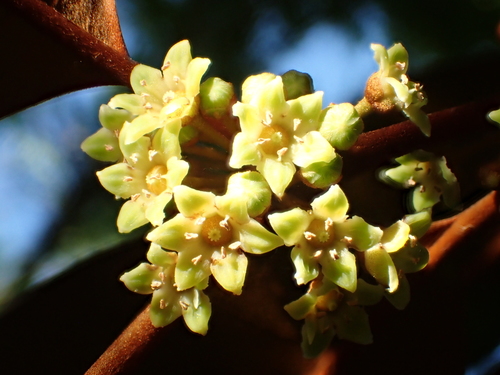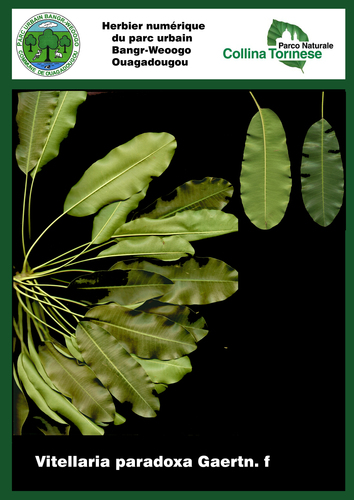
About Vitellaria paradoxa C.F.Gaertn.
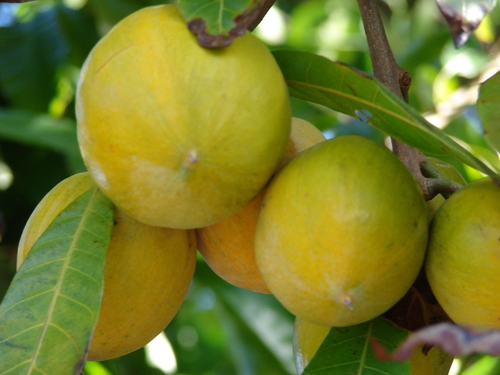
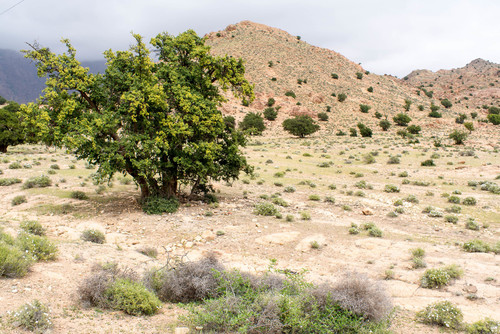
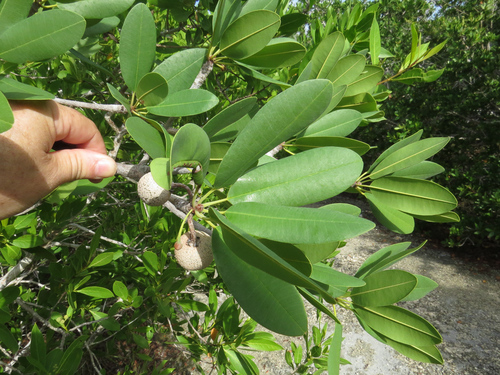
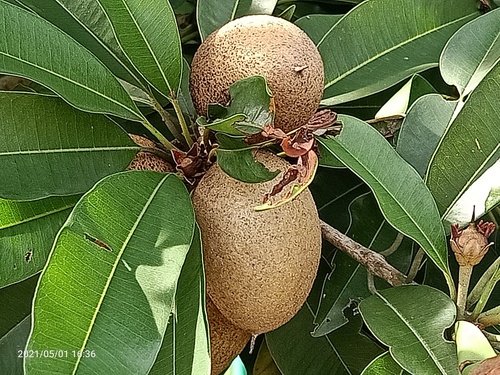
Vitellaria paradoxa C.F.Gaertn., commonly known as the shea tree, begins producing its first fruit when 10 to 15 years old. It reaches full fruit production between 20 and 30 years of age, and continues producing nuts for up to 200 years. Its fruits resemble large plums, measuring 4 to 8 centimetres long and weighing 10 to 57 grams each. These fruits take 4 to 6 months to ripen. On average, a single tree yields 15 to 20 kg (33 to 44 lb) of fresh fruit, with optimum yields reaching up to 45 kilograms (99 pounds). Approximately 400 grams (14 ounces) of dry seeds can be obtained from each kilogram of this tree’s fruit, and the fruit itself is edible. The shea tree grows naturally wild in the dry savannah belt that stretches from Senegal in West Africa east to Sudan and South Sudan, and continues onto the foothills of the Ethiopian highlands. It is found across 19 countries on the African continent: Benin, Burkina Faso, Cameroon, Central African Republic, Chad, Ethiopia, Ghana, Guinea Bissau, Ivory Coast, Mali, Niger, Nigeria, Senegal, Sierra Leone, South Sudan, Sudan, Togo, Uganda, Democratic Republic of the Congo, and Guinea. The total area of its habitat extends more than 5,000 kilometres (3,100 mi). A preserved shea seed testa from the site of the medieval village of Saouga provides evidence that shea butter production was already underway by the 14th century. In Uganda, shea trees grow specifically in the Lira and Otuke districts of Northern Uganda. To protect the species, the National Environmental Management Authority (NEMA) has issued a directive that bans cutting shea trees. Shea butter extracted from the tree’s nuts can be either refined or unrefined, and has a wide range of uses. In Western countries, it is most often used as an emollient in cosmetic products, and it is less commonly used in food. Across Africa, it is widely used in food, serves as a major source of dietary fat, and is also used for medicinal purposes. In Ghana and Nigeria, shea butter is a core ingredient in making African black soap. In the Lango and Acholi cultures, where shea butter is called Moo Yao in the Luo language, it is used in the enthronement of clan and traditional leaders. Traditionally, fat is extracted from shea tree kernels by roasting and pressing the kernels; the resulting liquid is boiled, sieved, and cooled to produce finished shea butter, which is used for food, medicine, and cosmetics. Edible, protein-rich caterpillars of the moth Cirina butyrospermi, which feed only on shea tree leaves, are widely collected and eaten raw, dried, or fried.