About Virbia laeta Guérin-Méneville, 1844
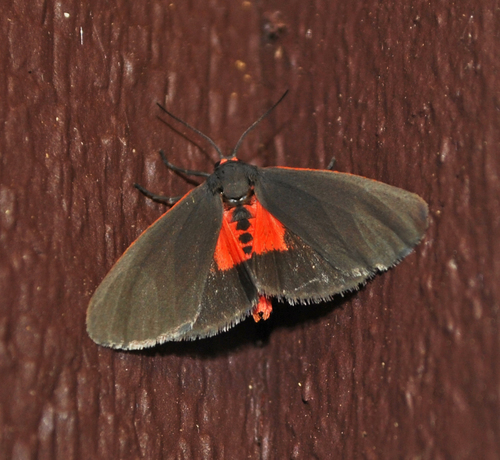
Virbia laeta, commonly known as the joyful holomelina, is a species of moth belonging to the family Erebidae. It was first described by Félix Édouard Guérin-Méneville in 1844. This moth is found in North America, ranging from New Brunswick in the north, south to Florida, west to Minnesota, and continuing south to Texas. Its native habitat is pine woodlands. Male Virbia laeta have forewings that reach an average length of around 11 mm, while female forewings measure around 17 mm. In Louisiana, adult moths have been recorded in flight year-round, with the exception of December. In Texas, this species produces two generations per year, and adults are in flight during March and June. In the more northern parts of this moth’s range, there appears to be only one generation per year, with adults active in flight during June and July. Larvae of Virbia laeta have been successfully reared on species of dandelion and plantain.