About Viola tricolor L.
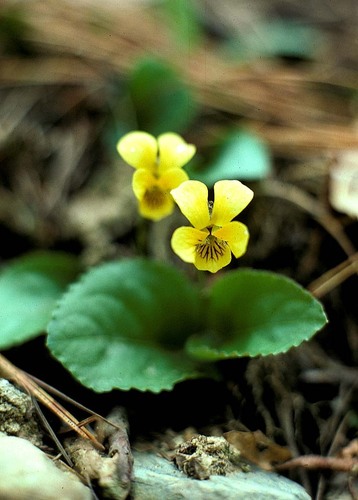
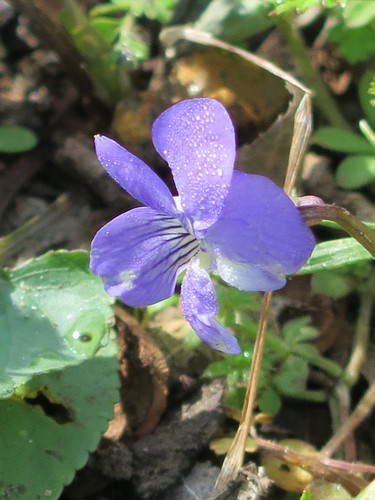
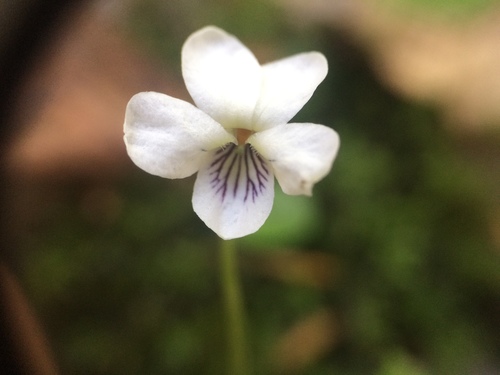
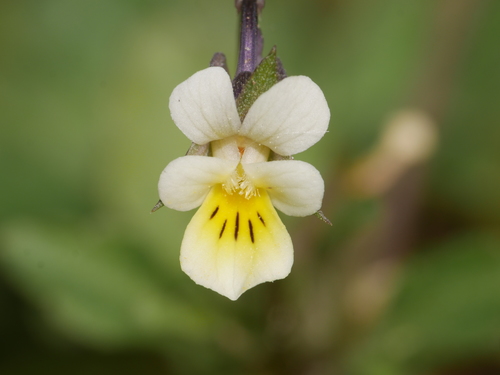
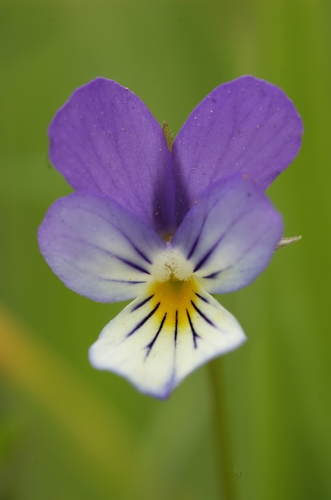
Viola tricolor L., commonly called wild pansy, is a small low-growing plant with a creeping, spreading growth habit. It reaches a maximum height of 15 centimetres (6 in), and its flowers are around 1.5 cm (1⁄2 in) in diameter. It has a rhizome root system with fine rootlets. Its acauline stem, which stays flush with the soil and produces leaves and flowering stalks, is hairless, sometimes downy, and branched. Unlike some other violets such as Viola hirta, this species does not form a basal leaf rosette; instead, its leaves grow in an alternate arrangement. The leaves are stalked, with leaf blades that are oval, oblong, or lanceolate, and have more or less serrated edges. At least the stipules of upper leaves are often quite developed, and these stipules are palm-lined or palmatised. The flowers are solitary and lateral, held on long peduncles, and grow on aerial stems with more or less long internodes. The sepals are never larger than the corolla, which measures 10 to 25 millimetres (3⁄8 to 1 in) long. The corolla may be purple, blue, yellow, or white; it is most often two-tone yellow and purple, while the tricolor yellow-white-purple form is the most sought after. In the Northern Hemisphere, this species flowers from April through September. Plants are hermaphroditic and self-fertile, and are pollinated by bees.
Viola tricolor is common across nearly all of the Eurasian continent, growing both near the coast and inland at altitudes from 0 to 2,700 metres (8,900 ft). It grows in open grasslands, wastelands, river banks, and alluvial areas. It prefers mainly acidic or neutral soils, and usually grows in partial shade.
In Iceland, Viola tricolor acts as a host for at least two species of plant pathogenic fungi: Pleospora herbarum and Ramularia agrestis.
Wild pansy has been cultivated as an ornamental and medicinal plant since the Middle Ages, and has been selectively bred in Britain since 1810. Along with other Viola genus plants such as sweet violet (V. odorata), it has a long history of use in herbalism and folk medicine, particularly in the Iranian, Greco-Arab, Ayurvedic, and Unani traditional health systems. Ancient Chinese people used this plant as medicine, while Celts and Romans created perfumes from it. Traditionally, it has been used to treat cardiovascular conditions, epilepsy, skin diseases, burns, and eczema; it is also used as an expectorant for respiratory issues including bronchitis, asthma, and cold symptoms. Modern research has begun to confirm these traditional uses. Studies have found that V. tricolor extract has antinociceptive, immunosuppressant, and anti-inflammatory properties, giving it potential as a treatment for autoimmune disorders. The extract is known to be antimicrobial, sedative, antiepileptic, and diuretic, and may also have antiviral and antiprotozoal effects. V. tricolor extract shows vasorelaxant, cardio-relaxant, hypotensive, and cardioprotective effects. Some studies have identified potential anti-cancer properties: the extract, primarily its ethyl acetate component, has been found to induce apoptosis and inhibit angiogenesis in cancer cells. The seeds and roots, and to a lesser degree the flowers and stems, are known to act as emetics and purgatives/laxatives, so the plant should be used with caution. The flowers have also been used to produce yellow, green, and blue-green dyes, while the leaves can be used to indicate acidity.