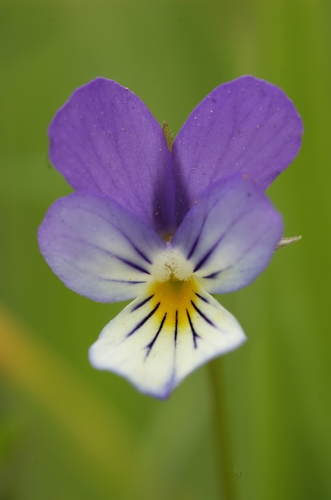
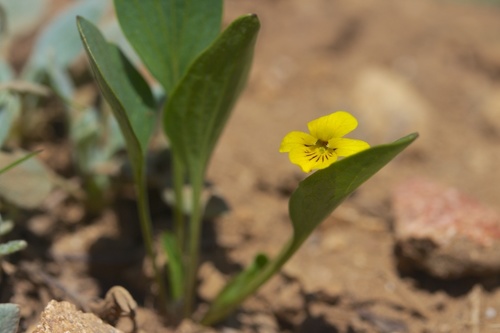
About Viola stagnina Kit.
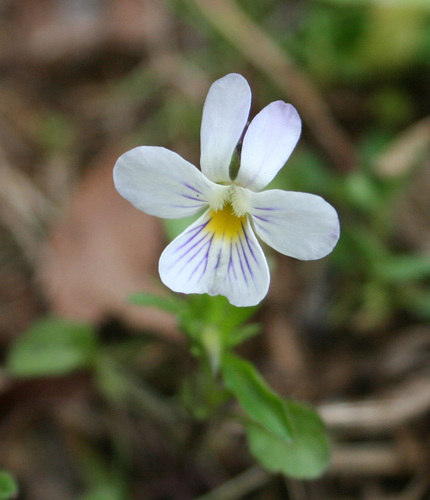
Viola elatior grows 10 to 30 cm (4 to 12 inches) tall from a creeping rhizome. It bears narrow, triangular leaves that are 7 to 15 mm (0.28 to 0.59 inches) across. Flowers bloom from late spring to early summer, reaching 10 to 15 mm (0.4 to 0.6 inches) in diameter. These flowers are pale bluish or yellowish-white, with a short, greenish or yellowish spur. Its petals are rounded and broad relative to their width. Viola elatior is native to central and northern Europe, and northern Asia. It only grows in very localized damp, lime-rich habitats within tall vegetation, such as fens and limy marshes. This violet has specific growing requirements: seeds germinate in spring on moist bare patches of base-rich peaty soil, but seedlings only become established if the soil surface dries out later. Most seeds germinate very close to the parent plant, so the species has limited dispersal. Habitat disturbance can cause this violet to vanish from a site, but its seeds are very long-lived, and new plants may sometimes sprout many years after the population was thought lost. In the British Isles, Viola elatior is rare. It is only found in eastern and northern England, and in damp hollows with limestone soils in western Ireland. It also occurs at a small number of sites in Northern Ireland, growing on rocky limestone lake shores around Upper Lough Erne and in turloughs (ephemeral pools) around Fardrum, County Fermanagh. Due to its rarity in Northern Ireland, it is listed as a Northern Ireland Priority Species. Conservation efforts are currently underway to reintroduce the species to newly suitable habitat in the Fens as part of the Great Fen Project.