About Viola selkirkii Pursh ex Goldie
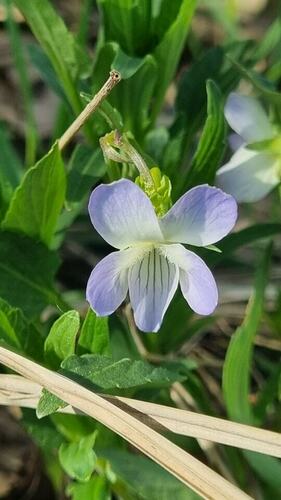
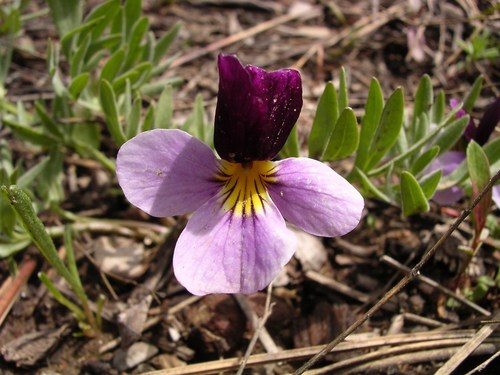
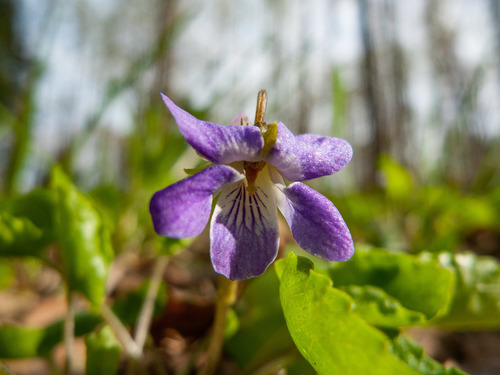
Viola selkirkii is a violet species with the common names Selkirk's violet and great-spur violet. It is native across the entire Northern Hemisphere, with a circumboreal distribution. This species is a rhizomatous perennial herb that grows hairy, heart-shaped leaves. Its flowers are violet-colored and can reach up to 1.5 centimeters wide, and unlike the flowers of some other violet species, they do not have beards. Each flower has a spur that grows up to 7 millimeters long. The fruit of this plant is a capsule that can reach up to 6 millimeters wide. Its flowering period runs from April to July. In some regions, this violet can be mistaken for its close relatives hookedspur violet (V. adunca) and common blue violet (V. sororia); its relatively large spur is a reliable feature to distinguish it from these species. Like some other violet species, Viola selkirkii forcefully ejects its mature seeds from its fruit capsules. Ants then collect the seeds and help disperse them. The plant grows in a wide range of moist, shady, cool habitats; in North America it is found mostly in forests. Like many other violets, it often grows on rotting wood. It also appears to prefer calcareous substrates such as limestone. While the species is not rare overall, it is classified as imperiled in some regions, mainly on the outer edge of its range. This includes the US states of Colorado, Connecticut (where it is listed as a special concern species), Montana, Pennsylvania, and South Dakota. It is a common plant in other areas. This species, which was at the time of naming only known from the area around Montreal, was named by Frederick Traugott Pursh for Thomas Douglas, 5th Earl of Selkirk. Selkirk had selected Pursh to serve as botanist for a planned expedition to the Red River Colony, which is located in what is now Manitoba.