About Viola rafinesquei Greene
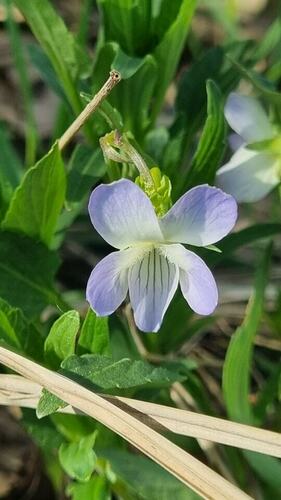
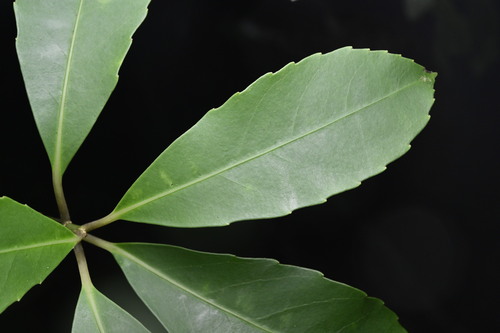
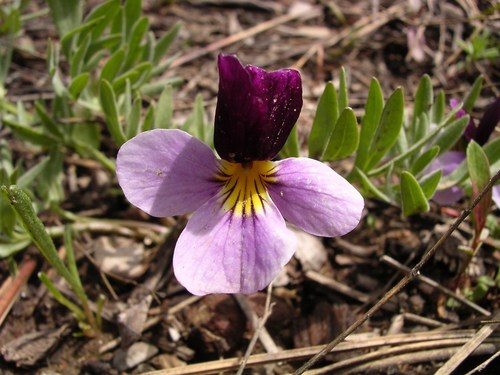
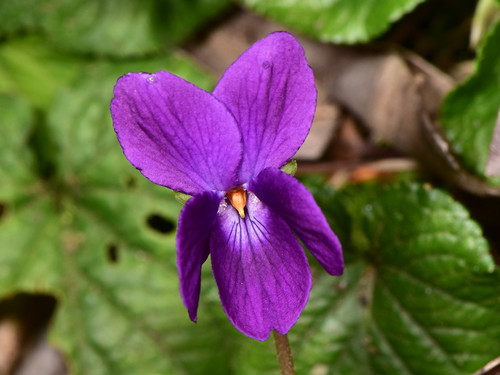
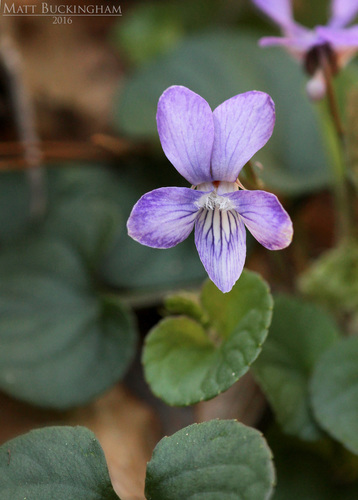
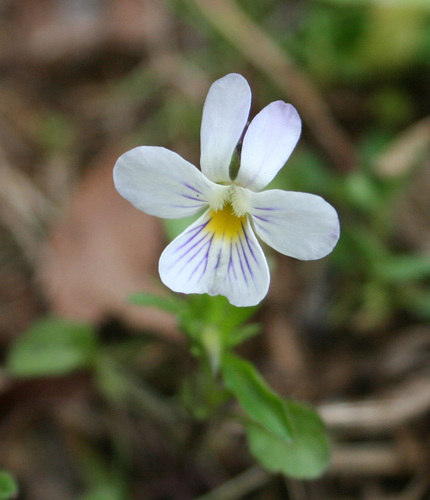
Viola rafinesquei Greene (also called V. rafinesquii, the American field pansy) has the following physical characteristics. Its flowers are asymmetrical, with five blue-white petals and five sepals arranged in a head inflorescence. The lowermost petal is larger than the other petals, has a faint yellow spot at its base, and all petals are covered in dense, club-shaped (clavate) hairs. The petals are longer than the lanceolate sepals, measuring 9 mm long. The freely branched stem grows between 0.5 and 5 inches in height. Leaves are simple, alternately arranged on an above-ground stem, lack surface hairs, and are subpinnately lobed. Upper leaves are larger than lower leaves: upper leaves measure 24 x 6 mm and are oblanceolate, while lower leaves measure 14 x 11 mm and are oblong-ovate. Both upper and lower leaves have serrated edges. This species produces light brown seeds. This species is native to North America, occurring across the central and eastern United States, ranging from New York to Florida. It is also found in midwestern states including Colorado, and can also grow in Arizona. It often forms large populations on roadsides. It prefers sandy soils and full direct sun, but can survive in other soil types and partial shade. While it is resilient across a range of habitats in eastern North America, cultivation attempts in California and Denmark were largely unsuccessful. Viola rafinesquei is a winter annual: it germinates in fall, grows vegetatively through winter, and produces seeds in spring. It is dimorphic with cosexual flowers, enabling both cross-pollination and self-pollination. It produces chasmogamous flowers first, then develops cleistogamous flowers later in spring. This strategy allows for both genetic diversity and reproductive assurance. Unlike cleistogamous flowers of other Viola species, which have a reduction of three anthers, cleistogamous flowers of this species have a reduction of four anthers. Fruit from chasmogamous flowers starts developing in March, while fruit from cleistogamous flowers develops later, in May. After seed dispersal, seeds go through a short period of primary dormancy (a post-dispersal germination delay). One to two months after this primary dormancy, seeds enter a state of relative dormancy that prevents germination until specific environmental conditions are met. In this relative dormancy stage, seeds germinate in response to low temperatures. Over time, seeds exit this dormancy period and are able to germinate across a wider range of environmental conditions, specifically including higher temperatures.