About Viola pedatifida G.Don
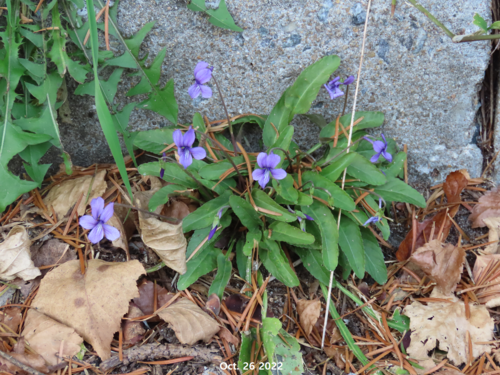
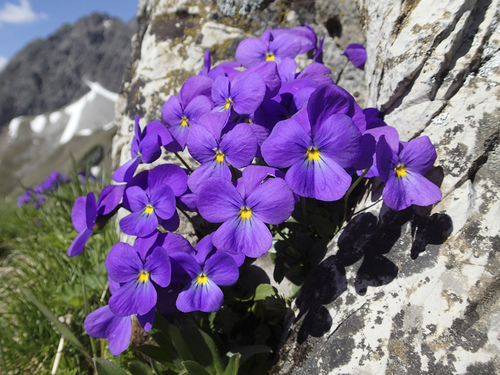
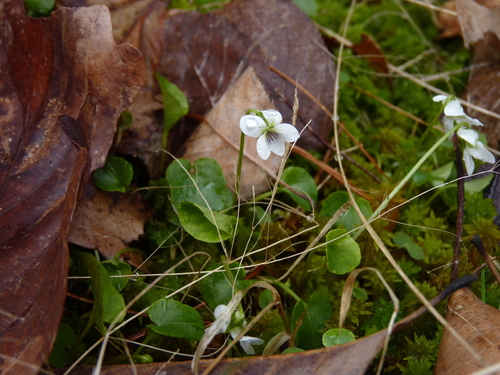
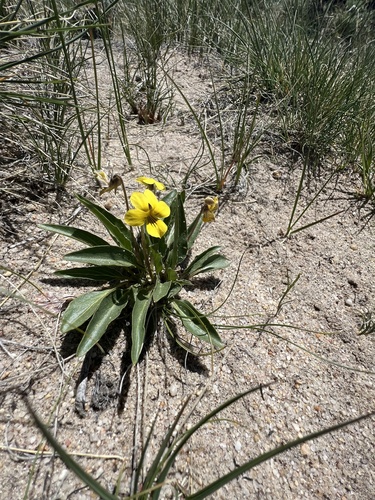
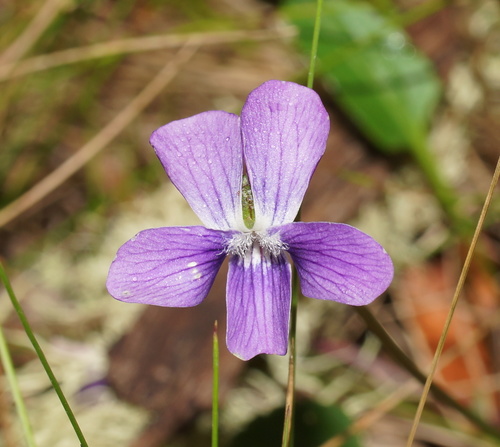
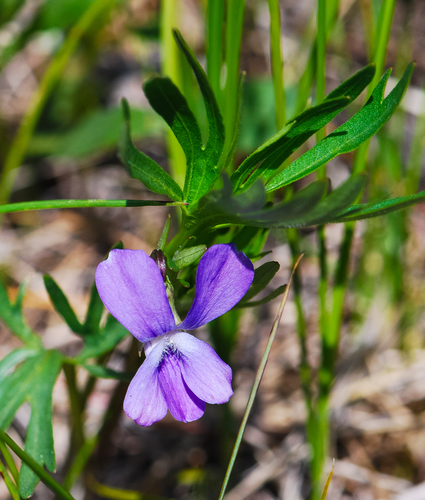
Viola pedatifida G.Don, commonly known as prairie violet, grows 5–30 cm (2.0–11.8 in) tall. It is an acaulescent violet, meaning its flowering stems do not bear leaves. Plants produce 2 to 11 deeply divided leaves, each with 5 to 9 lanceolate to linear lobes; individual leaves can grow up to 7 cm (2.8 in) long and 8 cm (3.1 in) across. Prairie violet flowers between March and June. Its flowers are light violet; the lower three petals are white near their bases, and usually have some hairs. After flowering, it forms ellipsoid capsules during the summer. This species is native broadly across the central United States and south-central Canada, ranging from Alberta to Ontario in Canada, south to Arkansas, and west to New Mexico in the United States. It has a disjunct distribution in Virginia, where it grows in Appalachian shale barrens. Across most of its range, prairie violet grows in dry prairies and other dry, sunny habitats. It is the provincial flower of the Canadian province of New Brunswick.