About Viola mandshurica W.Becker
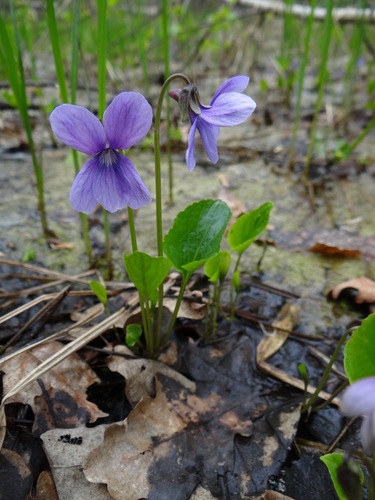
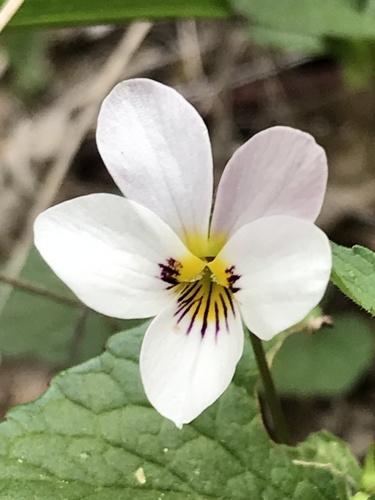
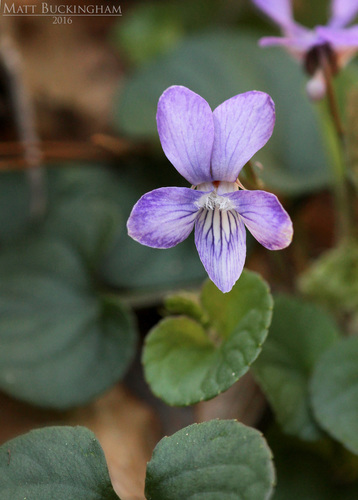
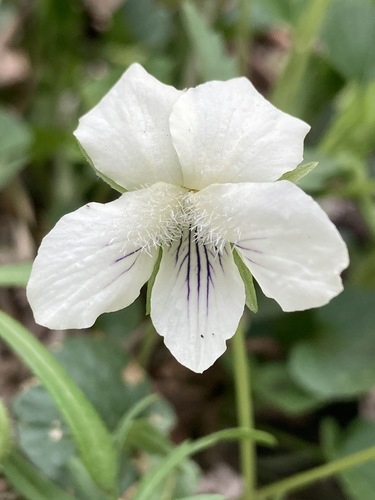
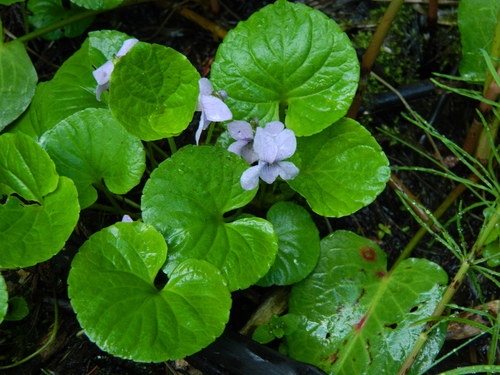
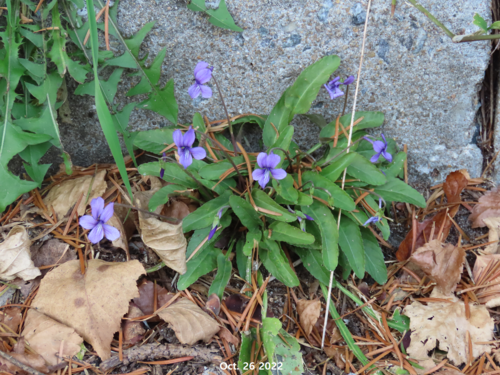
Viola mandshurica, like many other viola species, lacks a true stem. Its leaves and flowers emerge directly from the ground from its short, thick underground rhizome, and the plant reaches a total height of 6–18 centimeters (2–7 in). Its leaves are typically oval-lanceolate to lanceolate, and both leaf surfaces are either glabrous or sparsely puberulous. Wild plants usually have medium green leaves on both the upper and lower surfaces, but some cultivars, such as Fuji Dawn, have variegated leaves marked with white, yellow and/or pink spots, streaks or splotches. As a violet, it produces trumpet-shaped flowers that have five petals and bilateral symmetry. The lowermost petal is often the smallest, and all petals are typically a rich purple hue, though color can vary due to local growth conditions, localized mutations, or deliberate breeding for different appearances. This species blooms from April to May, and its fruiting period runs from May to September. It is native to eastern Asia. Its range extends west to eastern Siberia, north into Russian North Asia (especially in and around the Ussuri River Basin), covers all of China, Taiwan and Korea, and includes much of Japan, including Okinawa. Across its native range, this species grows in a wide variety of habitats, from undisturbed woodlands to urban areas, and from low-lying plains to mountainous regions. Horticulturalists have developed a number of varieties of Viola mandshurica, and these varieties are popular garden plants. The wild form, along with most named varieties and hybrids, prefers a semi-shaded location and humus-enriched soil that is not overly moist. For culinary use, Viola mandshurica flowers are among the species used to make flower pancakes, a traditional food that is an essential part of the Korean Samjinnal festival celebrating the arrival of spring.