About Viola lactea Sm.
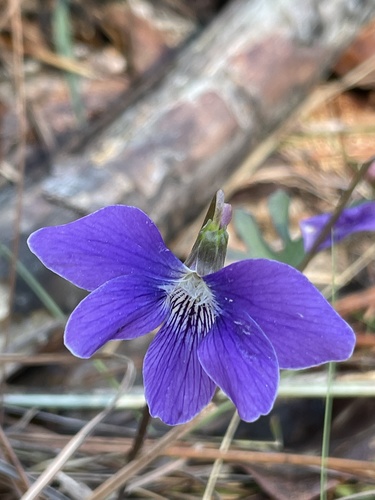
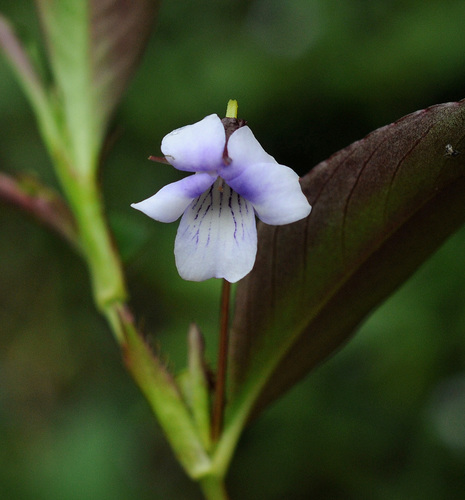
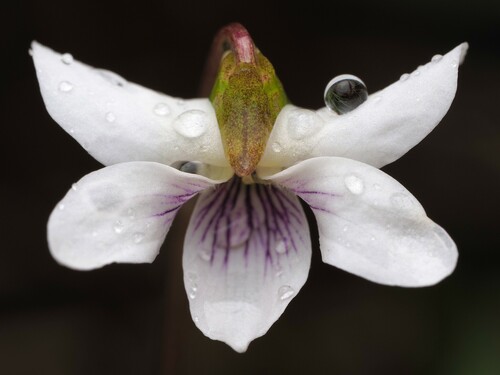
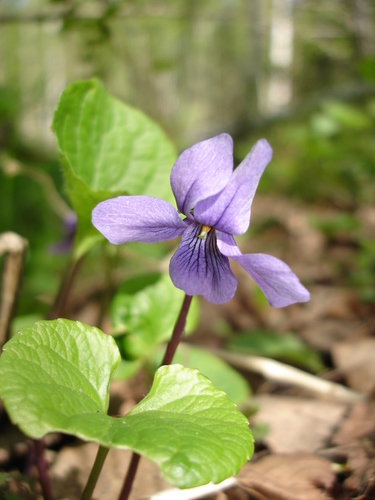
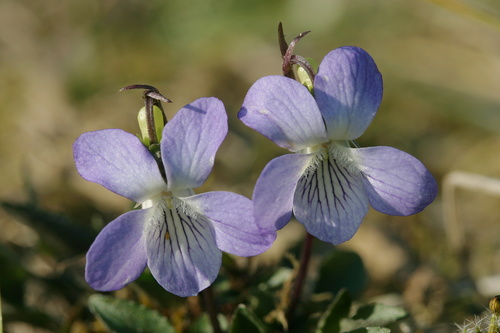
Viola lactea Sm. has sparsely hairy creeping stems, and a rosette of lanceolate leaves with cuneate bases. Each stem bears a single flower, which shares the typical shape of other violets. Flower colour ranges from milky-violet to greyish-pink, with deep purple veins on the lower petal. Two features distinguish this species from similar relatives: it has green spurs at the back of the flower, and the triangular stipules on its upper leaves are equal to or longer than the leaf stalks. This species hybridizes easily with Viola riviniana, which often grows in the same habitat. Where both parent species are present, especially around the Cornish coast, the hybrid population V. riviniana x lactea is thought to be increasing because the hybrid outcompetes both of its parent species. These hybrid plants are generally sterile. Viola lactea can also hybridize with Viola canina, though this hybridization event is much more rare. Viola lactea grows on heathland, and prefers areas that are bare or only support short vegetation, created by grazing, burning, or other disturbance such as turf cutting. The native range of Viola lactea is classified as Western European Oceanic. It occurs in the south and west of the British Isles, along the Atlantic coast of France, and in north-western Spain. Its southernmost extent is in Portugal, near the River Tagus. Within the British Isles, it is now most common in the New Forest, Dorset, Cornwall, Pembrokeshire and County Kerry. Due to habitat decline, it is no longer found across much of its former range, particularly in South East England.