About Viola betonicifolia Sm.
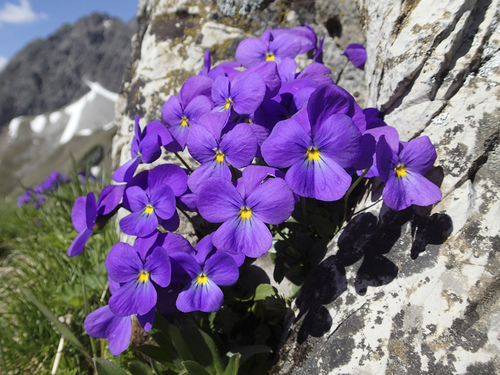
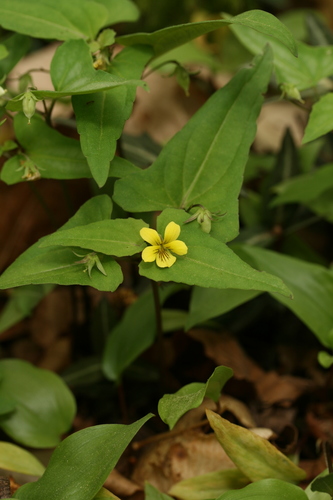
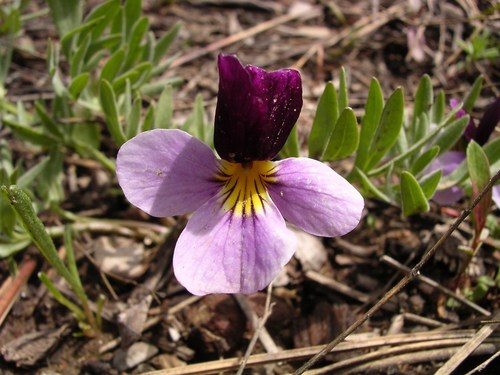
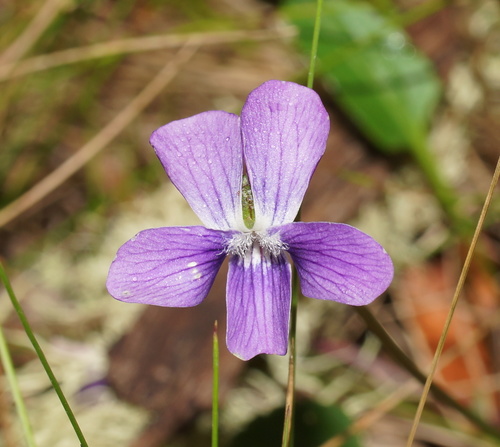
Viola betonicifolia Sm. is an stemless species, distinguished by long, slender arrow-shaped leaves that grow from the plant base. Its leaves reach up to 6 cm (2.5 in) long, have a v-shaped sinus at the base, and are typically a bright, fresh green. It produces striking bright purple flowers 1–1.5 cm (0.4–0.6 in) in diameter that bloom in spring and summer. After flowering, it forms small pale brown pods containing tiny blackish seeds. Viola betonicifolia is distributed in Tasmania and eastern mainland Australia, ranging from South Australia through Victoria and New South Wales, and extending into Queensland. It also occurs across Asia westward to India and Pakistan. It grows naturally in shady forest areas. Ecologically, caterpillars of the laced or Indian fritillary (Argynnis hyperbius) feed on this plant, and its flowers are pollinated by the large or common grass yellow (Eurema hecabe). In New South Wales, drainage of the coastal swamps where Viola betonicifolia grows has put the laced fritillary at risk of endangerment in the state. In cultivation, Viola betonicifolia is easy to grow and adaptable to many different soil types, as long as it receives sufficient moisture and at least half shade or more in a garden setting. It works well for rockeries. It can be quite vigorous in heavier, moisture-retentive soils, growing into clumps around 30 cm (12 in) in diameter, and it self-seeds readily.