About Viola adunca Sm.
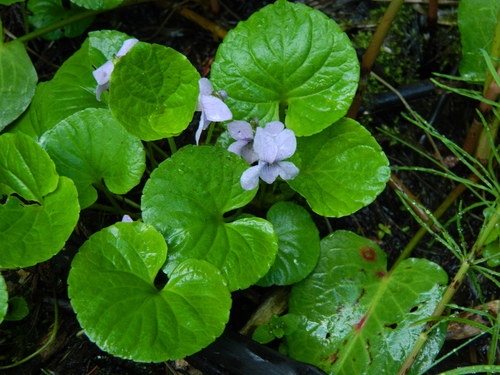
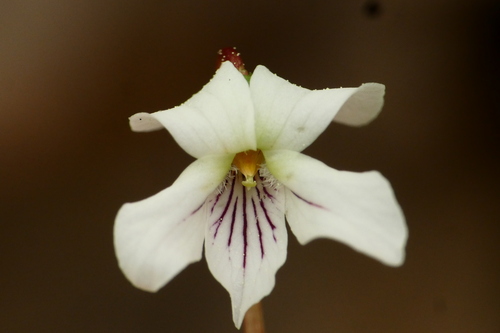
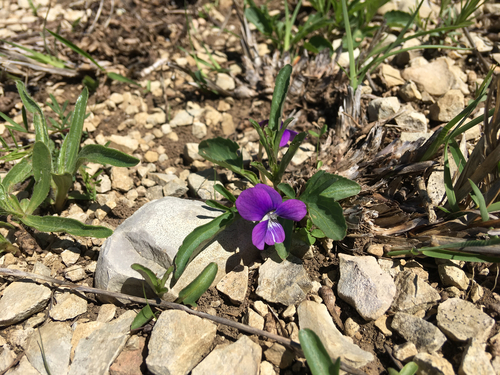
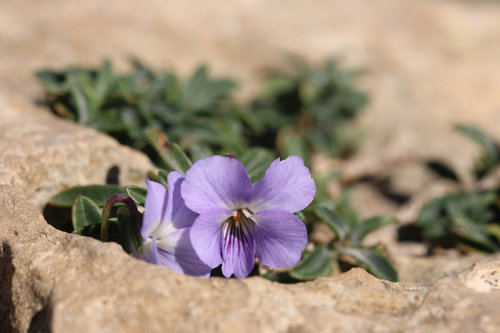
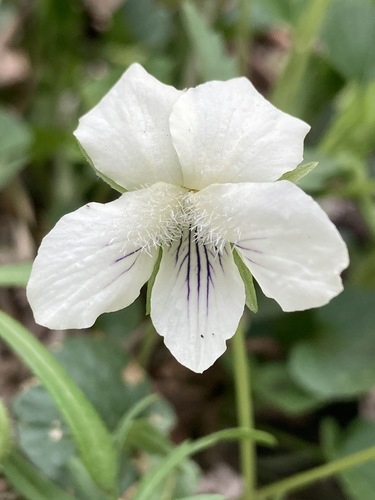
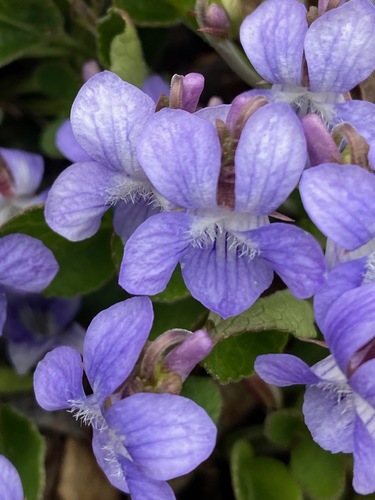
This species has the scientific name Viola adunca Sm. It is a compact perennial plant that grows from a small rhizome system. Its leaves are spade- or heart-shaped, sometimes with broadly wavy margins, and are generally between 0.5 and 4 centimeters long. Single-flowered inflorescences grow at the end of a very thin peduncle that reaches about 7.5 cm (3 in) high. The nodding flower is a violet, roughly 1.5 cm (1⁄2 in) long, with five purple petals. The lower three petals have white bases and purple veining. The two side petals have white bearding near the flower throat. The lower petal is spurred, and often has a slight hook at the tip. This species blooms in late spring. Several varieties of V. adunca exist; a white-petaled form of the plant has been noted in Yosemite National Park. It has also been observed in Southern Ontario, growing in tall grass prairies on sand plains and in black oak savannas. In ecology, Viola adunca acts as the larval host plant for Myrtle's silverspot. It is pollinated by bees and other insects. Polites mardon uses it as a nectar source, and birds and mice feed on its seeds. The leaves and flowers of Viola adunca are edible. They can be eaten in salads, prepared as potherbs, or brewed into tea, and these plant parts are high in vitamins A and C. However, the rhizomes, fruit, and seeds of the plant are poisonous to humans, and can cause upset stomach, intestinal problems, and respiratory and circulatory depression.